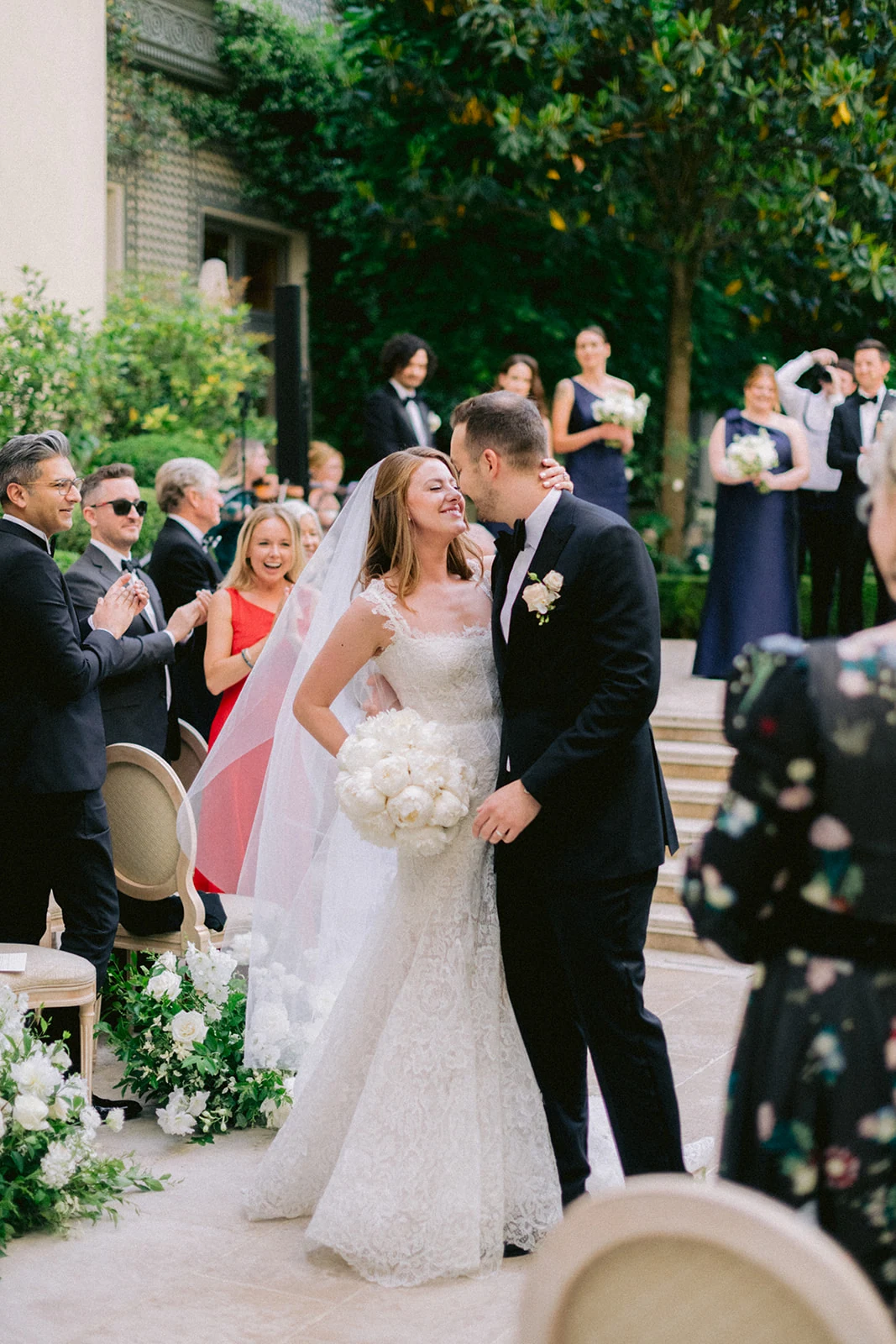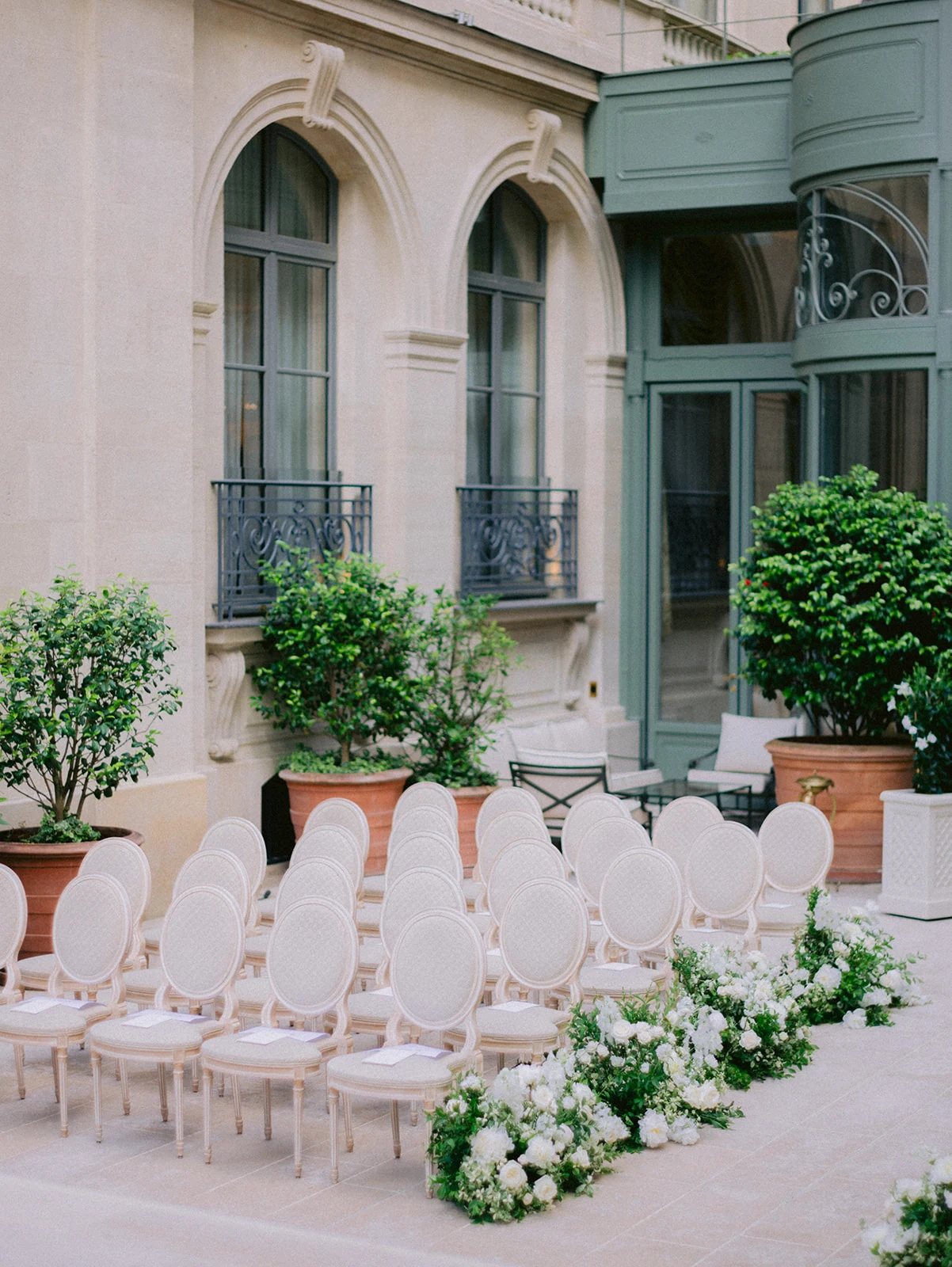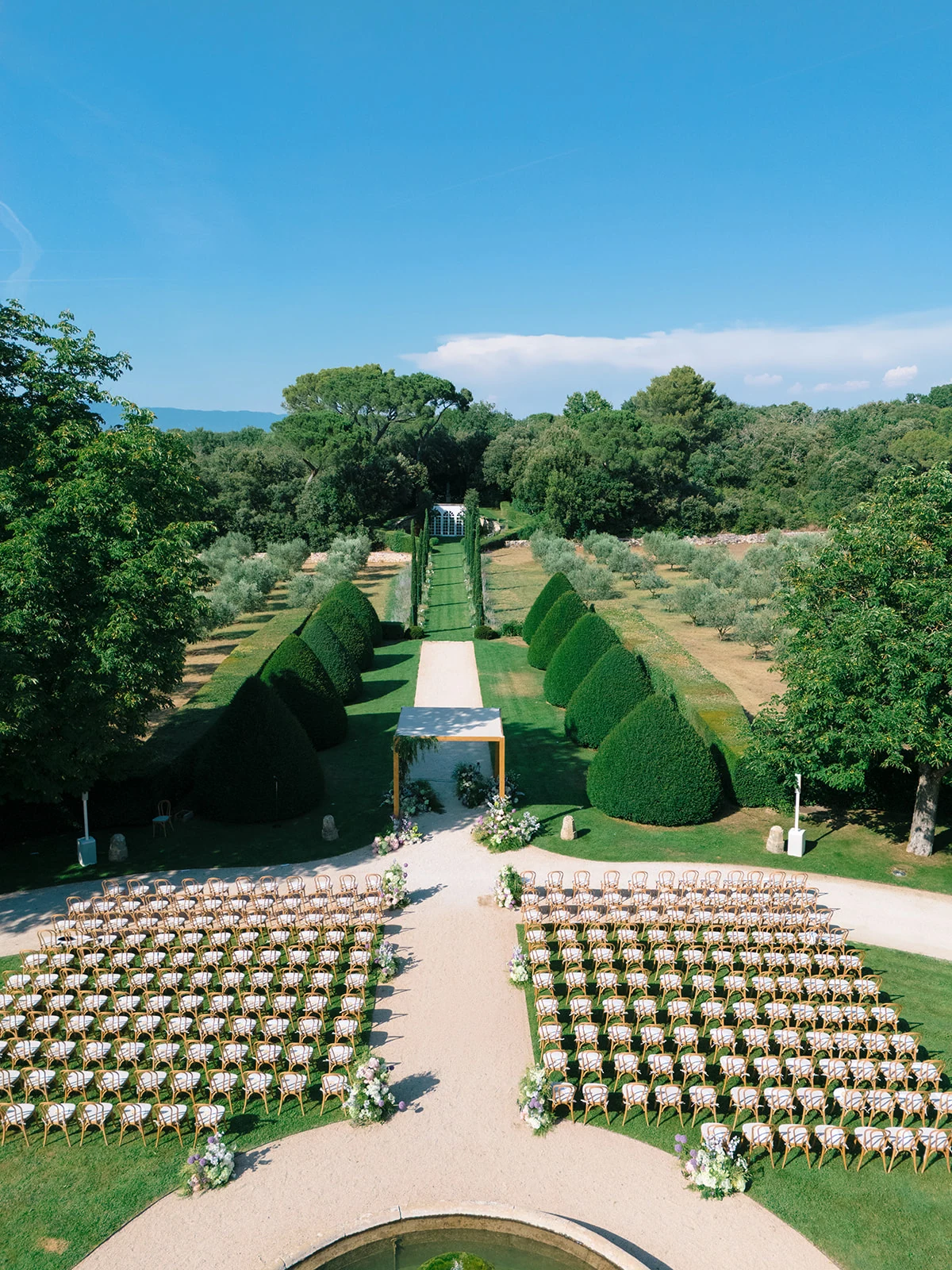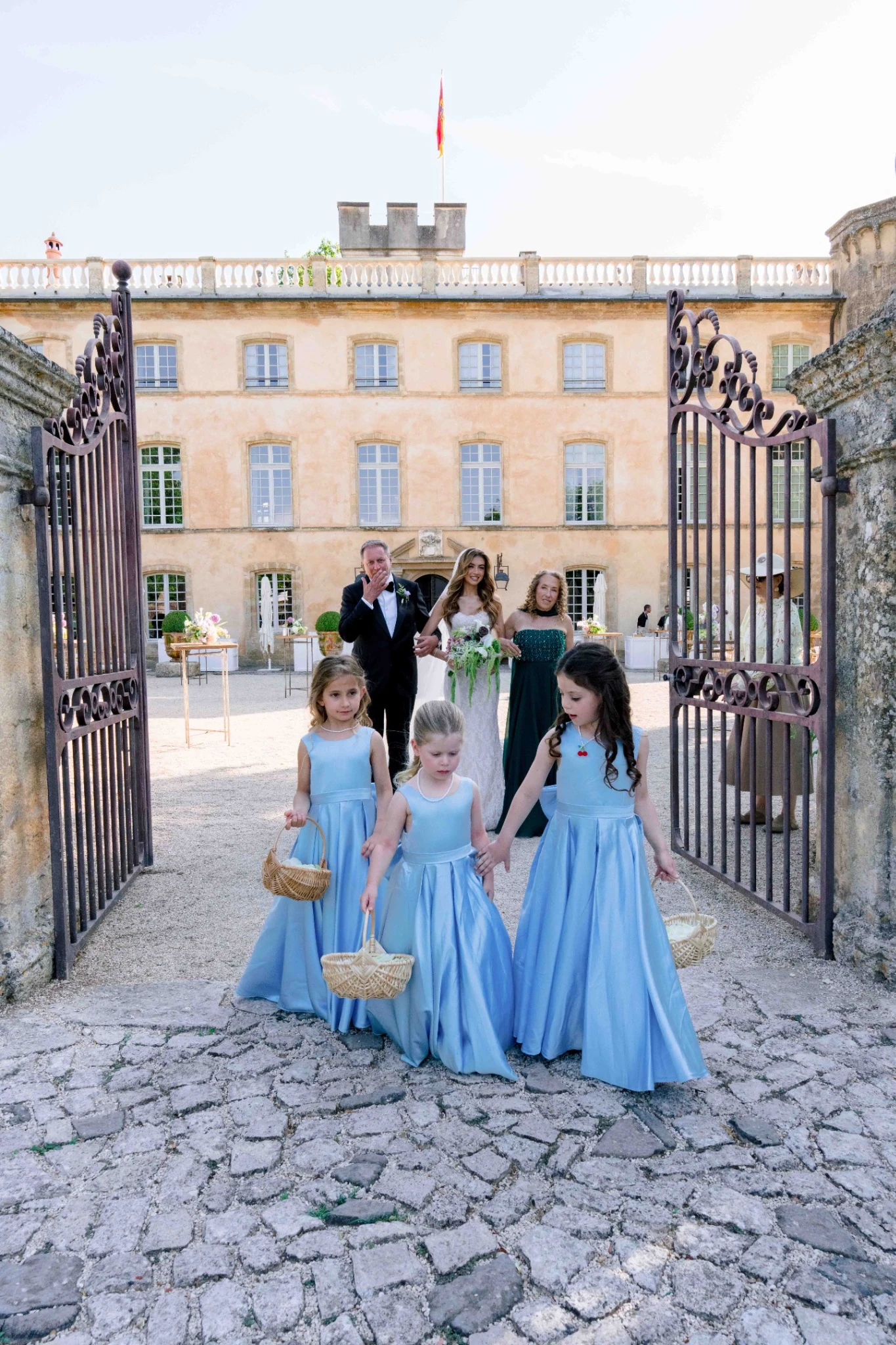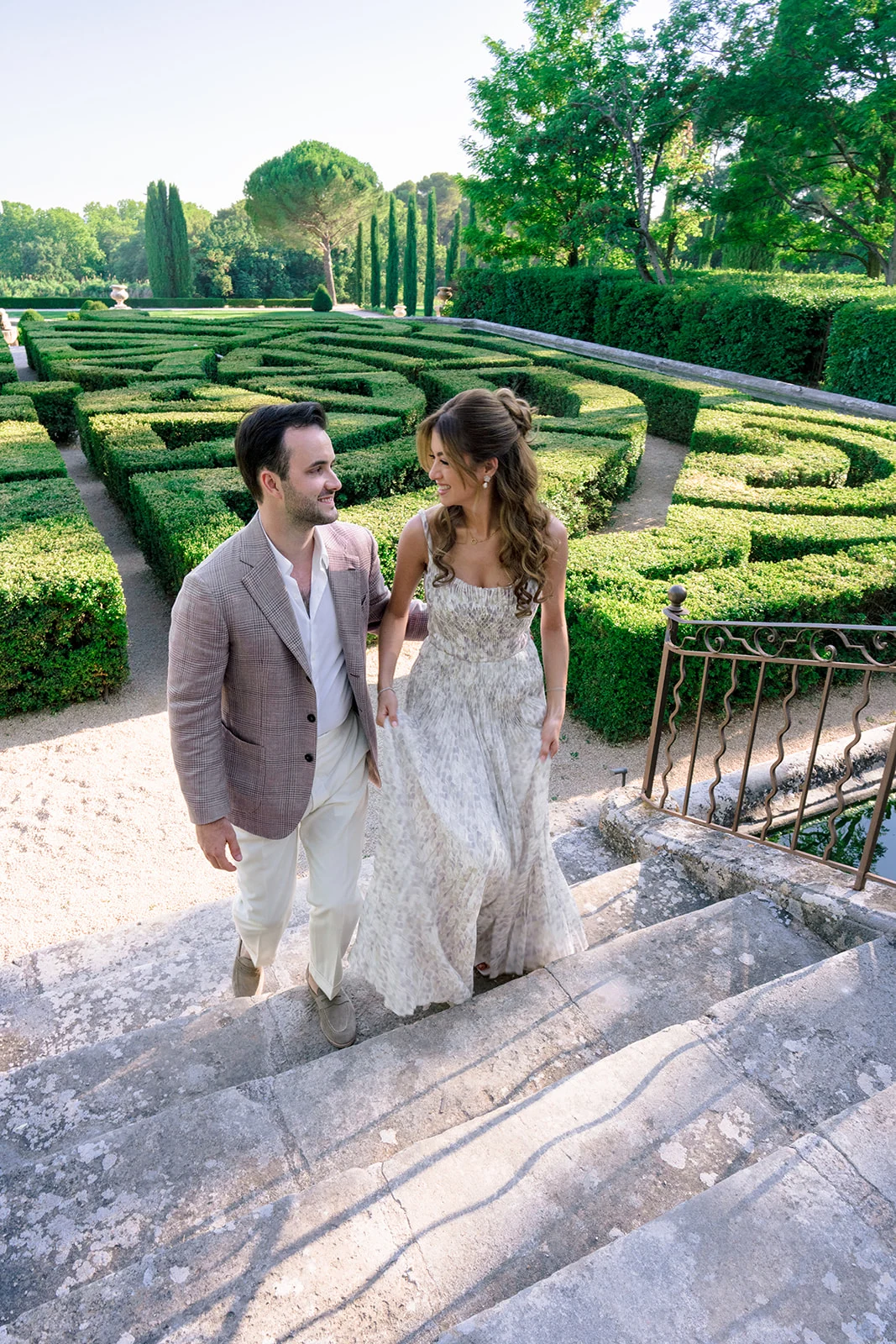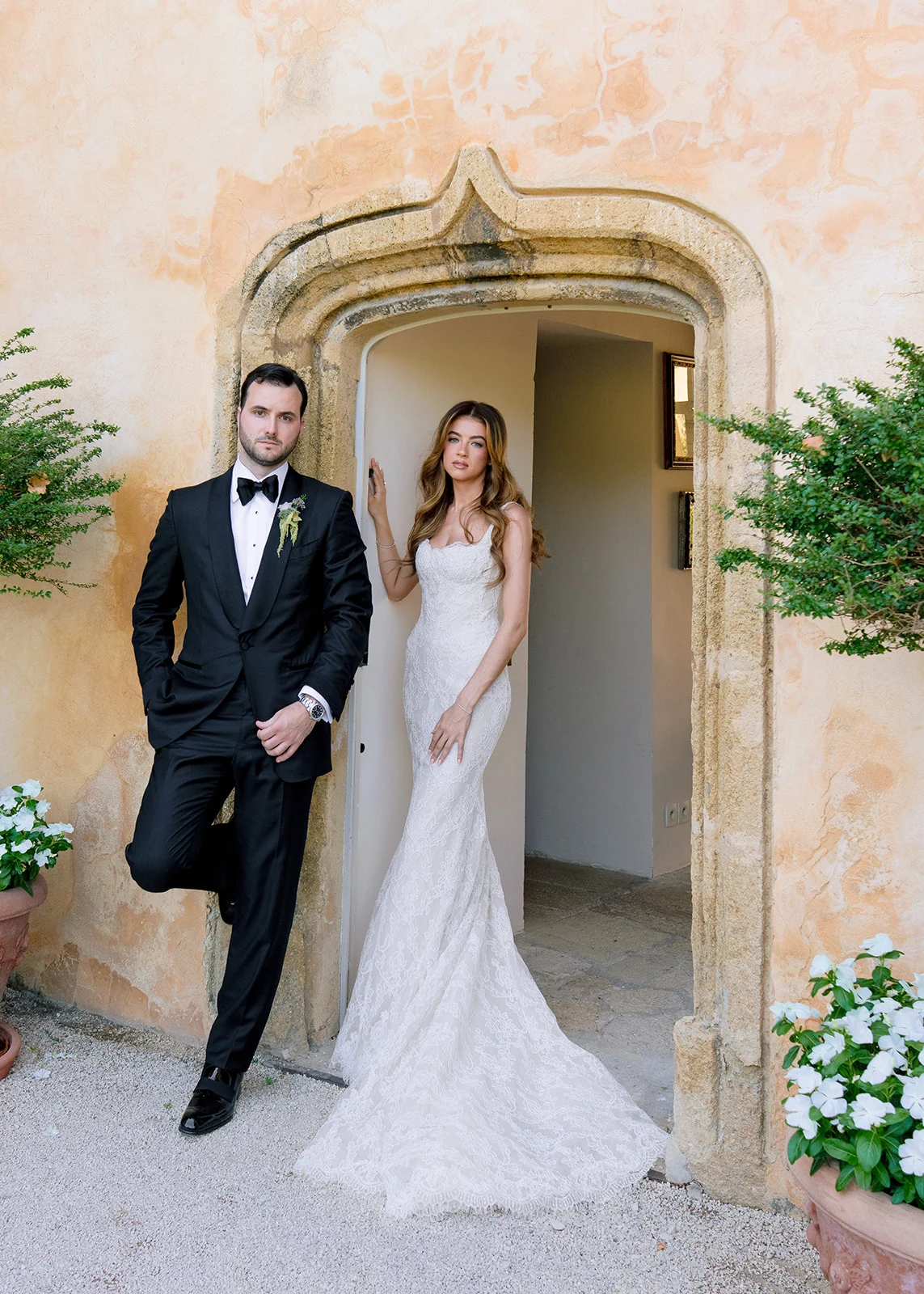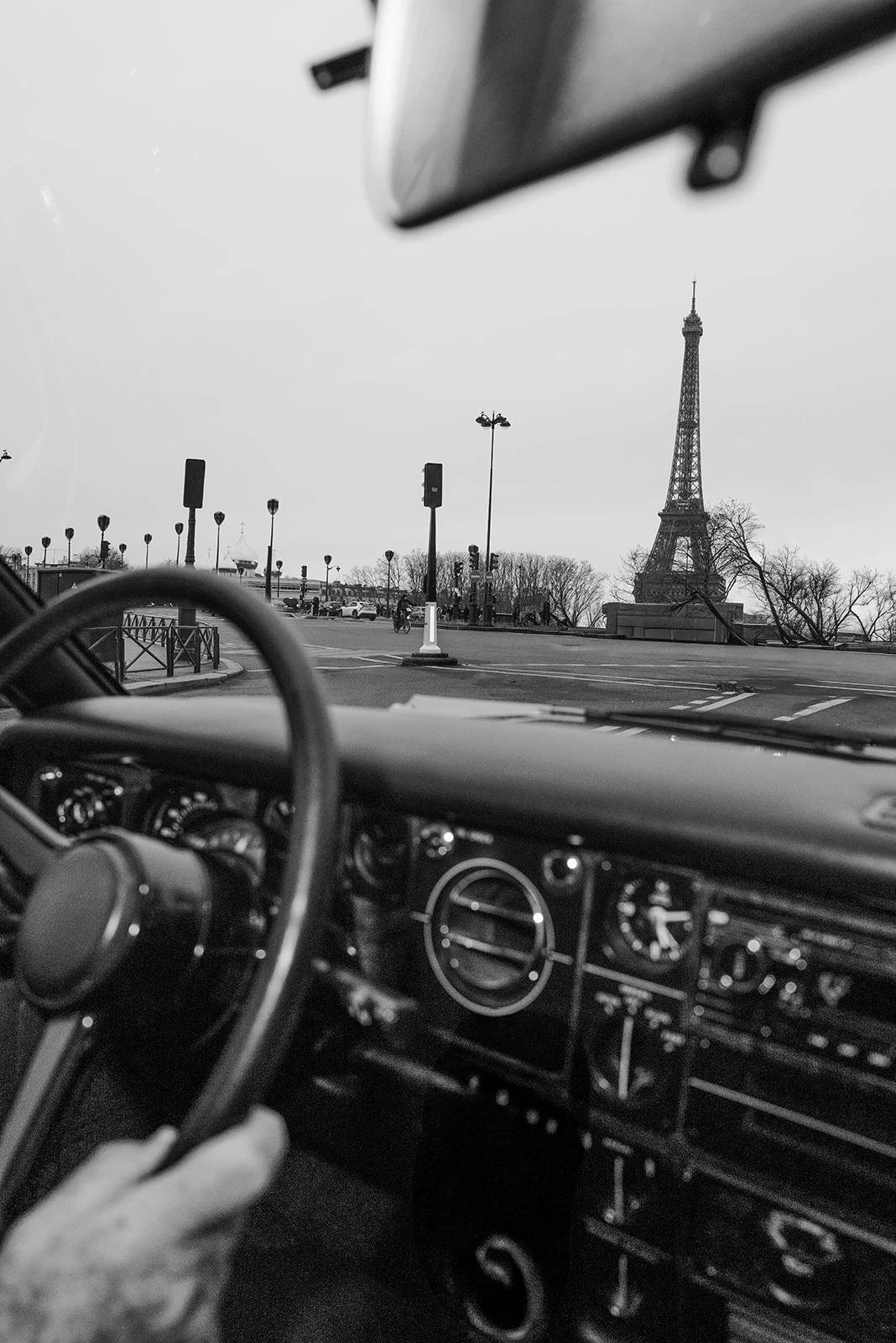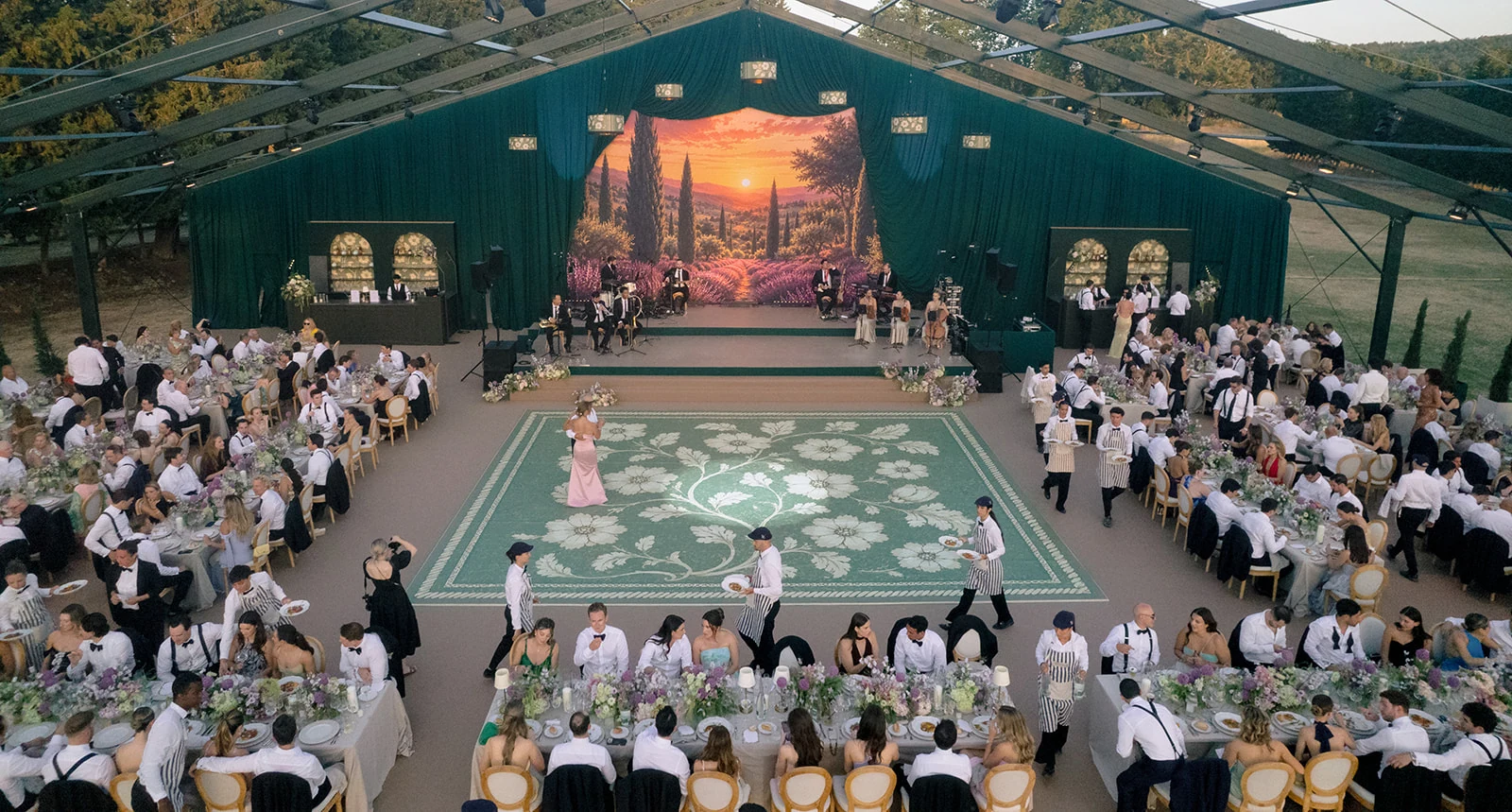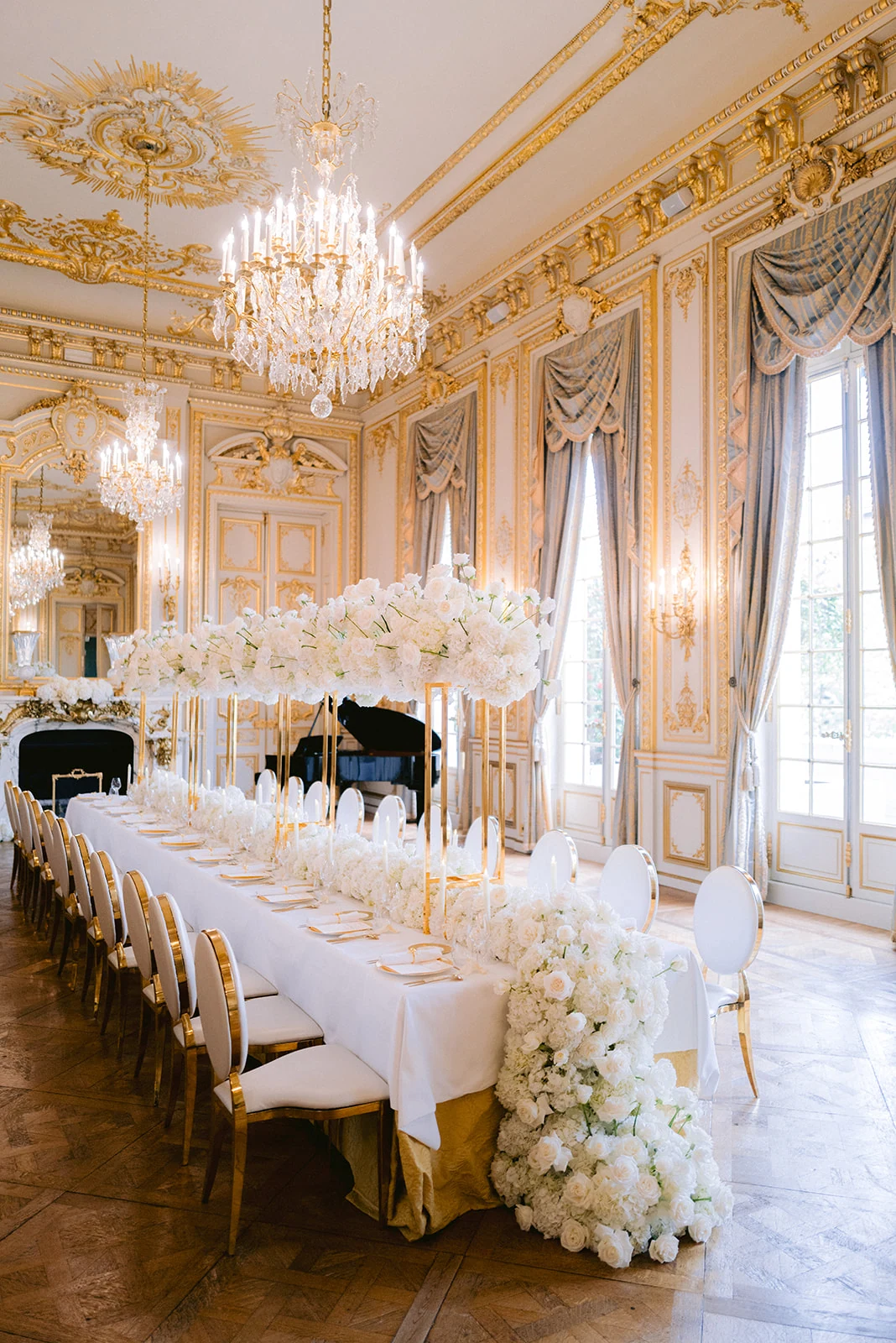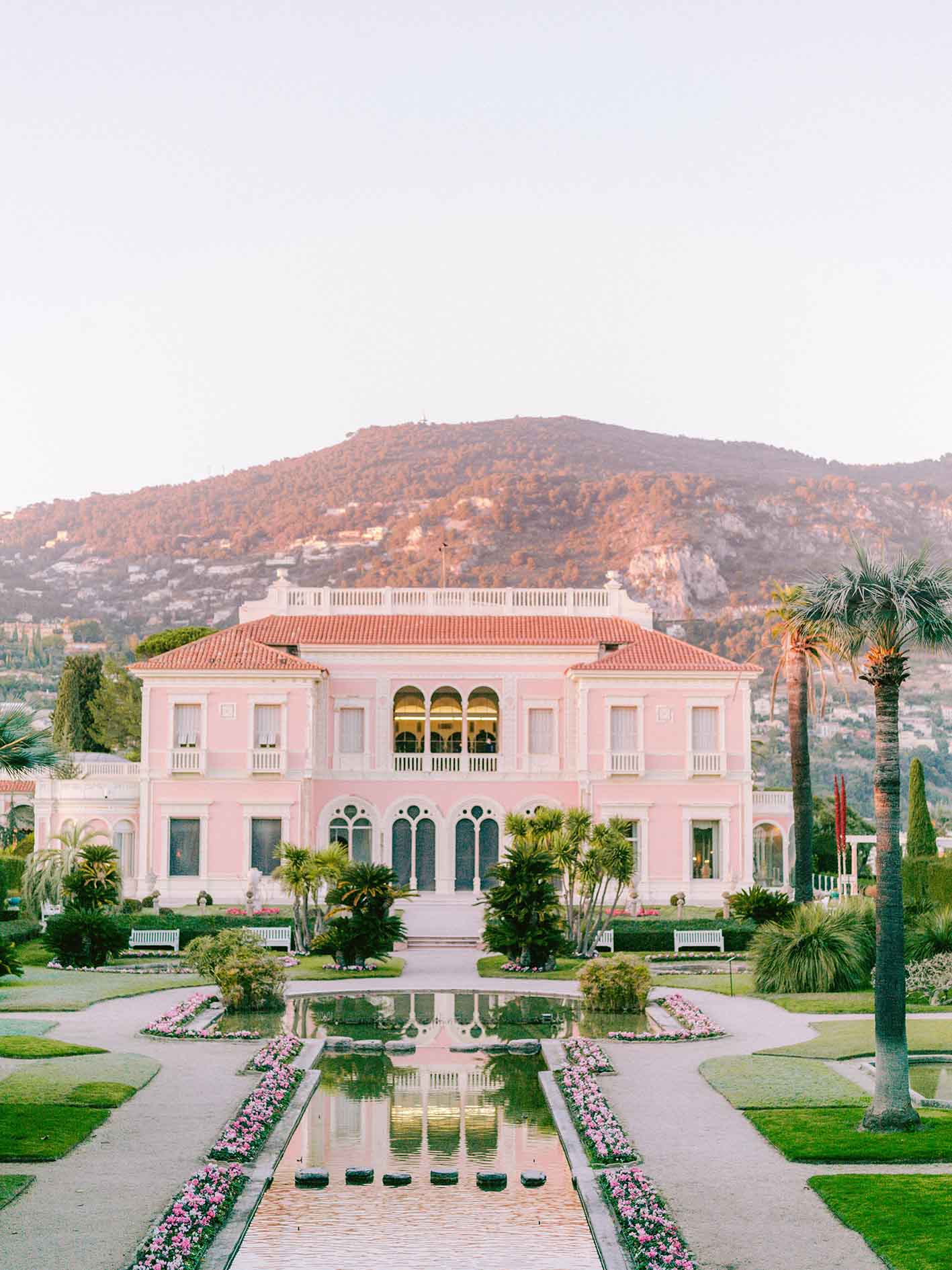
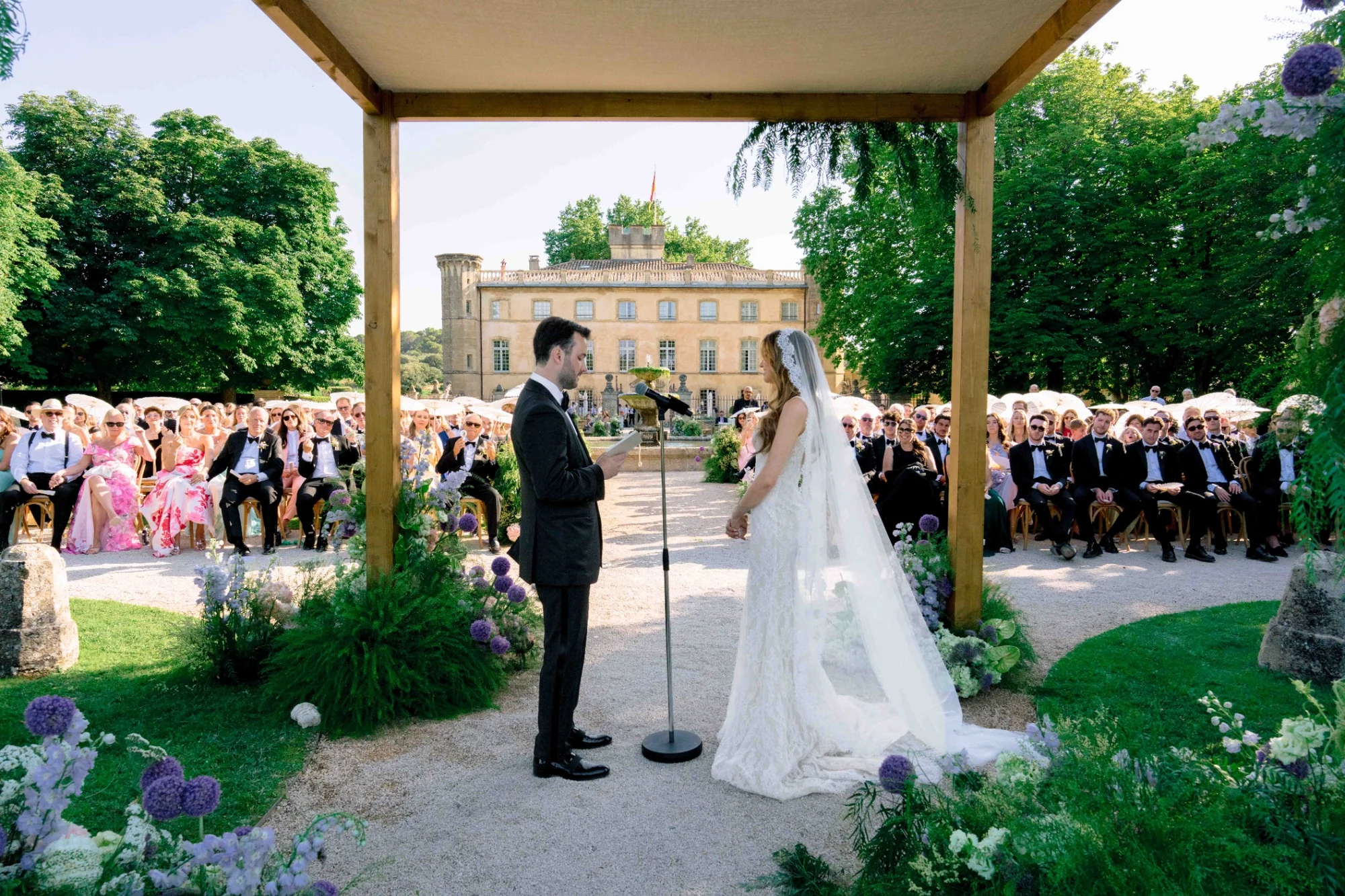
American couple exchanging vows at a destination wedding in France

A guide for couples planning from the United States

Getting Married in France as an American

Understand the process
United States · Paris · Provence · French Riviera
Scroll

01 — Start with the legal and practical reality

France can host the celebration.
The legal process is a separate decision.

For American couples, the first question is not only where to marry in France. It is whether the legal marriage will take place in France at all.

A destination wedding in France may include a French civil ceremony, a symbolic ceremony, or a legal marriage completed in the United States before the trip. Each option creates a different planning path. The right choice depends on your legal eligibility, connection to a French municipality, timing, documents and the experience you want for your guests.

This guide separates the legal process from the celebration itself, then covers the decisions American couples most often face: working across time zones, paying vendors in euros, choosing a region, planning guest travel and creating a photography timeline that works in France.

02 — Separate law from celebration

“The ceremony can be deeply personal.
It does not need to carry the legal paperwork.
02

Civil versus symbolic

Choose the ceremony that supports the experience

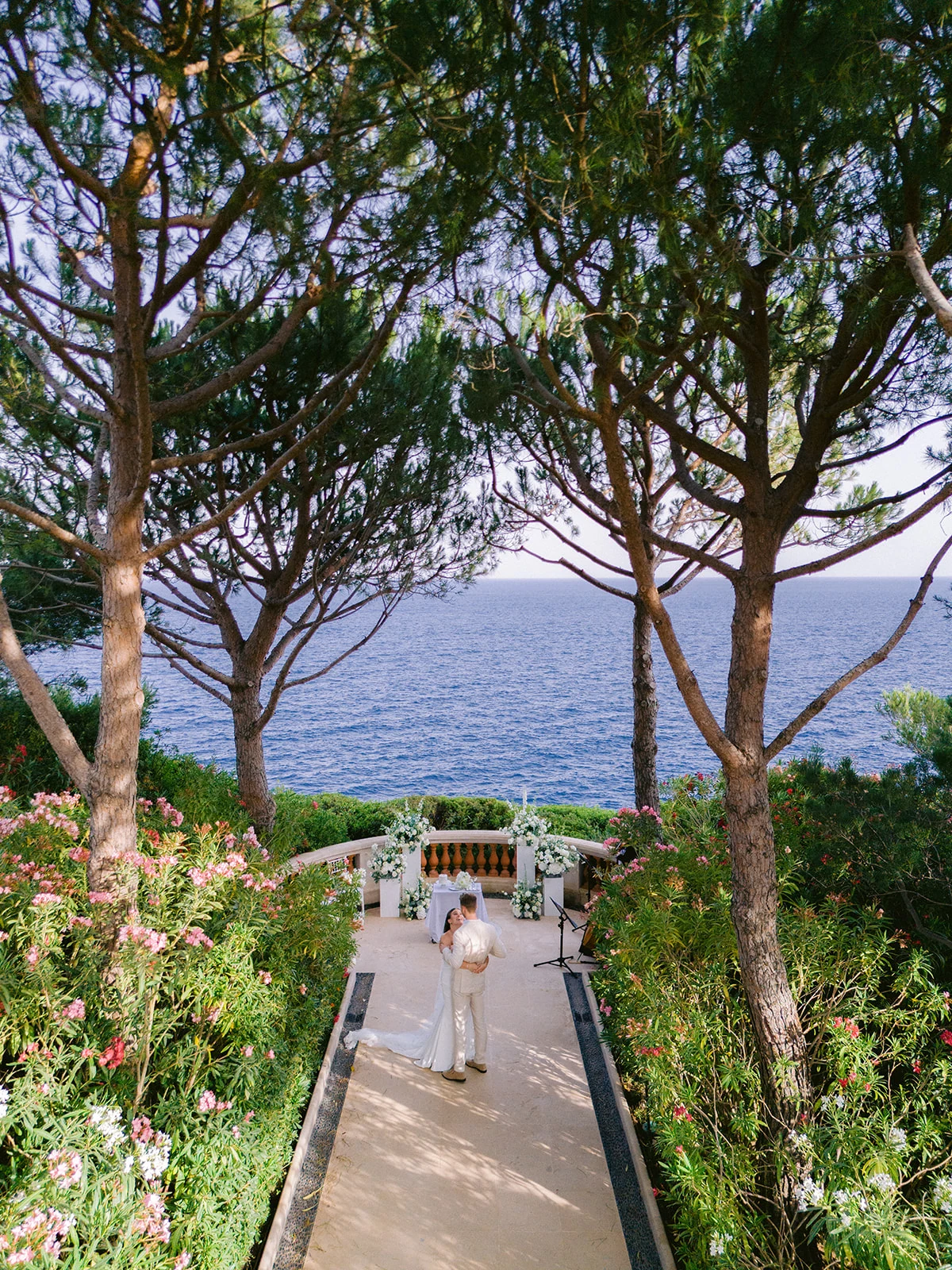
A symbolic ceremony is not a lesser version of a wedding. It is simply not the legal act. For destination couples, that distinction can create more freedom: the ceremony can happen at sunset, outdoors, in a garden, on a terrace, inside a palace salon or in any part of the venue approved for the event.

What a symbolic ceremony can include

A celebrant, personal vows, readings, live music, religious or cultural elements, ring exchange and family participation can all be included. The ceremony can feel formal, intimate, modern or theatrical. Its meaning comes from the people and the commitments made, not from the location of the legal signature.

When a French civil ceremony does work

Some American couples have French residency, dual nationality, family residence or another qualifying connection. In those cases, the mairie may become a beautiful part of the destination weekend. Civil ceremonies are often concise, and the schedule, room capacity and document process are controlled by the municipality.

Photographing both chapters

When the civil ceremony and destination celebration occur on different days, they can have distinct visual identities. A city civil ceremony may be compact and fashion-led; the symbolic ceremony can then open into the full scale of the venue, guests and design.

03

Documents and timing

Do not build the plan around an assumed document list

Document requirements can vary according to nationality, residence, marital history and the mairie reviewing the file. Originals may be required. Some documents may need a certified translation, apostille, recent issue date or additional affidavit.

Use the official document simulator

France provides an official simulator to identify documents according to the couple’s situation. Use it as a starting point, then confirm the final list directly with the mairie. The U.S. Embassy also provides information on attestations that American citizens may use in place of certain French certificates.

Official resources: French marriage-document simulator and U.S. Embassy notarial guidance.

Build time for translations and corrections

Do not wait until the final month. Names, birthplaces, prior-marriage records and document dates must be consistent. A rejected or expired document can affect the ceremony date, while a symbolic ceremony remains operationally independent of that process.

04

Planning from the United States

Create one decision system across two countries

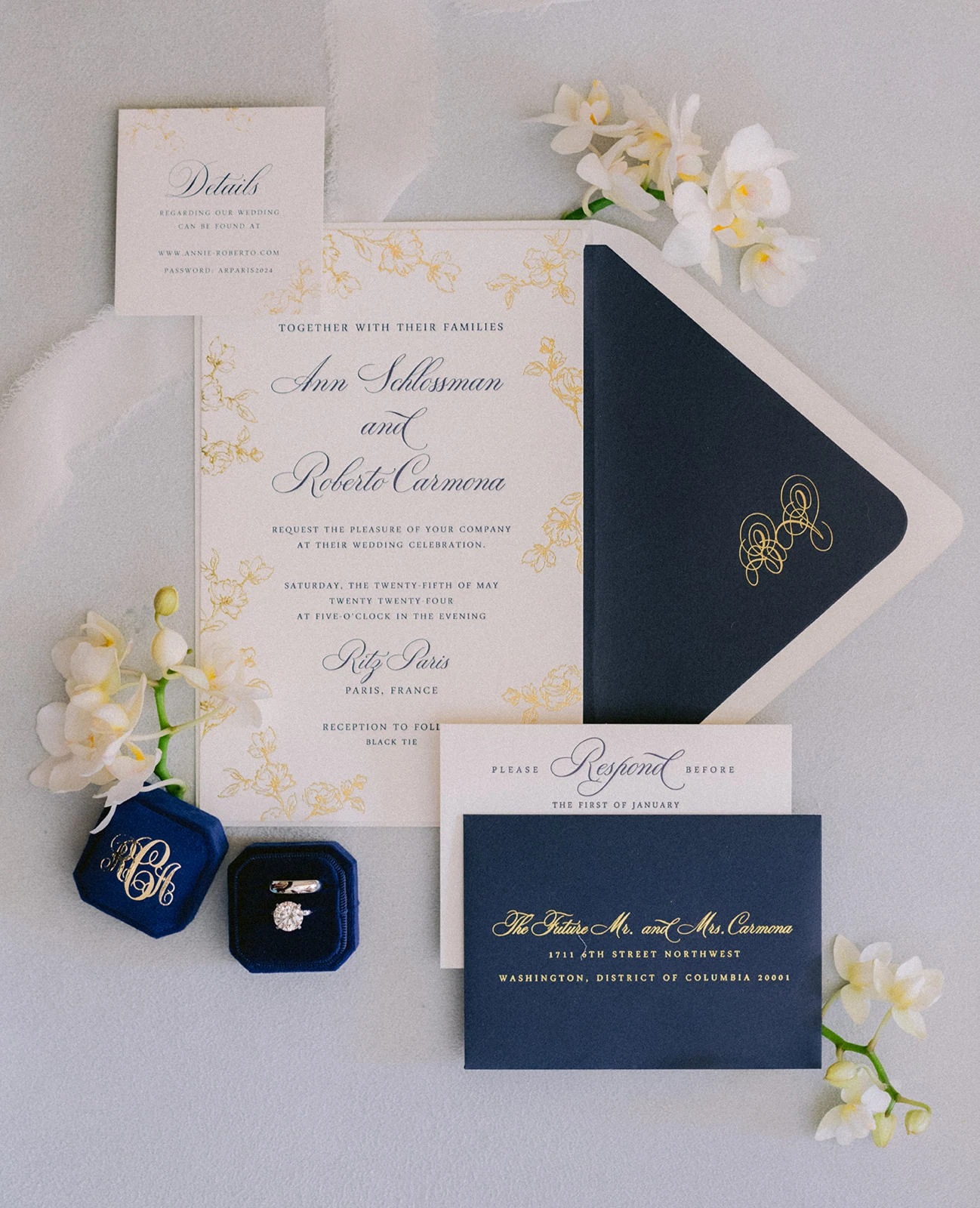
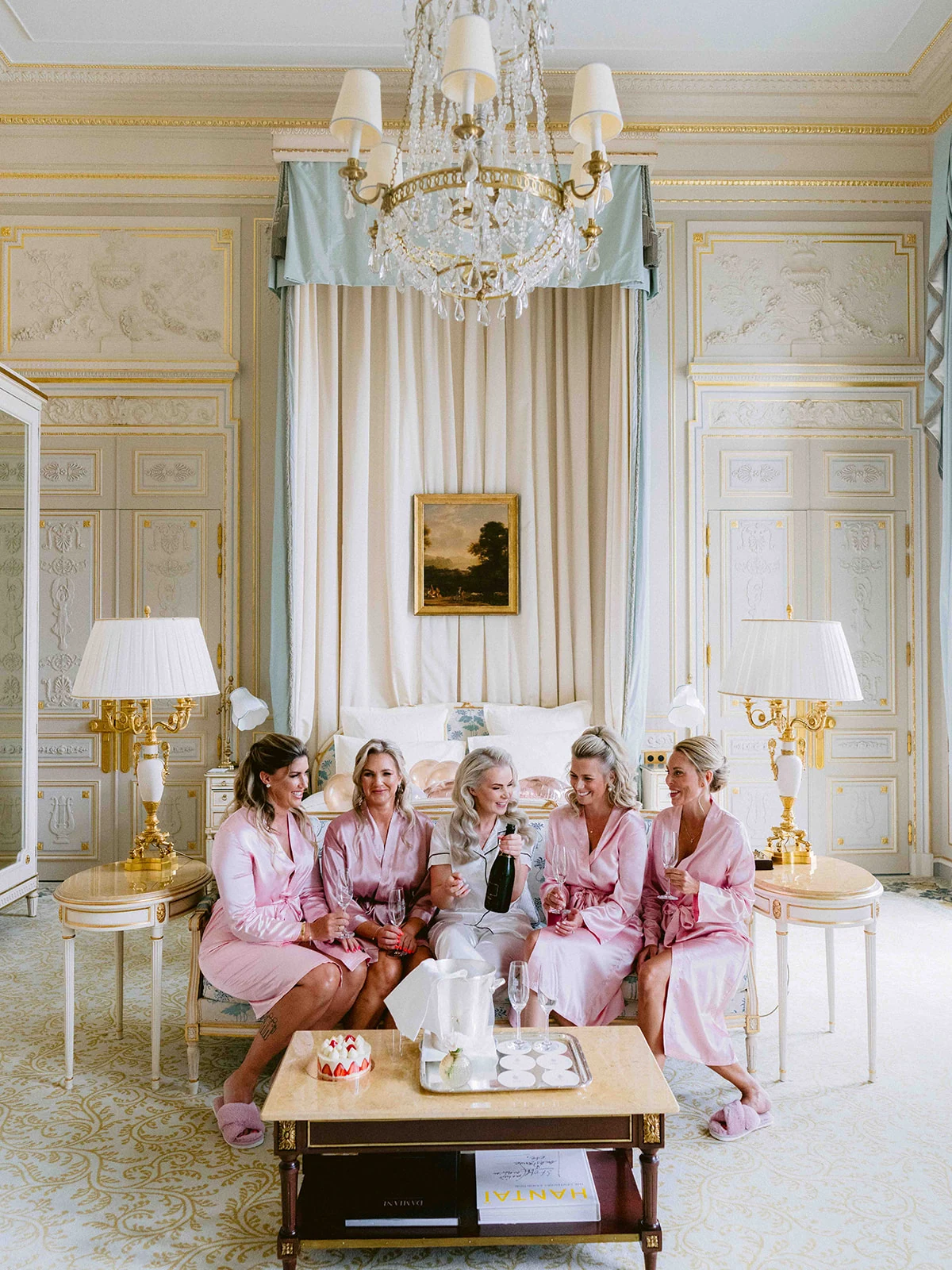
Wedding preparations inside the Ritz Paris Presidential Suite
Planning
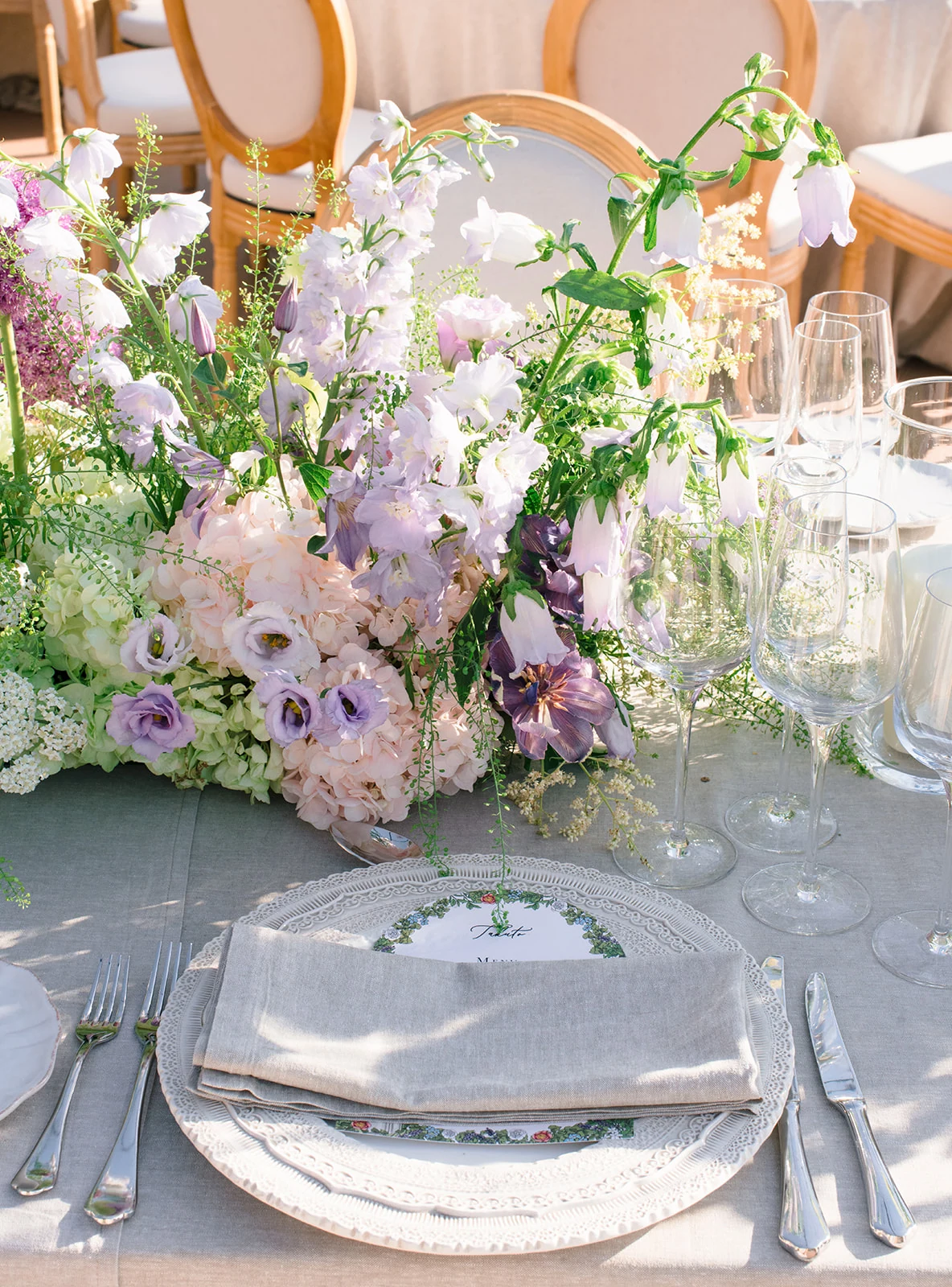
Floral wedding design at Villa Baulieu in Provence
Design
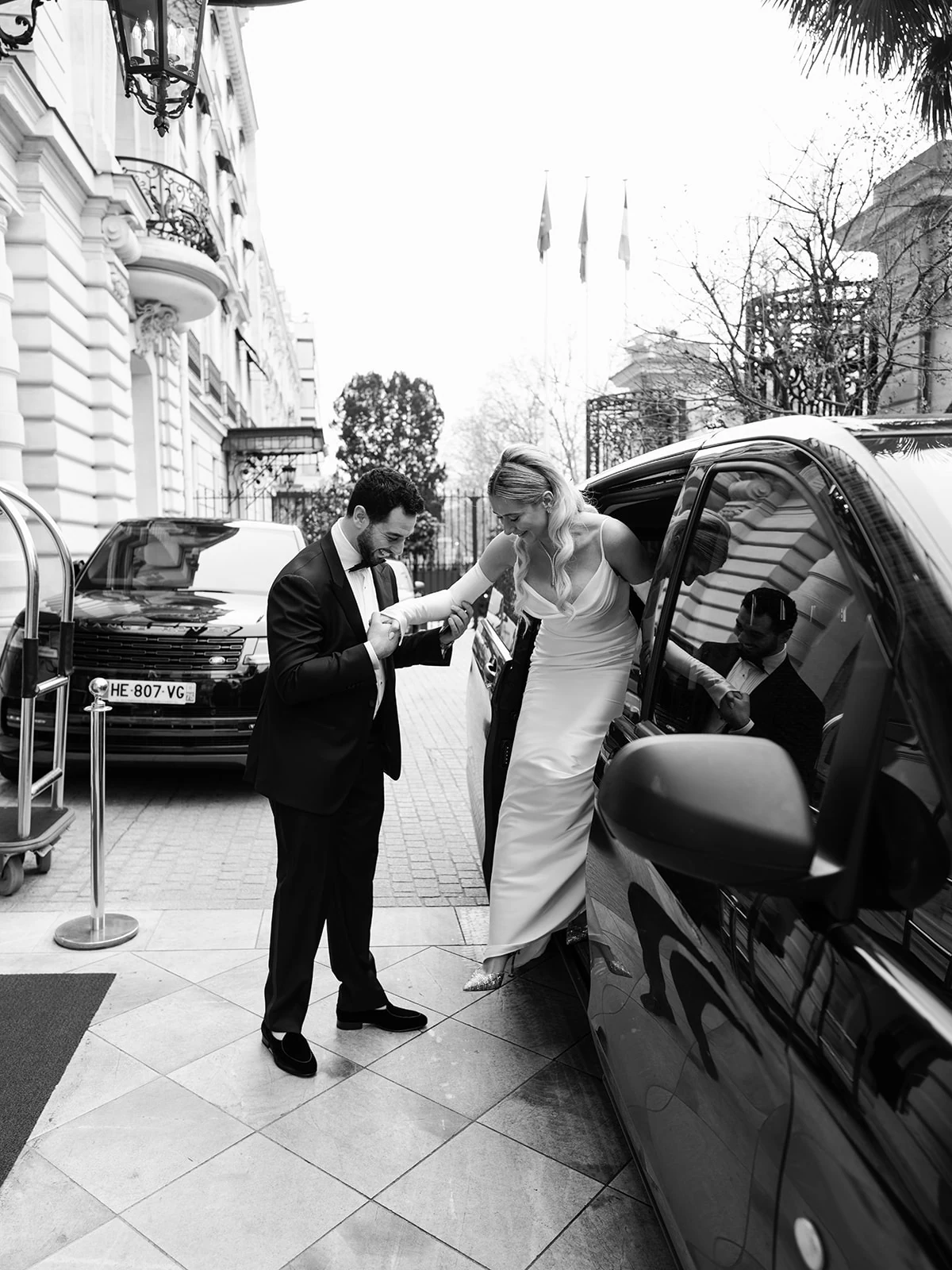
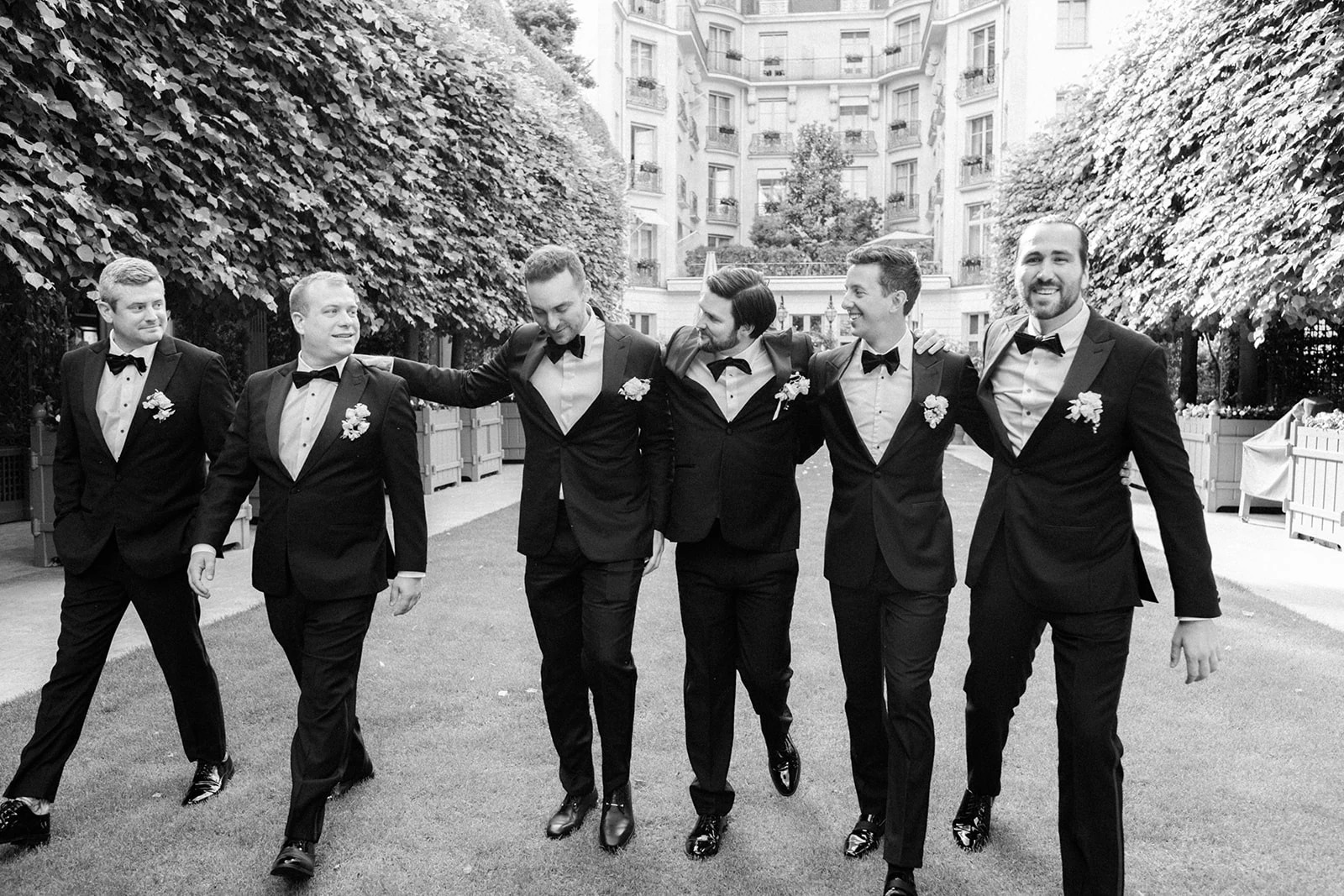
Bride and groom arriving at Shangri-La Paris
Travel
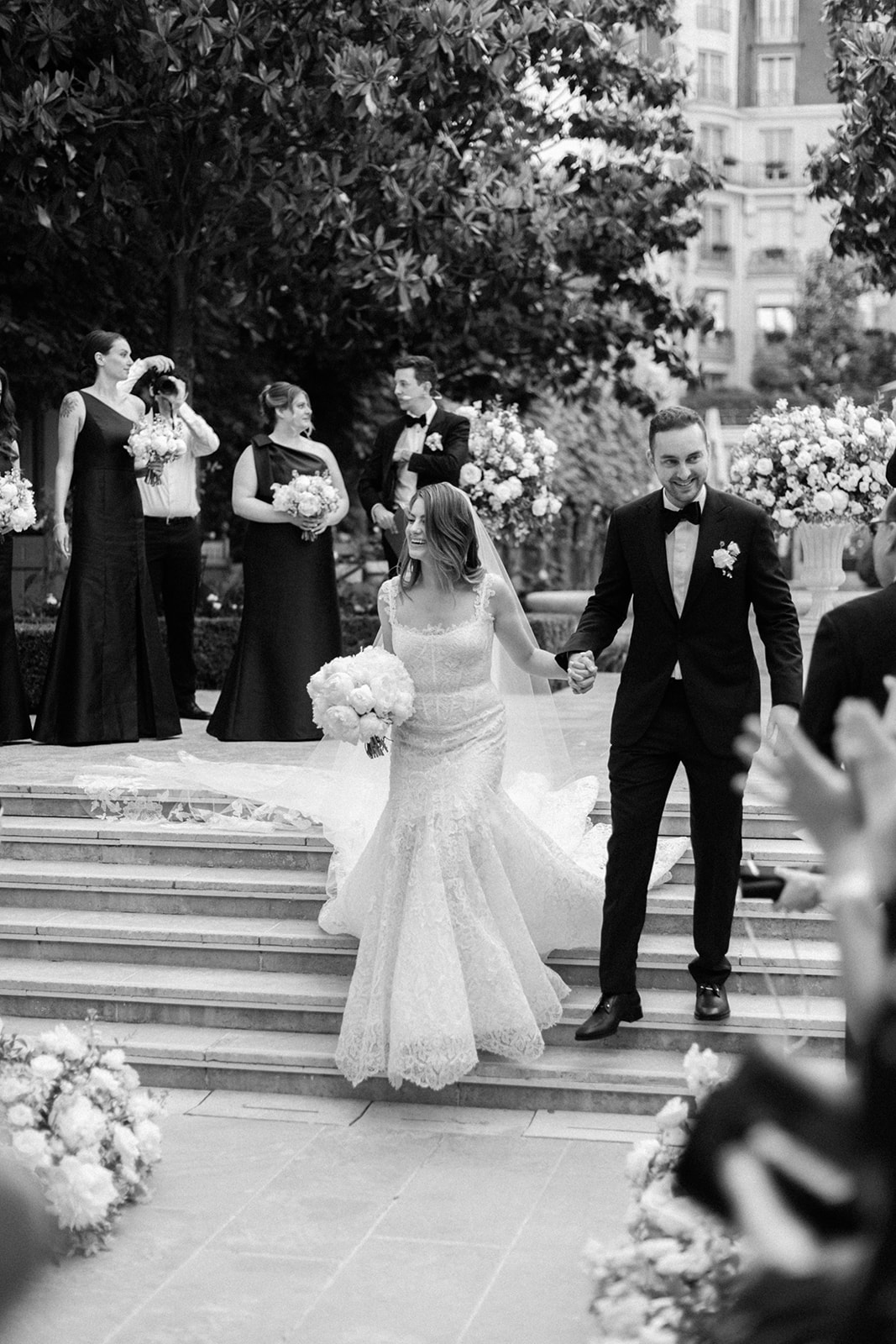
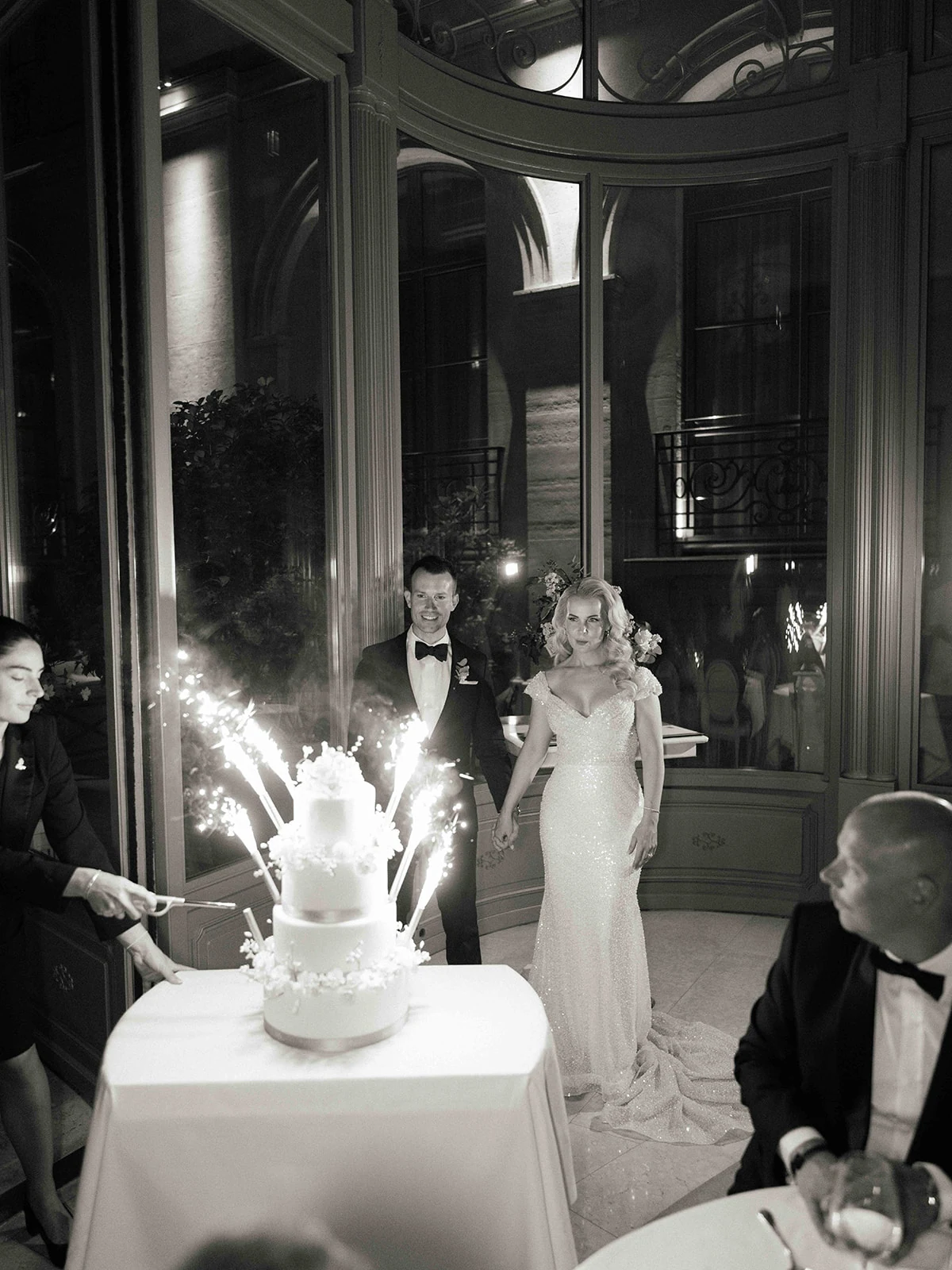
Wedding cake and reception moment at the Ritz Paris
Celebration

The distance is manageable when the communication structure is clear. It becomes difficult when the couple, planner, venue and vendors are all maintaining different versions of the schedule and decisions.

Choose a France-based planning lead

For a complex destination wedding, a bilingual planner with local production experience becomes the operational center. The venue coordinator manages the venue; the wedding planner manages the complete event on the couple’s behalf.

Use calls for decisions, not status updates

Share documents in advance, then use video calls to resolve choices. Record final approvals in writing. Establish who can approve cost changes, design revisions and schedule updates when family members or multiple creative teams are involved.

Account for the time difference

France is several hours ahead of the continental United States. Create predictable communication windows and response expectations. Urgency caused by time zones is usually a planning-system problem rather than a geographic problem.

05

Choose the right France

Paris, Provence and the Riviera offer different weddings

Paris: palaces, architecture and movement

Paris works for couples who want a city-wide experience: palace suites, private salons, fashion, restaurants and portraits within recognizable architecture. The tradeoff is logistics. Traffic, hotel access, security, guest movement and realistic travel windows must shape the timeline.

Provence: privacy, estates and outdoor dining

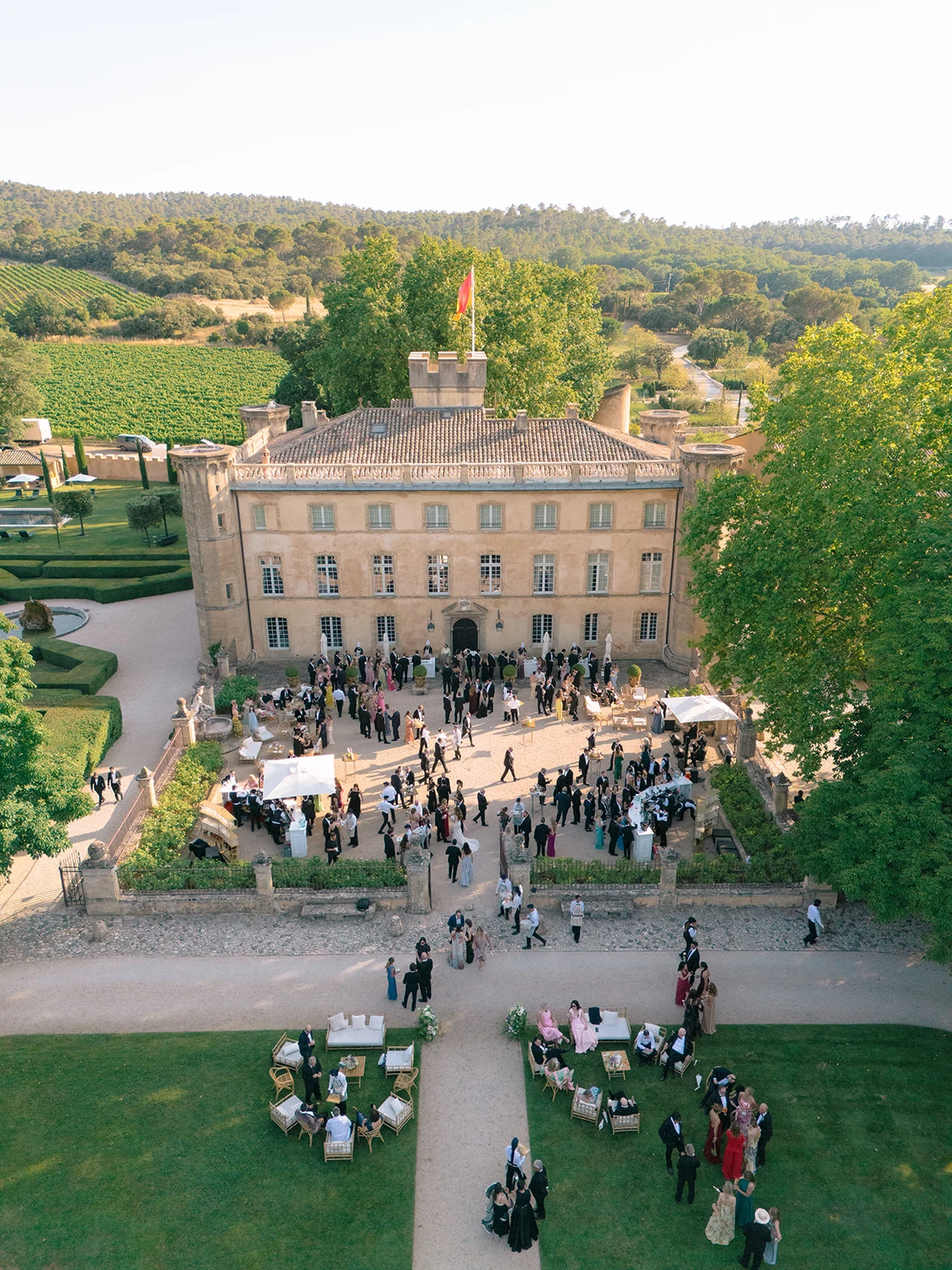
Provence creates an immersive destination weekend. Private estates can host welcome events, the wedding day and a final brunch in one environment. Remote locations may require more production, transportation and accommodation planning.

The French Riviera: sea views and resort energy

The Riviera suits villas, panoramic hotels, pools, terraces and a high-energy weekend. Nice provides a major arrival point, while Monaco, Saint-Jean-Cap-Ferrat, Antibes and Saint-Tropez offer distinct experiences. Summer traffic and major regional events can affect availability and transport.

Use the complete France wedding planning guide to compare regions and logistics, or explore the best wedding venues in France.

06

Euros, contracts and production

Build the budget in euros before converting it to dollars

French vendors generally quote and invoice in euros. A dollar estimate is useful for personal planning, but the contract exists in the invoiced currency. Exchange-rate movement, bank fees and international transfers can change the amount ultimately paid from a U.S. account.

Confirm whether taxes are included

French consumer-facing proposals often include VAT, but do not assume. Review every quote for tax, travel, accommodation, overtime, setup, breakdown and payment fees. Ask what happens if the event changes venue, date or duration.

Budget for the destination, not only the wedding day

Room blocks, transfers, welcome events, brunches, vendor accommodation, technical production and weather infrastructure may represent a significant share of the total. A venue with a higher rental price but complete infrastructure can be more efficient than a lower-priced property requiring extensive rentals.

Use qualified financial advice when needed

Questions involving tax treatment, international transfers or legal entities should be reviewed with the relevant accountant, attorney or financial adviser. The planner can organize payments but should not replace regulated advice.

07

The American guest journey

Make international travel feel intentional

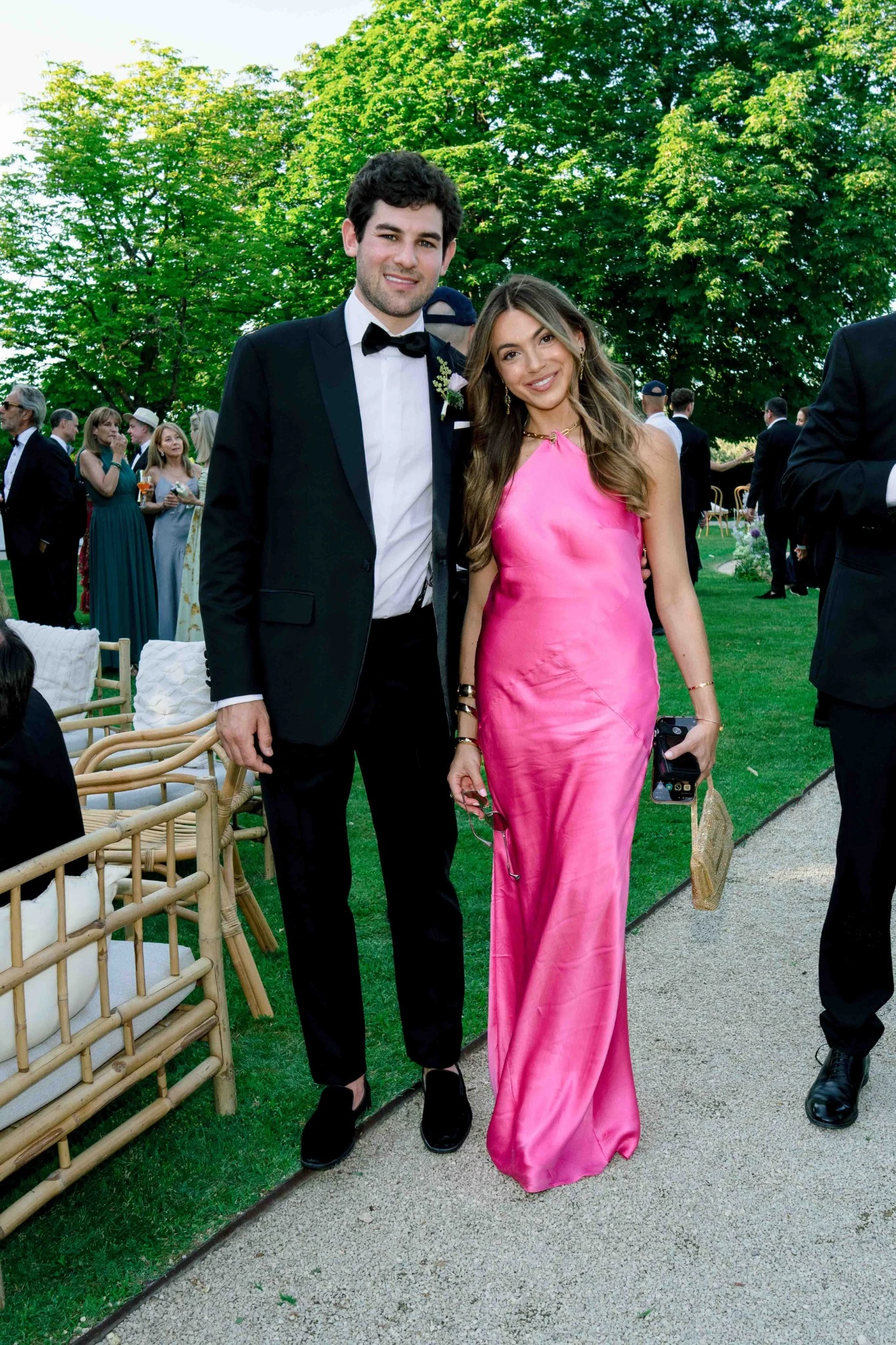
Editorial portraits of wedding guests in Paris
Arrival
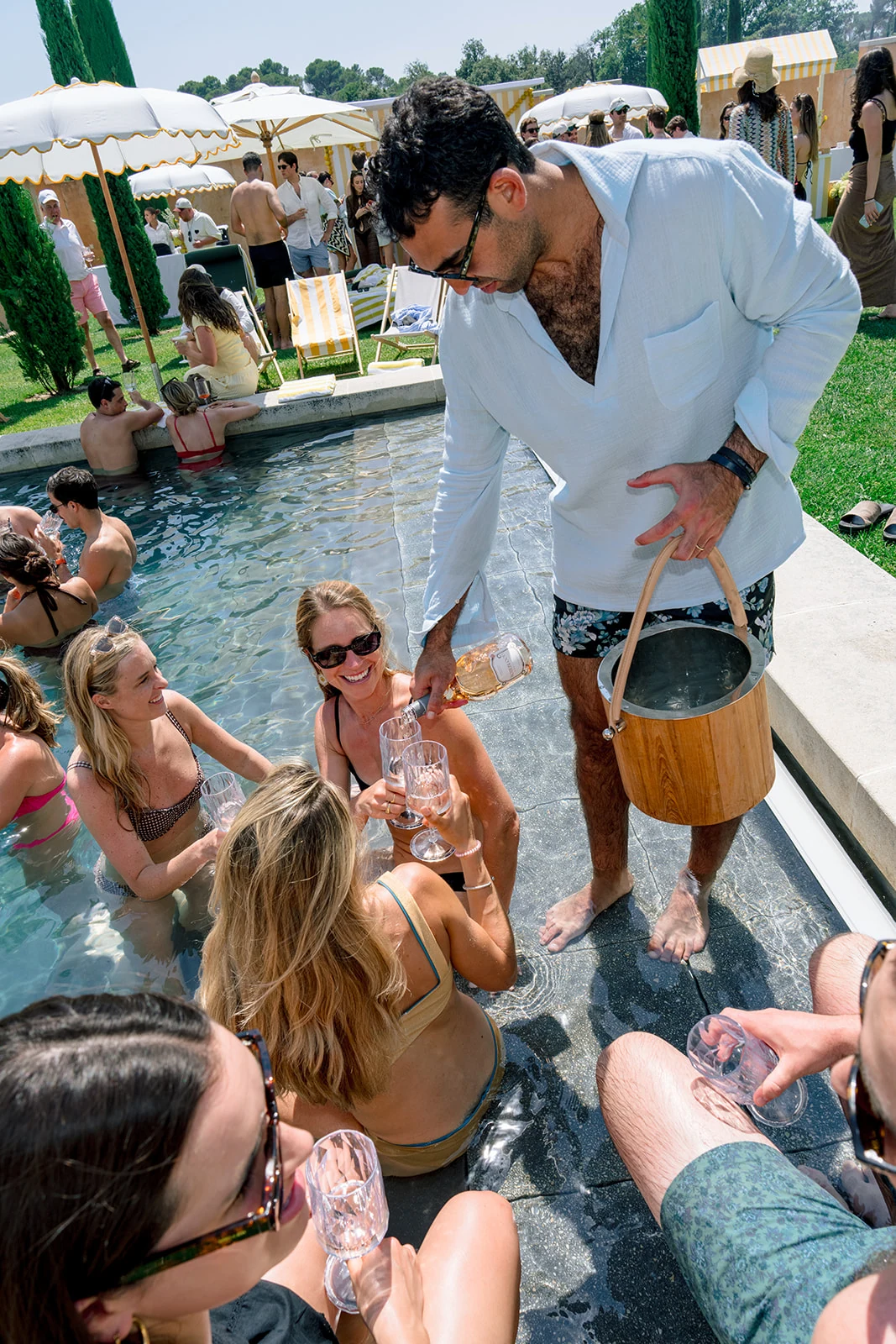
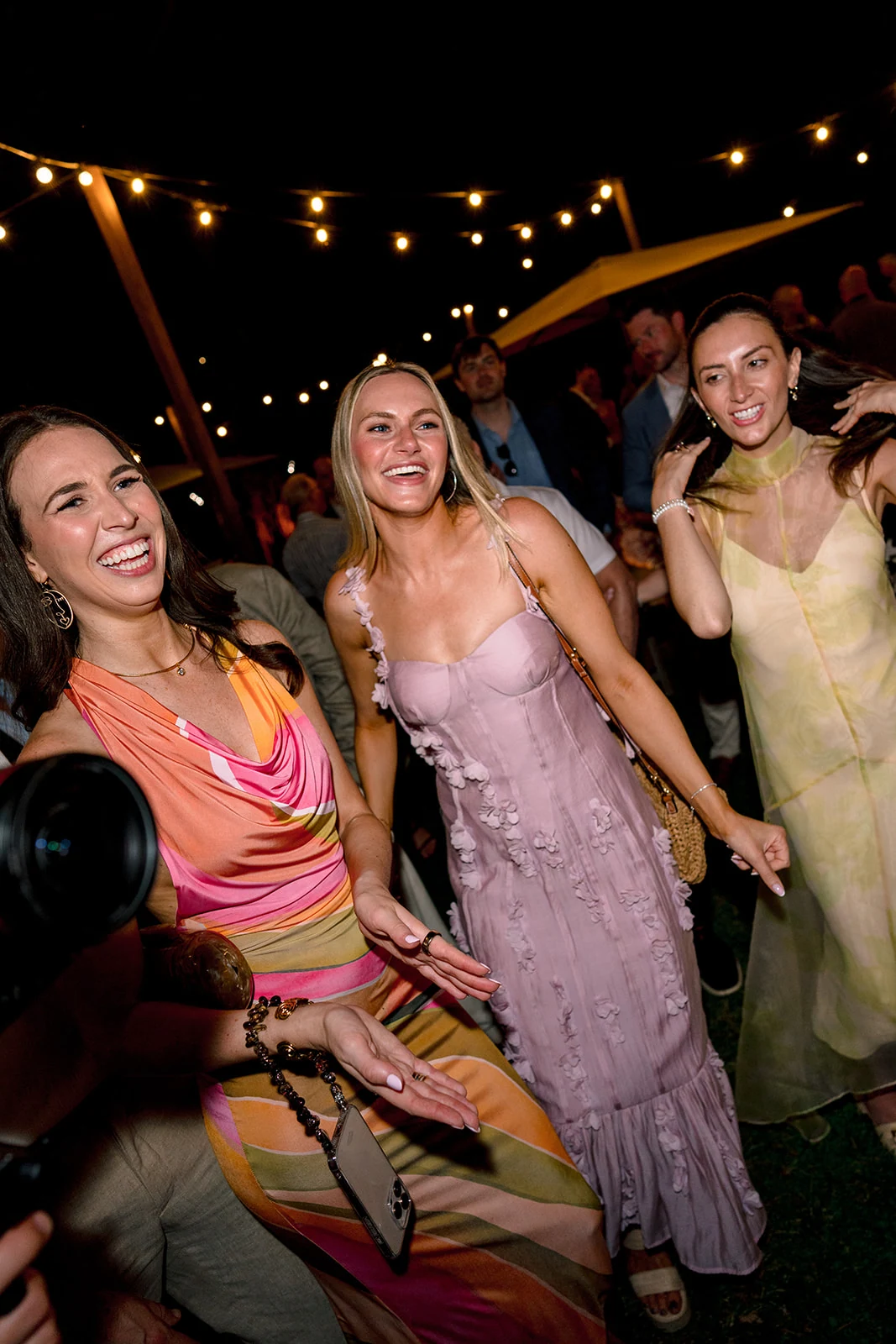
Guests celebrating at a champagne pool party in Provence
Welcome event
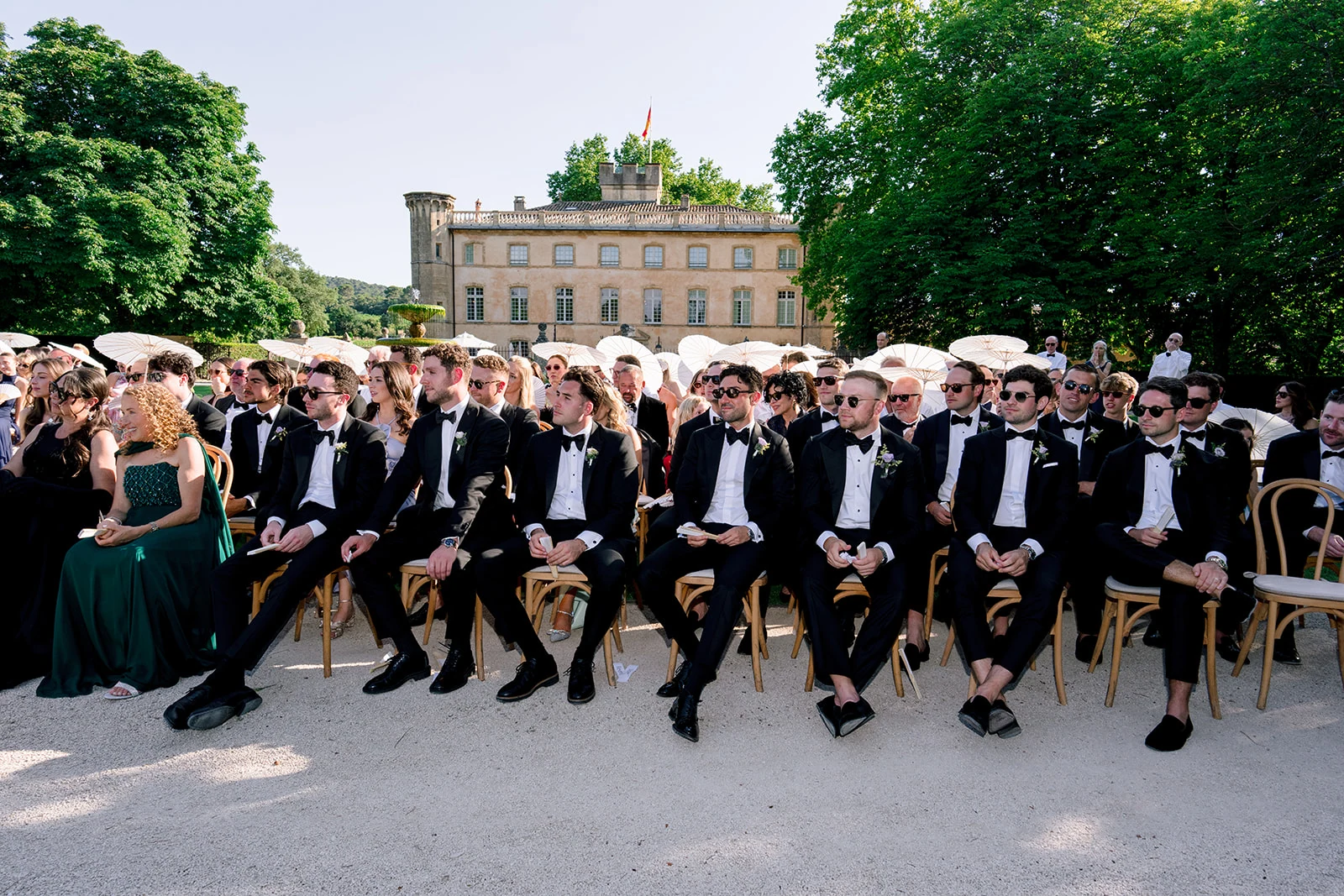
Guests seated for a wedding ceremony at Villa Baulieu
Wedding day
Relaxed post-wedding gathering at Villa Baulieu
Final event

Guests need a clear route from their home airport to their hotel and from their hotel to every hosted event. A beautiful venue can become exhausting when the final transfer is unclear or when multiple pickup points are introduced without support.

Publish practical information early

The wedding website should include recommended airports and train stations, hotel options, transportation, attire, terrain, weather expectations and the status of each event. State clearly which gatherings are hosted and whether any are optional or limited.

Group accommodations strategically

Keeping guests within one area simplifies transfers and creates social continuity. In Paris, proximity to the venue can reduce traffic exposure. In Provence, accommodation may be split between the estate and a nearby town. On the Riviera, room availability can change sharply during major events.

Do not make guests navigate late-night transportation alone

Professional shuttles or cars should be planned around the actual end of the celebration. Include late departures for guests who leave early and a controlled final departure for the party.

08

Photography and multi-day coverage

Plan the images around the real event

Destination photography works best when it is included before the timeline is finalized. Light, distance, access and guest experience determine what can be created without turning the celebration into a photo shoot.

Paris requires short, precise portrait windows

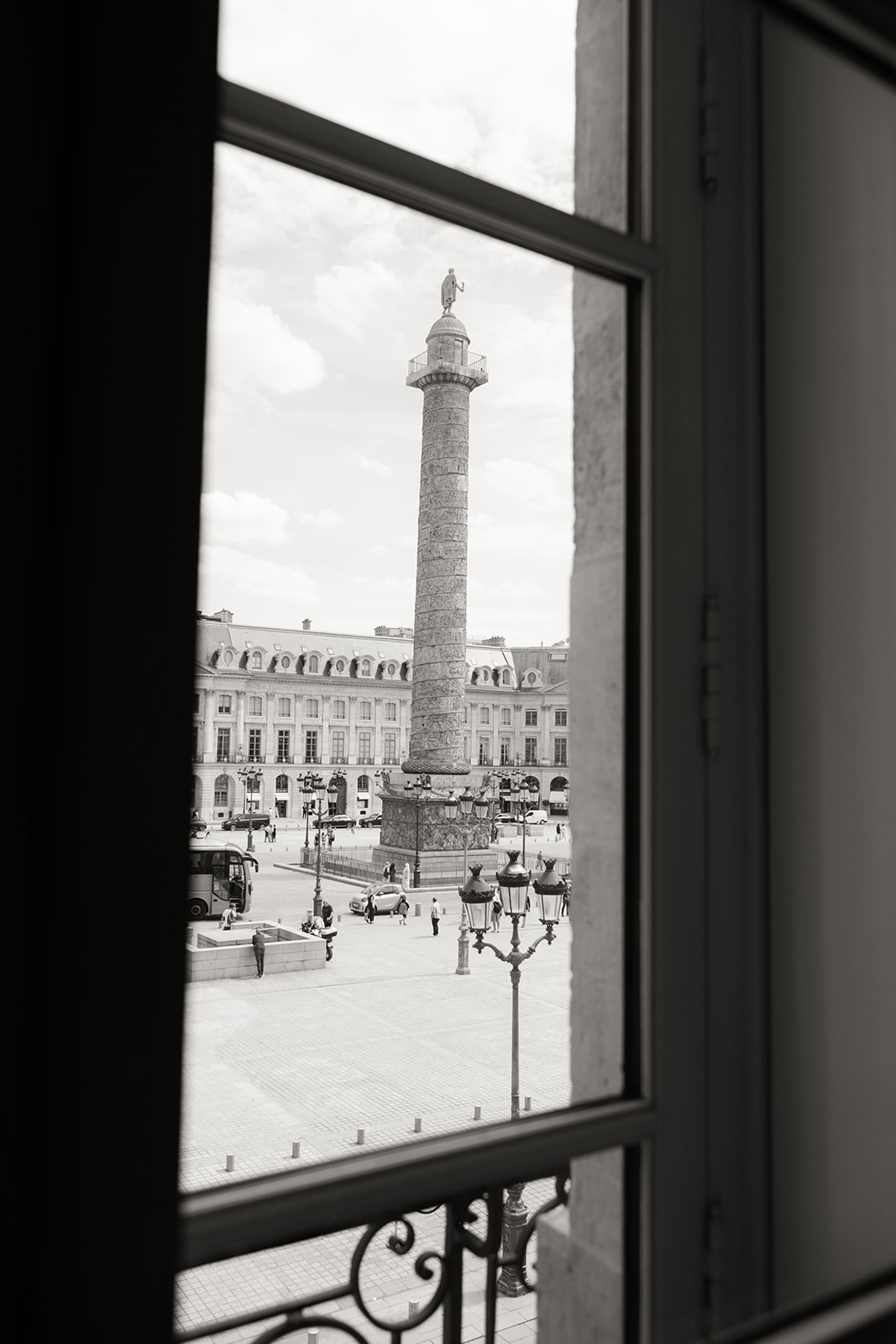
Place Vendôme, Palais Royal, the Louvre and other city settings can be effective when they are close to the venue and timed correctly. A long city route may consume the cocktail hour and expose the couple to traffic, crowds and delays.

Southern France requires heat and daylight planning

Summer ceremonies may need shade and later timing. Sunset can occur during dinner, so portrait plans must be coordinated with service and speeches. Wind can also affect veils, ceremony structures and sound.

Photograph the complete destination story

Welcome dinners, civil ceremonies, pool parties and after-parties reveal relationships that the wedding day alone cannot. Multi-day coverage creates continuity and allows each event to have a distinct visual language.

Explore my work as a Paris wedding photographer, review weddings in France, or read the complete France wedding planning guide.

09 — Frequently asked questions

American weddings in France:
the essential questions.

Direct answers to the legal and logistical questions American couples ask before planning the celebration.

Can two American citizens legally marry in France?

A French civil marriage generally requires a qualifying connection to a municipality, and eligibility must be confirmed by the mairie. Many American couples complete the legal marriage in the United States and hold a symbolic ceremony in France.

Will the United States recognize a marriage legally performed in France?

The U.S. Embassy explains that a French marriage that is valid under French law is generally recognized in the United States, although legal effects can vary by state and circumstance. Confirm any specific issue with the relevant authority or attorney.

Do we need to register our French marriage with the U.S. Embassy?

The U.S. Embassy states that couples are not required to register a French marriage with the embassy. Keep certified copies of the French marriage certificate and obtain any translations or apostilles required for later administrative use.

Can we have a symbolic ceremony if we are already legally married?

Yes. This is a common structure for destination weddings. The symbolic ceremony can include vows, rings, readings, music and a celebrant while the legal marriage is completed separately.

How far ahead should Americans plan a wedding in France?

For a sought-after venue or multi-day event, 12 to 18 months is a useful benchmark. Earlier planning can help with exclusive-use properties, peak dates, room blocks and priority vendors.

Should we hire a French wedding planner?

A France-based planner is strongly recommended for a complex event, especially when the wedding includes several days, a private estate, guest transportation or substantial production.

Can a French photographer work with an American planning team?

Yes. Clear English-language communication, detailed contracts and early timeline coordination allow the photographer to work directly with the couple, U.S.-based creative partners, the France-based planner and the venue.

France is the destination.
The experience should feel entirely yours.

Planning your wedding from the United States

Created for those who
notice everything.

Start the conversation

Paris · Provence · French Riviera · Worldwide
jeremy@photosmariage.fr · +33 6 38 55 38 08