Use it as the opening event
Let guests meet beside the water before the more structured wedding day.
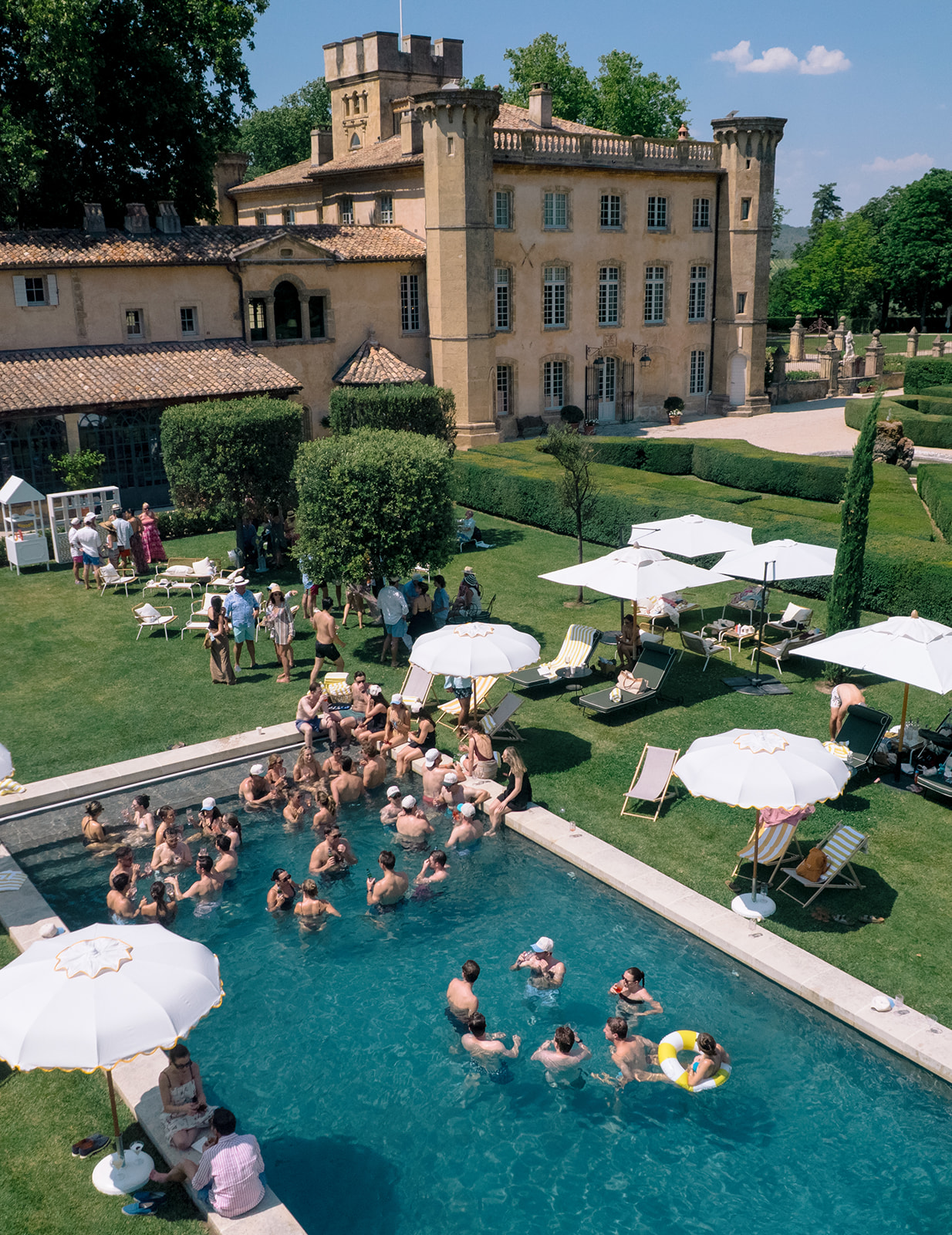
Destination wedding weekend guide
01 — A different way to open the wedding weekend
A destination wedding pool party can be the first real moment of the celebration: relaxed enough for guests to connect, designed enough to feel intentional, and energetic enough to establish the tone of the entire weekend.
For American couples getting married in France, the classic sequence often includes an opening gathering, the wedding day and a final event. In a three-day wedding weekend in France, the pool party can take place on the first or final day without becoming the subject of the entire weekend.
Used this way, the pool party is not a recovery event. It becomes the welcome party itself. It can feel more spontaneous than a seated dinner, create more movement between guests and give the couple a genuine opportunity to spend time with everyone before the wedding day becomes more structured.
The most successful pool parties are not improvised. They look effortless because the shade, music, service, furniture, food, safety, transportation and event timing have all been planned with the same precision as the wedding reception.
This specialist article is part of the complete guide to planning a wedding in France from abroad.
Wedding pool party ideas
The most effective ideas combine one clear visual direction with practical service. Choose a small number of elements that guests can actually use, then connect them through color, music and food.
Let guests meet beside the water before the more structured wedding day.
Use an open arrival window, relaxed seating and food available in phases.
Combine white structure, yellow accents, lemons and clean striped details.
Create shade and a graphic visual identity with furniture guests can really use.
Integrate the bar facade, menu, glassware and service area into the decor.
Keep the menu short, summery and fast enough for a busy arrival period.
Give international guests a recognizable French food experience.
Use smaller portions, strong ingredients and a clear vegetarian alternative.
Balance cocktails and hot food with watermelon, herbs and seasonal produce.
Introduce a final service moment before guests return to their rooms.
Start with identity and conversation, then raise the tempo once the pool fills.
A saxophonist or percussionist can create one deliberate high point.
Turn guest comfort into a visible, well-designed part of the event.
Explain whether guests should swim, change, stay for dinner or bring a cover-up.
When venue rules allow it, use lighting and a final service to close the afternoon.
Why it works
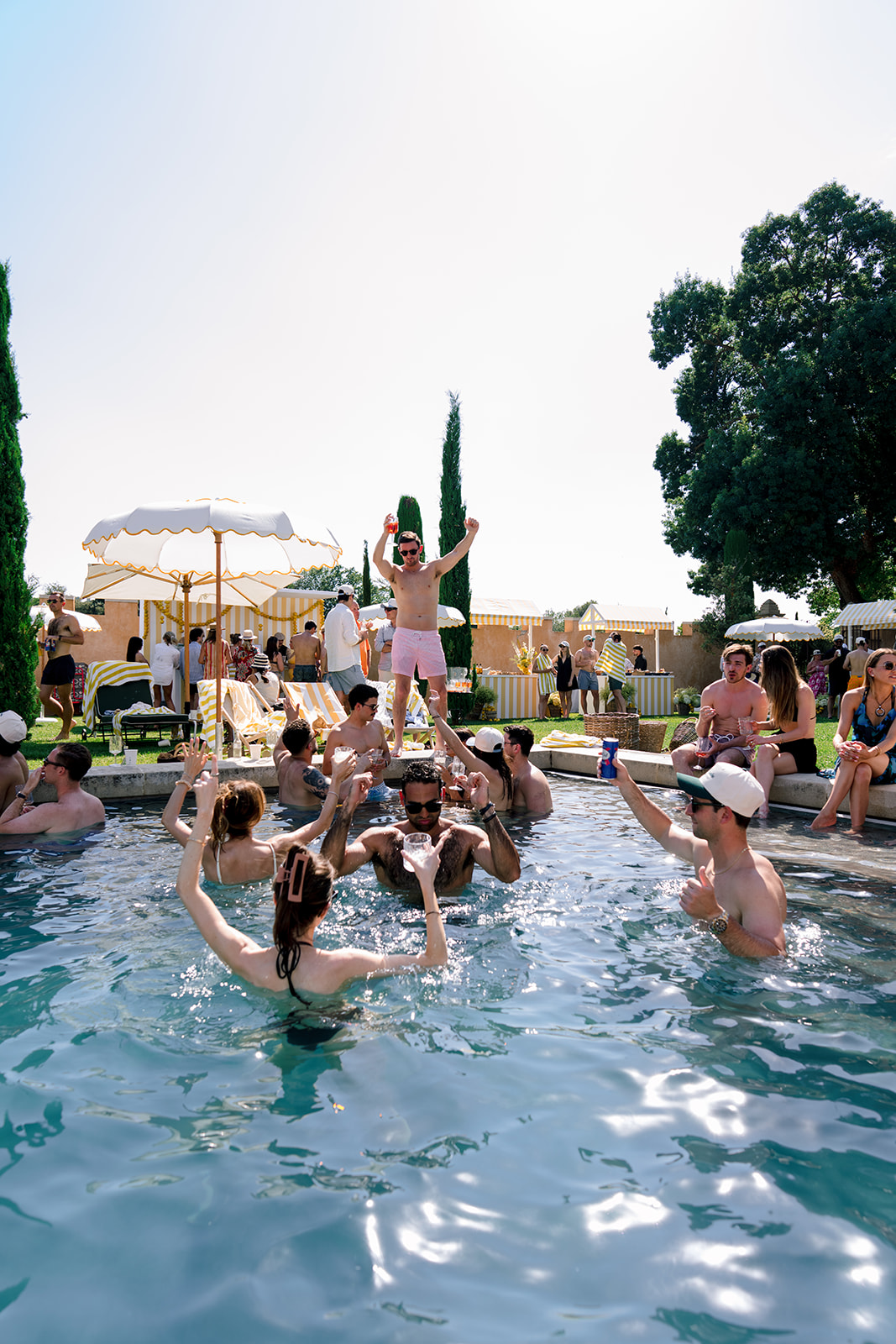
A wedding pool party works because it gives guests a flexible, social event built around movement rather than assigned seating. In France, it is especially effective at a private estate or coastal property where the pool is already part of the destination experience.
Destination weddings bring together people who may not have met before. Some guests know the couple from childhood, others from college, work, family or a different country. A formal dinner can place those groups at separate tables. A pool party creates circulation. Guests arrive at different times, move between the bar and the food stations, sit in small groups, swim, dance and meet without needing a structured introduction.
For couples planning from the United States, travel days can be fragmented. Some guests reach Provence through Marseille, others arrive through Paris or Nice, and delays are common. A pool party with a generous arrival window is more forgiving than a welcome dinner with a fixed seating time. Guests can join when they are ready without feeling that they have missed the entire event.
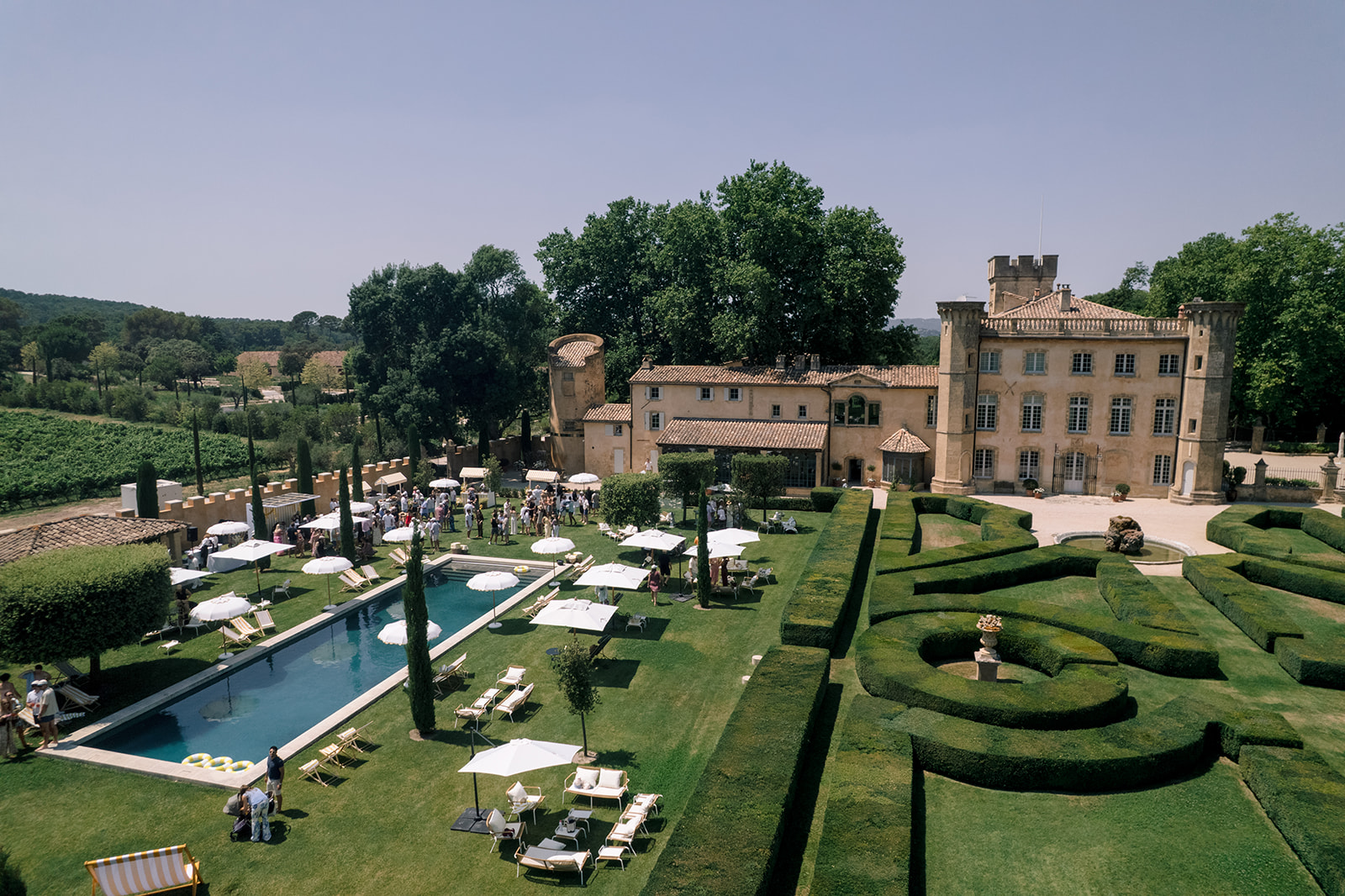
A private estate, Mediterranean villa or Provençal château often has a pool that expresses the character of the property better than a conventional event room. The first view of striped umbrellas, pale stone, citrus trees, cold drinks and a DJ beside the water can communicate the South of France in seconds.
The event should not look like a casual copy of the wedding day. A pool party can have its own dress code, menu, music and color direction. The wedding may be formal and architectural; the pool party can be bright, graphic and playful. That contrast makes the weekend feel curated rather than repetitive.
On the wedding day, the couple moves through preparations, ceremony, portraits, cocktail hour, dinner, speeches and dancing. Even during a long celebration, there is limited time for real conversations. A pool party provides several unstructured hours in which the couple can greet guests without a rigid schedule.
02 — Rethink the order
“The pool party does not have to be the ending.
It can be the opening scene.”
Opening event or recovery event
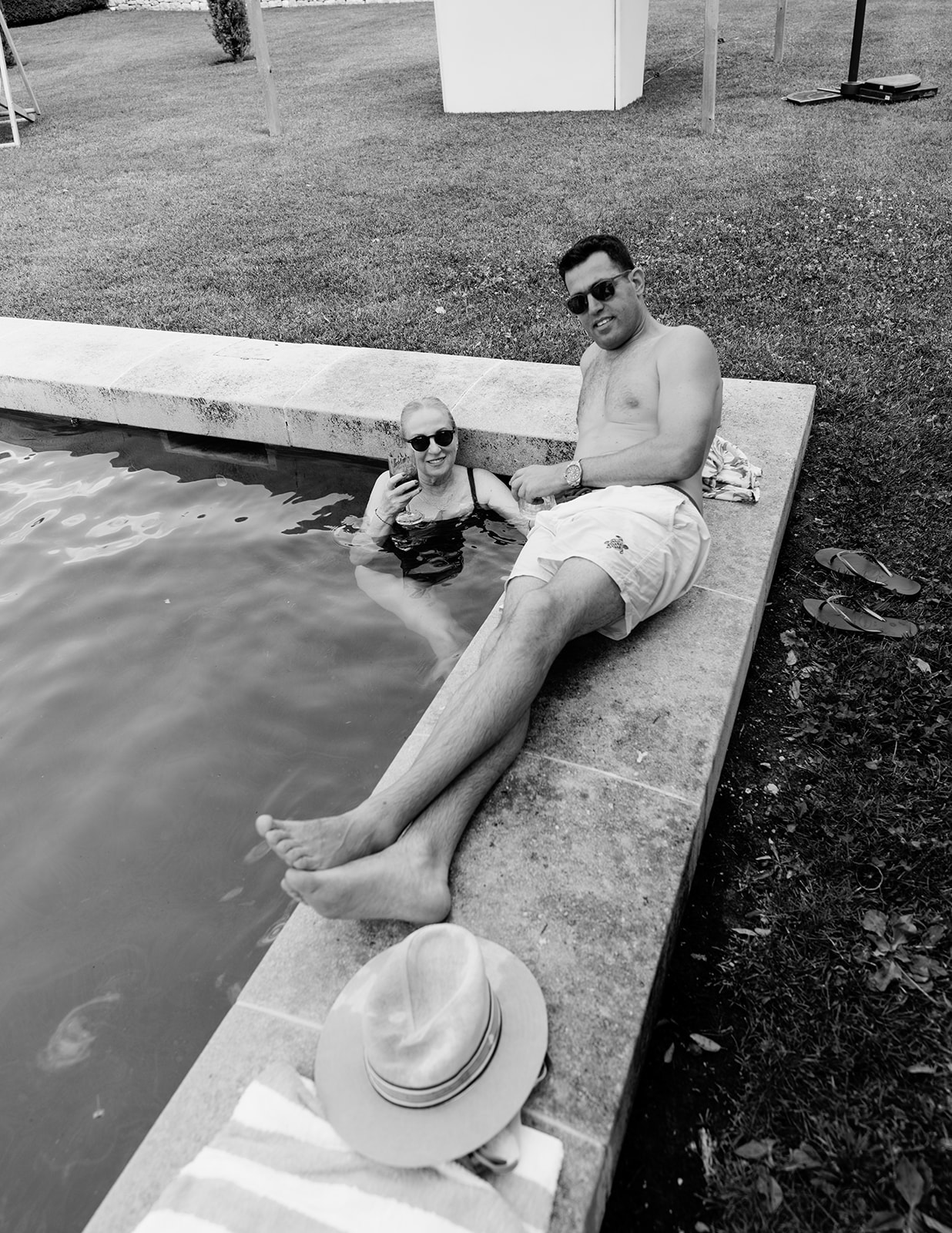
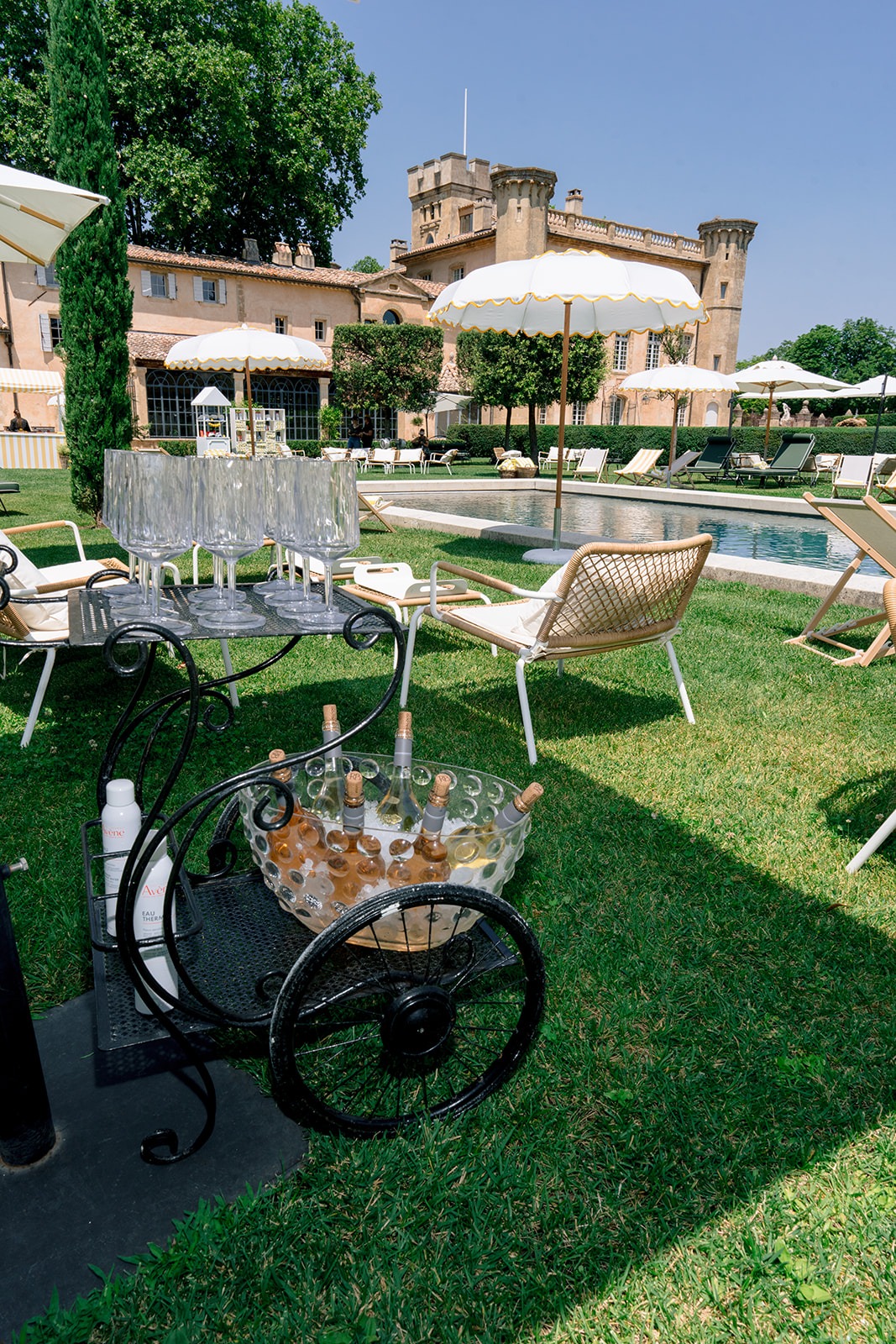
For a three-day wedding weekend, place the pool party on day one for immediate energy or on day three for a more relaxed final gathering. Keep the wedding day itself separate so guests and the production team can focus on the central celebration.
This is the most interesting option for couples who want the weekend to begin with energy rather than formality. Schedule the event on the afternoon of the first hosted day, with a broad arrival window and enough time for international guests to recover from travel. The couple can welcome everyone in a setting that encourages immediate interaction.
An opening pool party works especially well when the venue is privately booked for several nights. Guests can check in, change and walk directly to the event without another transfer. It can replace a traditional welcome dinner or lead into a smaller dinner for close family and the wedding party later that evening.
The traditional day-after format remains effective when guests are staying on site or close to the venue. The atmosphere should be deliberately flexible. Avoid an early start after a late-night party. A noon or early-afternoon opening, informal food and an open arrival window make the event feel restorative rather than compulsory.
For a four-day celebration, the pool party can take place before the official welcome dinner. This separates travel recovery from the more formal opening event. It is useful when many guests are already staying at the property and the couple wants one private, high-energy afternoon before the full program begins.
Guests meet quickly, the weekend starts with movement, and the event can replace a seated welcome dinner.
A flexible final event with casual food, swimming and no pressure to arrive at a specific minute.
A relaxed first gathering that leaves room for a separate welcome dinner or rehearsal event.
Build the rhythm
A pool party should not begin at maximum intensity. The strongest events develop in phases: arrival, conversation, food, swimming, dancing and a final moment that gives the gathering a clear ending. Three to five hours is often enough, but the exact duration should reflect heat, travel, sound restrictions and the following day’s schedule.
Open with chilled water, a signature cocktail, nonalcoholic options and light music. Staff should direct guests toward changing rooms, towels, restrooms and shaded seating. The bar needs to be fully operational before the first shuttle arrives.
Do not make guests wait too long for substantial food, especially in the heat. Open the lighter stations first: salads, fruit, chilled vegetables and small Mediterranean plates. The burger, grilled-food or crêpe station can follow once the event has settled.
The DJ can increase the tempo once most guests have arrived. This is the moment for swimming, dancing and interactive service. Avoid forcing a single announcement or activity unless it genuinely reflects the couple.
Bring out gelato, fresh fruit, crêpes or a final savory snack. Give guests enough time to return to their rooms before the evening program. If the pool party is the only event that day, it can continue into sunset, but lighting, temperature and noise limits must be built into the plan.
A pool party on the morning of the wedding is rarely ideal. Heat, wet hair, makeup, travel and alcohol can create stress before preparations begin. Keep the pool event on a separate day unless the wedding ceremony happens much later and the guest program has been designed around it.
Before setting the hours, compare the best time of year for an outdoor wedding in France, including heat, daylight, rain and regional conditions.
A bright visual identity
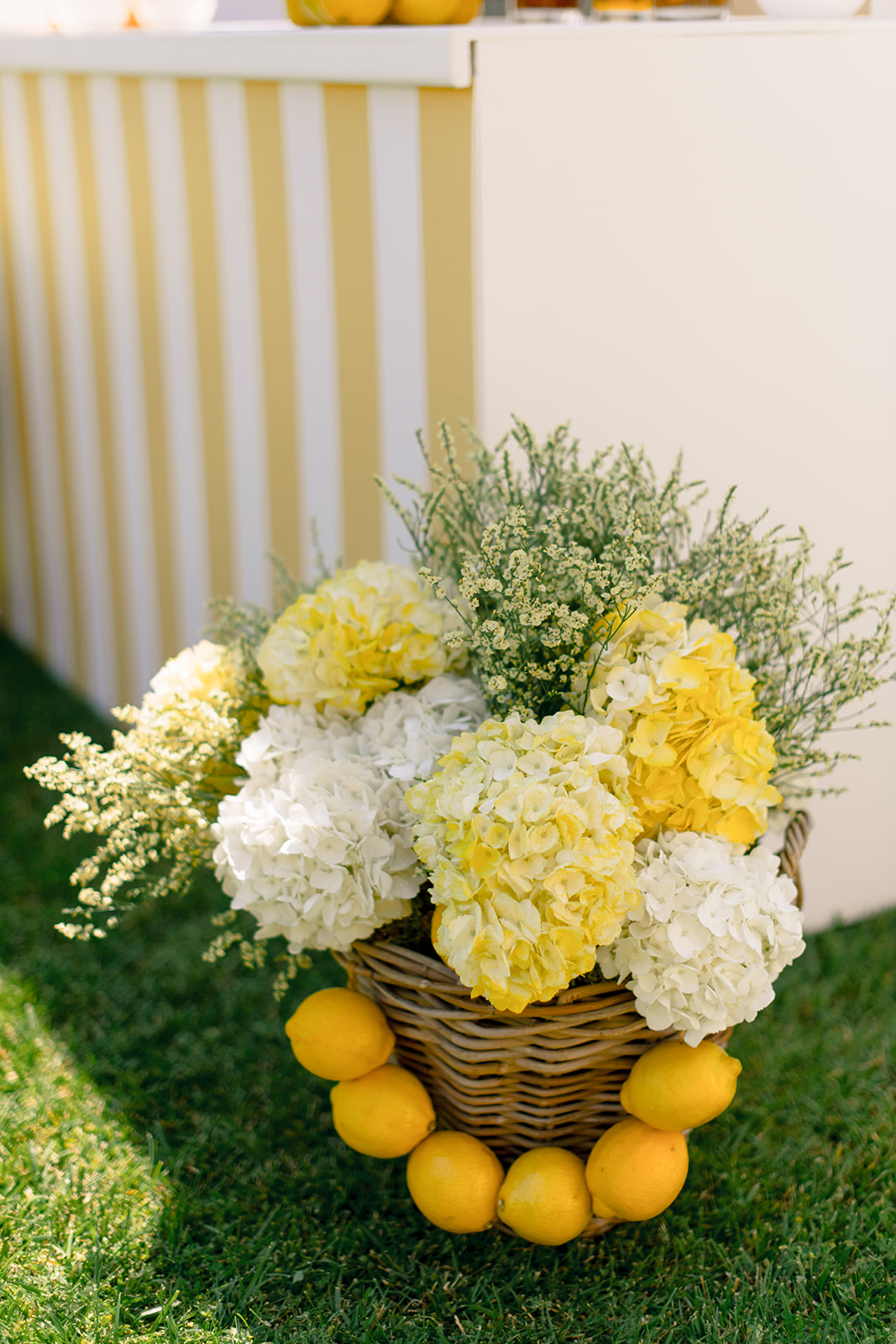
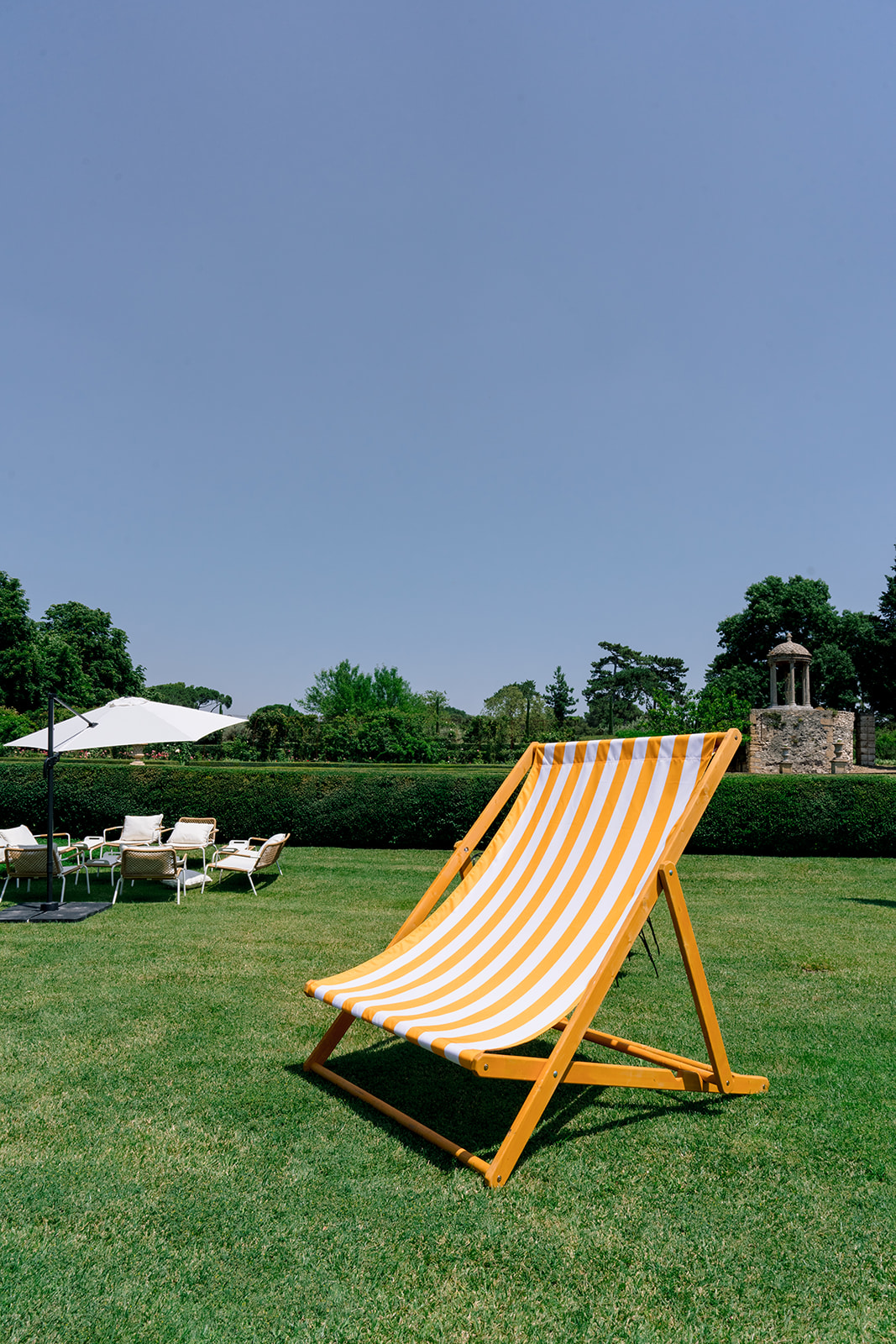
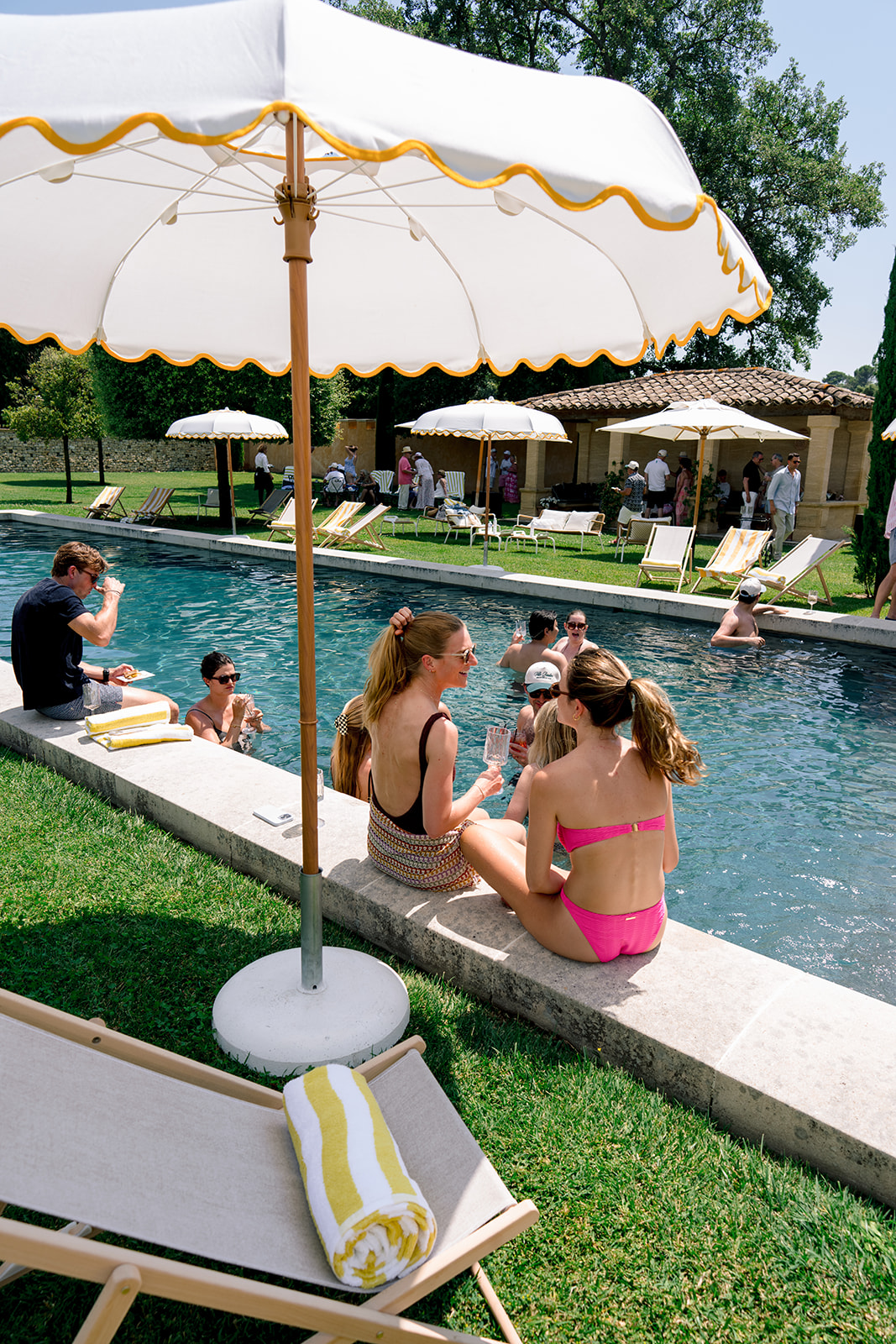
Yellow and white work especially well around a pool because they feel fresh, visible in strong sunlight and unmistakably summery without becoming childish. The palette can reference lemons, striped Riviera umbrellas, pale stone, white towels and the saturated color of the water. The result can be graphic and editorial rather than rustic.
White should provide the visual structure through linens, umbrellas, lounge furniture, towels and signage. Yellow can appear through flowers, citrus, napkins, menus, bar details and selected furniture. Keeping the ratio controlled makes the design feel intentional and gives the photographs a cleaner visual rhythm.
A poolside setup can look empty when every decorative element sits at table level. Use umbrellas, fabric canopies, tall floral moments, sculptural signs and vertical bar details to create layers. The design should remain stable in wind and should not block the view or create obstacles near the water.
Lemon displays, bowls of fruit, yellow glassware, striped paper details and a visually designed salad or dessert station can reinforce the palette. The food service should feel integrated rather than hidden behind generic catering equipment.
This is not a styled shoot. Fabrics will be wet, guests will move chairs, towels will accumulate and glassware will travel. Choose materials that remain attractive once the event is active. Use nonbreakable drinkware where required and keep fragile decorative pieces away from the pool edge.
05 — The bar sets the pace
“Cold drinks, strong design,
and service that never slows down.”
Outdoor cocktail service
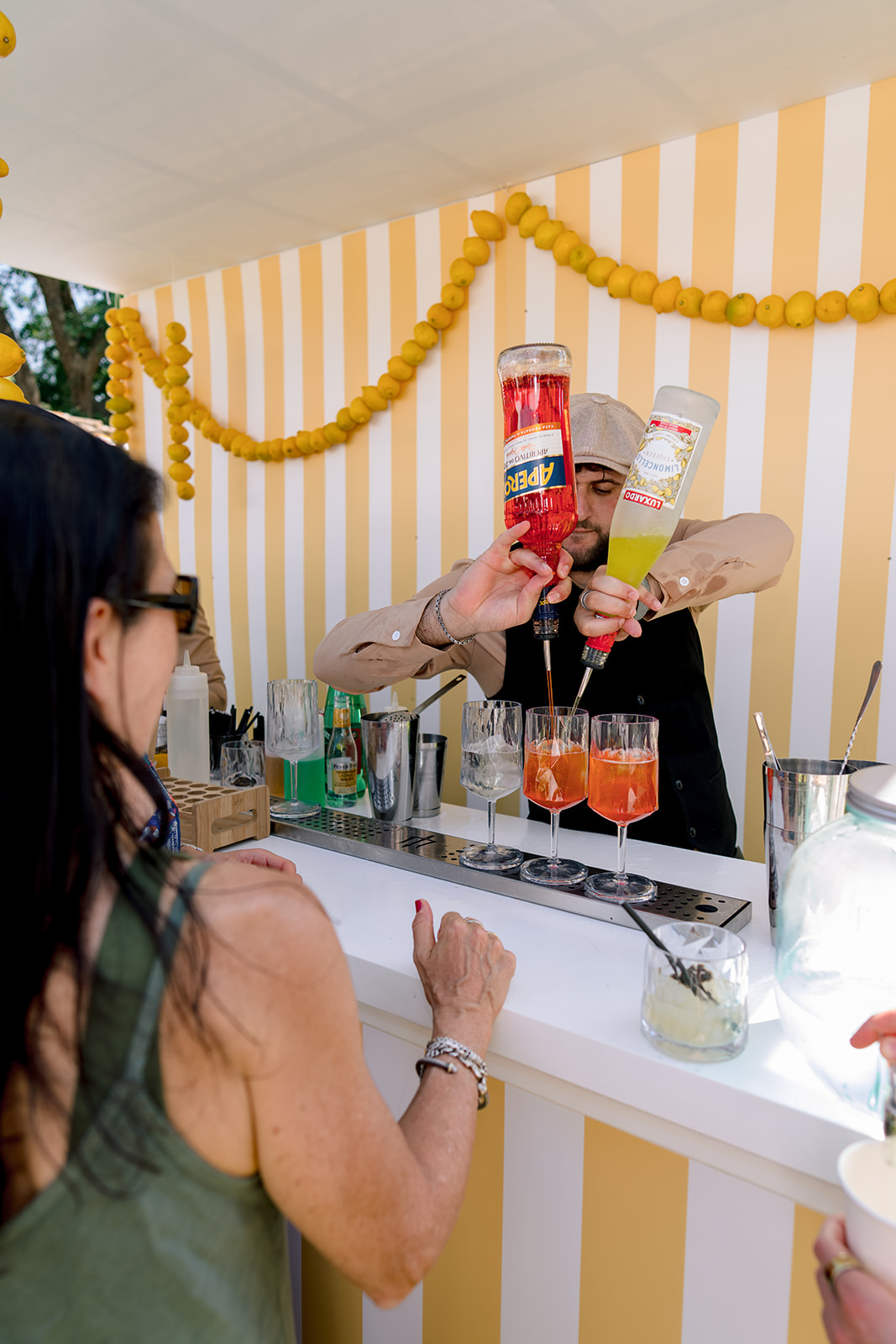
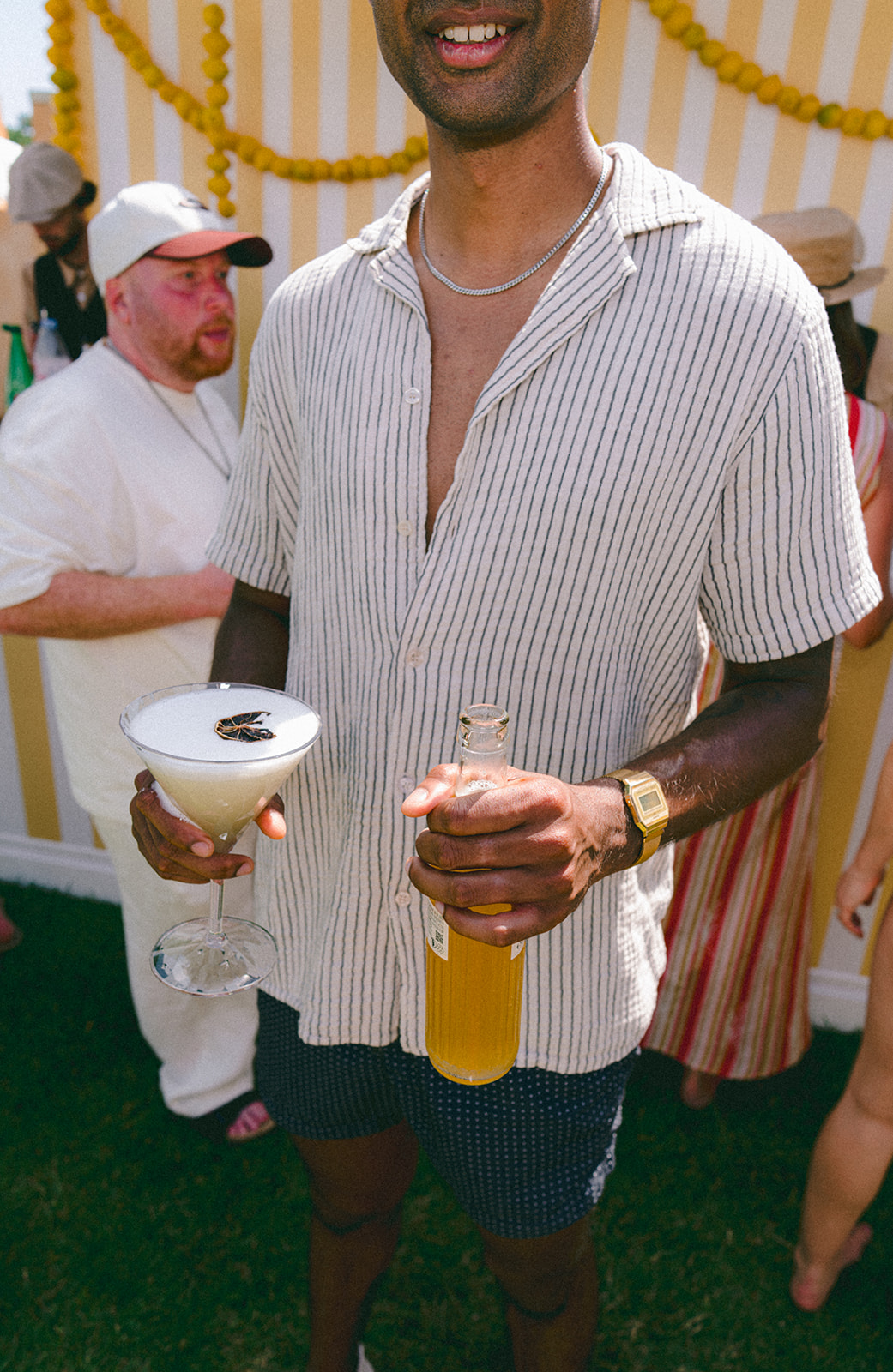
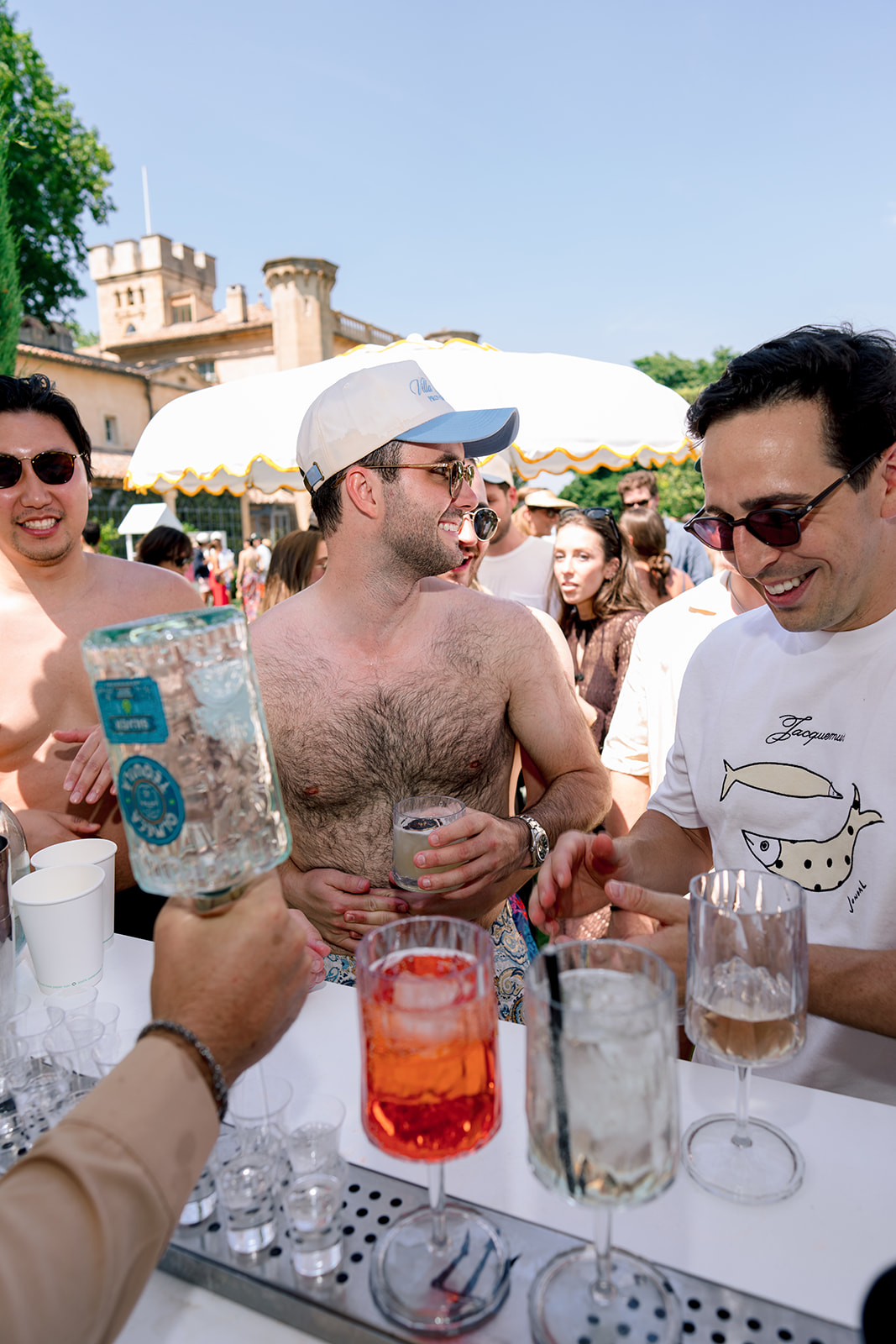
The outdoor bar is often the busiest point of the pool party. It should be visible, shaded, properly staffed and designed as part of the event. A professional bartender creates more than drinks: the movement, conversation and presentation around the bar become part of the atmosphere.
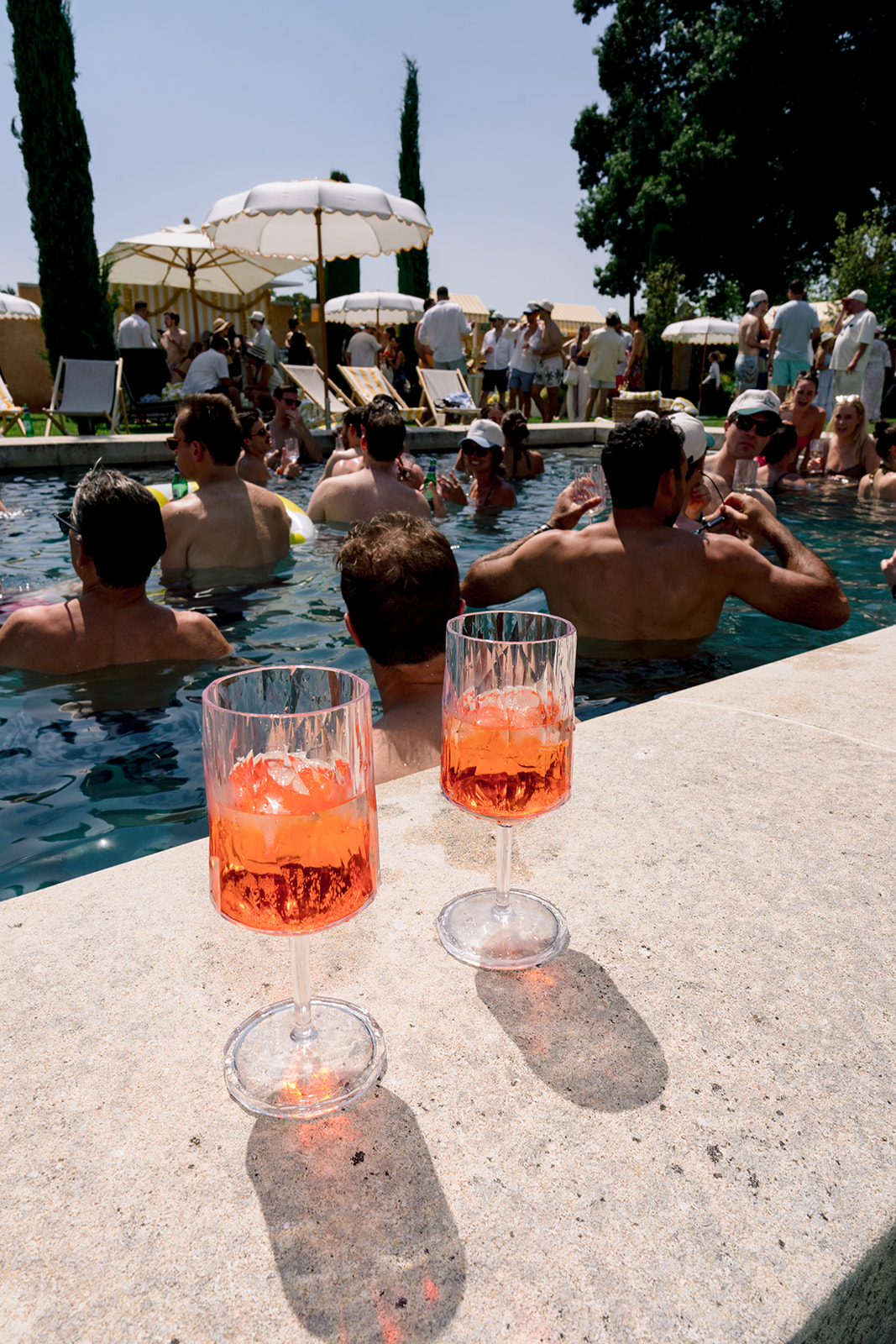
Three well-executed cocktails are stronger than a long menu that slows service. Build one light signature drink, one more expressive option and one alcohol-free cocktail with the same level of presentation. In the South of France, citrus, basil, peach, melon, cucumber, rosemary and local herbs can create a sense of place without turning the menu into a cliché.
Balance alcohol with hydration. Cold still and sparkling water should be visible and easy to reach. Consider spritz-style drinks, low-alcohol cocktails, fresh lemonade and chilled tea. Avoid designing the entire experience around strong spirits when guests are swimming and standing in direct sun.
A pool party may have a flexible start time, but shuttles still create waves of arrivals. The number of bartenders, prep space, ice capacity and glassware rotation should be calculated for the busiest twenty minutes, not the average pace of the event.
Guests and cameras will see the service area. Hide packaging, empty bottles, coolers and waste. Plan power, water, drainage, ice delivery and replenishment before the event. A beautiful front counter cannot compensate for a chaotic operation behind it.
Food as an experience
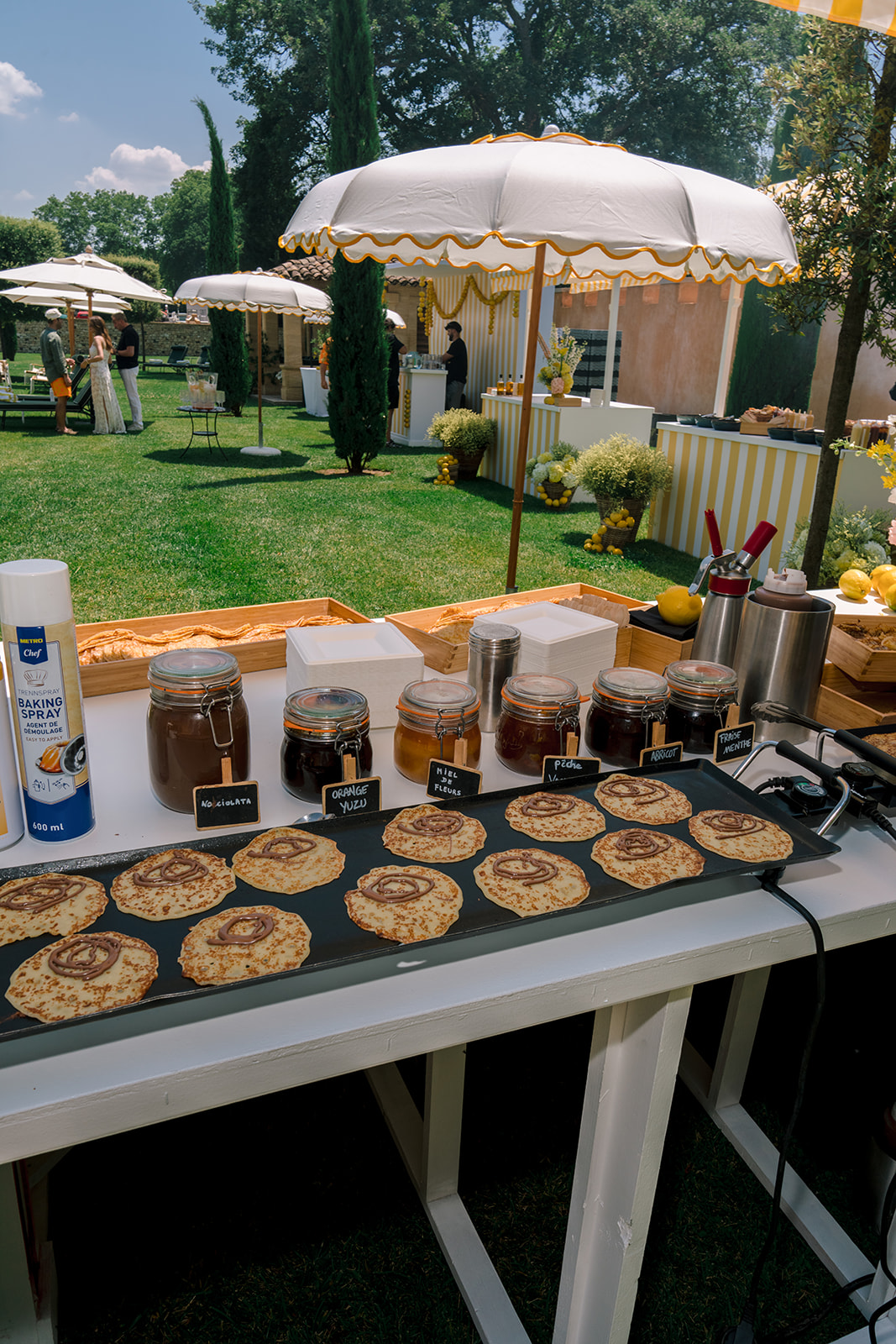
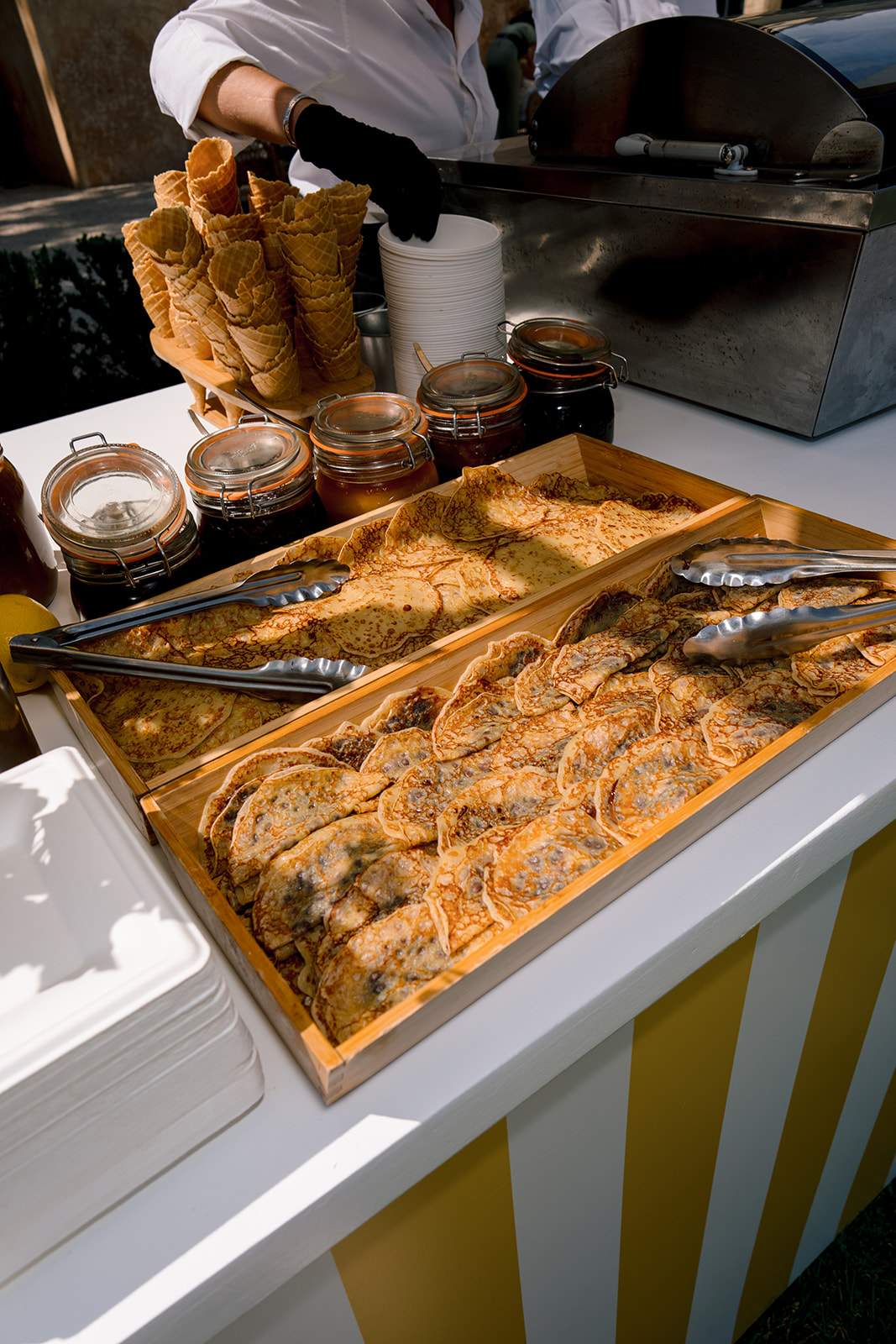
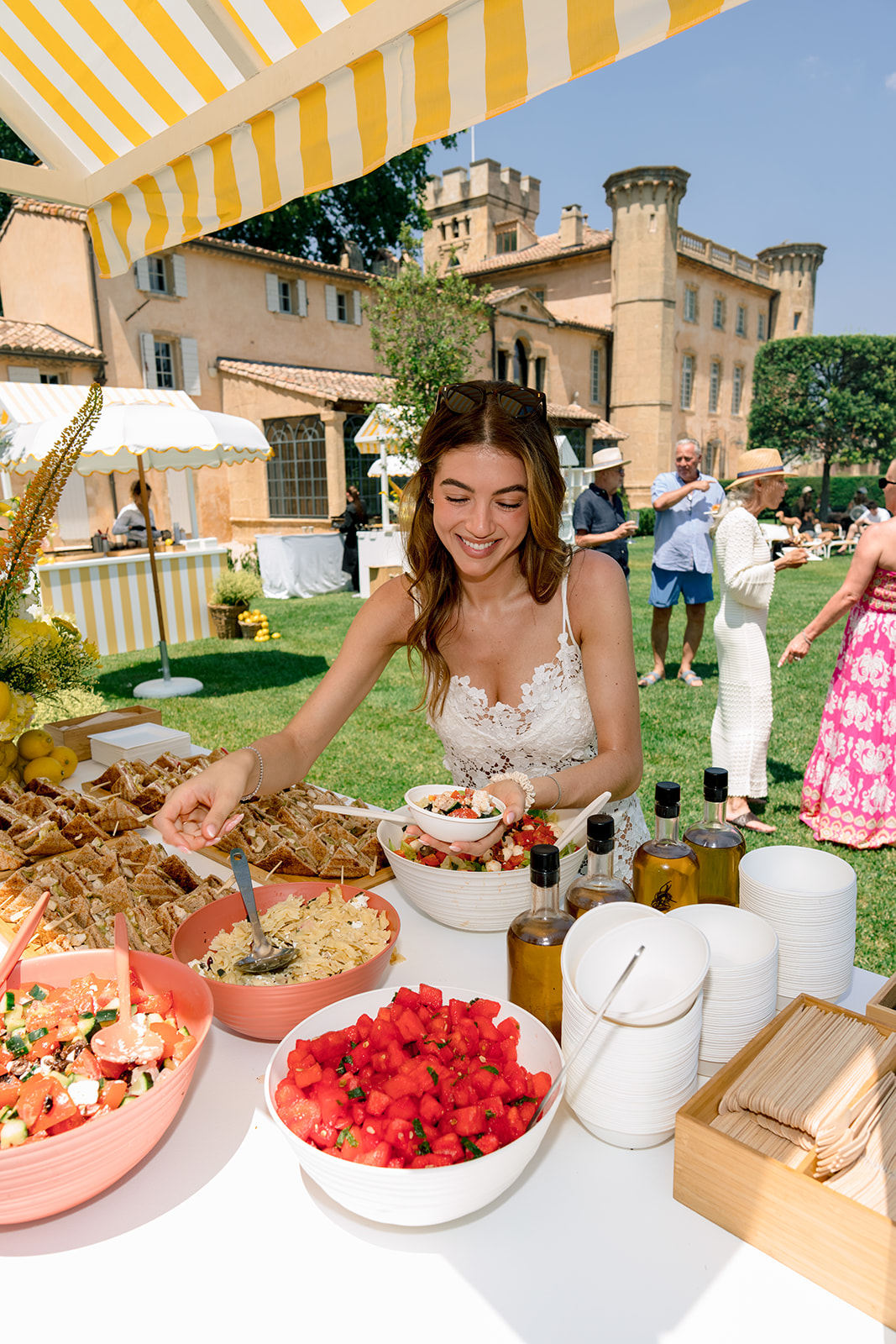
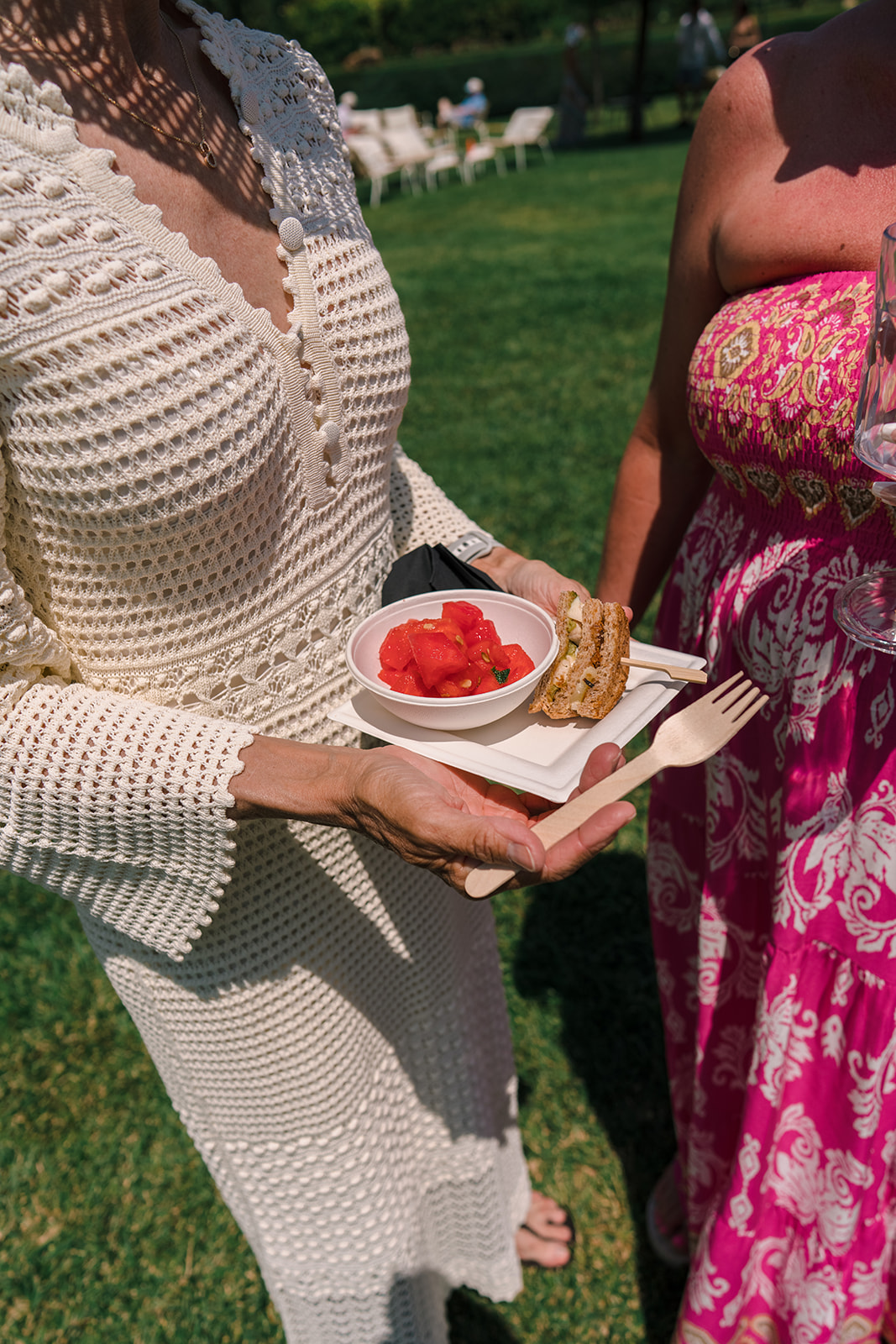
Interactive food stations fit the rhythm of a pool party because guests do not all want to eat at the same moment. Some arrive hungry after traveling, some swim first, and others move slowly between drinks and conversation. Several stations create choice, reduce queues and turn the meal into part of the event design.
Burgers bring a relaxed American reference into the French setting and work particularly well for a welcome event. Keep them manageable in size and offer a clear vegetarian option. Fresh buns, high-quality meat, grilled vegetables, local cheese and a concise selection of sauces make the station feel considered rather than fast-food themed.
A crêpe station creates movement and gives international guests something recognizably French. It can operate as a sweet station with lemon and sugar, chocolate, seasonal fruit or salted caramel, or include a limited savory menu. Position it where heat and smoke will not affect the bar or lounge area.
In warm weather, one station should feel light and genuinely refreshing. Consider tomato and peach, melon and herbs, cucumber, grains, grilled vegetables, burrata or a modern interpretation of a Niçoise salad. Dressings and proteins can be served separately so guests can build a plate that suits them.
A generous fruit display can support the color palette and provide a natural pause between cocktails and heavier food. Watermelon, melon, berries, peaches, apricots and citrus work well in summer. Add chilled towels, infused water or coconut water to make the station functional as well as visual.
Depending on the guest count and venue, consider grilled fish, focaccia, wood-fired pizza, oysters, gelato, frozen fruit, a rosé station or a late-afternoon snack. The goal is not to create ten concepts. Choose three or four that feel coherent and can be operated safely outdoors.
Live cooking is entertaining only when service remains fluid. Calculate output per hour, provide enough staff and separate ordering from pickup when necessary. Shade, refrigeration, food safety and discreet waste collection are essential in high temperatures.
Music changes everything
A playlist can fill silence, but a DJ shapes the room — even when the room is outdoors. The DJ reads arrivals, temperature, conversation, food service and the point at which guests are ready to move. The music should feel effortless, but the progression should be deliberate.
The first hour can blend modern soul, disco, French touch, Balearic sounds, refined pop and tracks connected to the couple. The music should establish personality without forcing guests to dance before they have even found the bar.
Once guests have settled and the pool becomes active, the DJ can increase the tempo. A pool party benefits from recognizable music and clean transitions more than from a highly specialized club set. The objective is collective energy, not a performance that competes with conversation.
French venues may impose strict volume levels and outdoor curfews. Ask where speakers can be placed, whether a limiter is required, when amplified music must stop and whether dancing can move indoors. These rules can change the event format completely.
The DJ booth must be shaded, powered safely and positioned beyond the splash zone. Cables need protected routes, and rain protection should be immediately available. Outdoor production should be designed for wind, water and heat rather than adapted at the last minute.
A saxophonist, percussionist or singer can create a high point, but the collaboration should be rehearsed and integrated into the set. More entertainment does not automatically create more energy. A strong DJ, a clear schedule and a responsive crowd are often enough.
The details guests remember
A pool party can look exceptional and still fail if guests are overheated, cannot find a towel or do not know whether they are expected to swim. Comfort and safety should be visible, elegant and easy to understand.
Provide enough shaded seating for guests who do not want to swim or stand in direct sun. Umbrellas should be weighted correctly and positioned before the event begins. Consider additional canopies, covered lounge areas and fans where the venue permits them. During periods of extreme heat, review current Météo-France heat-risk guidance and adapt the event schedule before guests arrive.
Towels can become part of the design through color, embroidery or custom tags, but the service plan matters more. Decide where clean towels are displayed, where used towels go and how they are replenished. Changing rooms should be signed and kept separate from catering operations.
Many venues prohibit glass near the pool. High-quality reusable acrylic or polycarbonate glassware can still look refined. Confirm the rules before ordering rentals, and make sure the entire bar team follows the same system.
The venue, insurer or planner may require pool supervision, particularly when alcohol is served or children are present. Even when it is not mandatory, a discreet professional can be a responsible choice. Clarify who has authority to stop unsafe behavior. France also publishes general official information on private-pool safety requirements; the venue and insurer must confirm what applies to the event itself.
If children are invited, do not assume parents will supervise collectively. Define pool access, flotation devices, childcare and the location of any children’s activity. The entertainment zone should not create a blind spot around the water.
“Pool party” can mean swimwear and bare feet to one guest, or a polished resort look to another. State whether swimming is encouraged, whether the event continues into dinner, and whether guests should bring a cover-up, flat shoes, sunscreen or an evening layer. A visual dress-code guide on the wedding website can prevent confusion.
09 — Choose the right setting
“The best pool is not simply beautiful.
It is usable as an event space.”
Pool party venues in France
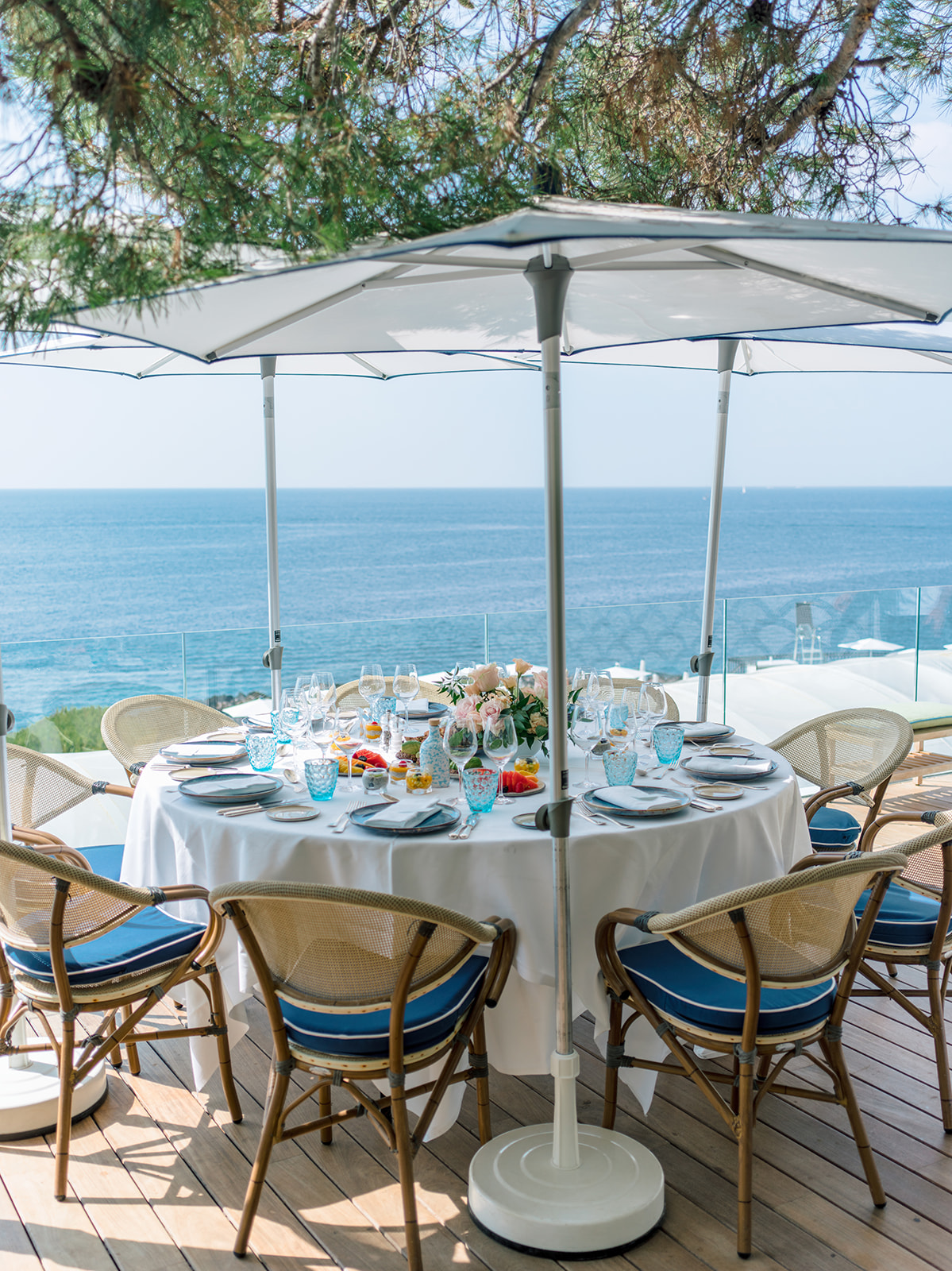
The strongest venues are not simply properties with beautiful pools. They combine private use, safe circulation, event permission, shade, catering access, sound conditions and a credible weather alternative.
The ideal venue offers more than a photogenic swimming pool. It needs event permission, safe circulation, catering access, power, restrooms, changing spaces, shade, furniture and a realistic sound policy. A pool reserved for hotel guests may not be available for a private party, and some properties do not permit pool games, amplified music or food service beside the water.
Provence is one of the strongest regions for this format because many estates are designed for multi-night stays. A pool party can happen without transporting guests to another venue, and the landscape naturally supports an outdoor summer design. Look for exclusive use, on-site accommodations and several event spaces so the pool party does not reveal the entire wedding setup in advance.
The Riviera offers a more graphic, resort-driven atmosphere: sea views, white stone, umbrellas and an immediate vacation feeling. Logistics can be more restrictive. Premium hotels may have strict rules around privacy, music and pool access, while private villas may require additional rentals, staff and transportation.
Still deciding between city and estate formats? Compare Paris and Provence for a destination wedding before committing to a poolside property.
These regions can offer larger estates, longer private stays and more space around the pool. They may also involve longer transfers from major airports. The venue works best when most guests can stay on site or within one organized accommodation area.
| Venue | Region | Best for | Confirm before booking |
|---|---|---|---|
| Villa Baulieu | Provence | A complete private-estate wedding weekend | Pool event permissions, swimming rules, music and guest accommodation. |
| Château de Tourreau | Provence | Exclusive villa-style privacy and a large estate setting | Event conditions, sound, pool access and production areas. |
| Château d’Estoublon | Provence | Design, gastronomy and an immersive estate experience | Private access, poolside service, event layout and timing. |
| Domaine de Manville | Provence | A resort-style wedding with accommodation and service | Pool privatization, guest circulation and amplified music. |
| Hôtel du Cap-Eden-Roc | French Riviera | An iconic Mediterranean poolside environment | Buyout conditions, event spaces, pool-deck access and guest privacy. |
| Grand-Hôtel du Cap-Ferrat | French Riviera | Resort service, gardens and a coastal wedding weekend | Club access, poolside event rules, sound and transport between spaces. |
Important: inclusion in this guide does not confirm that a property will authorize the exact pool-party format on a particular date. Contact the venue directly and verify every condition with the planner before contracting the event.
For a wider regional shortlist, compare the best wedding venues in France and then verify which properties can support the complete poolside production.
Can guests swim during the event, and are there restrictions on floats, diving, children or alcohol?
Will hotel guests or other visitors share the pool area during the party?
What are the outdoor sound limit, speaker rules and mandatory end time?
Can live stations operate poolside, and what kitchen, water, power or refrigeration is available?
Which covered space can absorb the guest count without becoming a completely different event?
Are lifeguards, security, non-glass drinkware or additional insurance required?
For properties that can support a private pool event within a complete destination weekend, compare the Best Wedding Venues in Provence.
A real pool party in Provence
This opening-day event worked because every visual idea also had a practical role. The yellow-and-white palette connected umbrellas, flowers, lemons, towels and food counters, while the pool, bar and live stations gave guests several natural meeting points.
White structures and furniture kept the setting clean in strong daylight. Yellow accents remained visible across the lawn and around the pool without overwhelming the estate itself.
Guests could move between cocktails, crêpes, fresh food and the pool instead of waiting for one formal meal. That circulation helped different groups meet naturally during the first hosted event.
A clear visual direction, active bar, live food service, music, shade and prepared pool furniture made the afternoon feel intentional rather than improvised.
Choose one palette, two or three food concepts, one well-staffed bar and a DJ who can control the progression. The result is stronger than adding too many activities with no visual or operational connection.
See the complete Villa Baulieu wedding story and compare the estate with other properties in the Provence wedding venue guide.
The production behind the ease
Use this checklist with the planner, venue and production team before the design is finalized. The details below determine whether the event remains beautiful once guests arrive.
Opening welcome party, day-after event or additional pre-wedding afternoon; guest count; hosted hours; optional or required attendance.
Arrival waves, shuttle timing, walking routes, check-in, changing rooms, accessibility and the route back to accommodations.
Color palette, umbrellas, lounge furniture, tables, towels, signage, florals, bar facade, food-station styling and nighttime lighting.
Station count, menu balance, dietary needs, output per hour, refrigeration, shade, live-cooking restrictions and staff meals.
Signature cocktails, alcohol-free menu, water points, ice, staffing, non-glass drinkware, service timing and responsible alcohol management.
DJ brief, speaker placement, sound limiter, curfew, power supply, splash protection, rain cover and any live performers.
Shade, fans, sunscreen, insect control, towels, restrooms, changing rooms, seating, footwear guidance and an evening layer.
Lifeguard, security, children’s supervision, emergency access, first-aid resources, cable protection and pool-use rules.
Decision deadline, covered alternative, wind strategy, rain protection, flooring, equipment protection and guest communication.
Coverage hours, aerial permissions, protected equipment area, group-photo timing, detail images before guests arrive and privacy expectations.
A weather plan should not be a sentence in the contract. It needs a floor plan, furniture allocation, food-service solution, music setup and communication schedule. If the entire concept depends on the pool, decide in advance what the event becomes when swimming is impossible.
An opening-day pool party should finish early enough for the couple and key guests to rest. A day-after party should not require the production team to rebuild an entire venue at sunrise. The best schedule respects both guest energy and the physical work required behind the scenes.
11 — Frequently asked questions
Clear answers for American and international couples planning a multi-day destination wedding in France.
Both formats can work. An opening-day pool party helps guests meet immediately and gives the wedding weekend a relaxed, high-energy start. A day-after pool party feels more restorative and usually benefits from a flexible arrival time.
Yes. For a warm-weather destination wedding, a well-produced pool party can become the official welcome event. It should still include substantial food, shaded seating, clear transportation and a defined end time.
Interactive stations work especially well because guests can eat at their own pace. Popular options include gourmet burgers, French crêpes, seasonal salads, grilled vegetables, fresh fruit, gelato and late-afternoon snacks.
A DJ is strongly recommended when music is central to the atmosphere. The DJ should build the energy gradually, coordinate with the venue on sound limits and use equipment designed for a safe outdoor setup.
The invitation should state whether the event is swimwear-friendly, resort casual or a more polished Riviera dress code. Guests should also know whether they need flat shoes, a cover-up, sunscreen or an evening layer.
Three to five hours is usually enough for arrivals, drinks, food, swimming and dancing without exhausting guests. The ideal timing depends on heat, venue rules, transportation and the schedule of the following day.
Confirm exclusive access, pool-use rules, lifeguard requirements, sound limits, furniture, food-service areas, glass restrictions, changing rooms, restrooms, shade, power, lighting, weather alternatives and the permitted end time.
The strongest ideas combine a clear visual direction with useful guest experiences: striped shade, a designed cocktail bar, two or three interactive food stations, a progressive DJ set, towels, sunscreen, fresh fruit and a precise dress code.
Private estates in Provence and selected hotels or villas on the French Riviera are the strongest starting points. The venue must still confirm private use, swimming rules, sound, catering access, safety and weather alternatives.
Host it on day one to help guests connect immediately, or on day three as a flexible final gathering. Keep the central wedding day separate so the weekend retains a clear rhythm.
An opening event builds energy and introductions before the wedding. A recovery event starts later, uses a flexible arrival window and focuses more heavily on hydration, informal food and easy departures.
The total depends on guest count, venue access, furniture, catering, bar staffing, DJ and sound, transportation, safety, shade and weather infrastructure. Request a complete event proposal rather than comparing food prices alone.
Continue planning in France
Use the specialist guides below to structure the full wedding weekend, shortlist a property that can support several events, and choose a season that protects guest comfort.
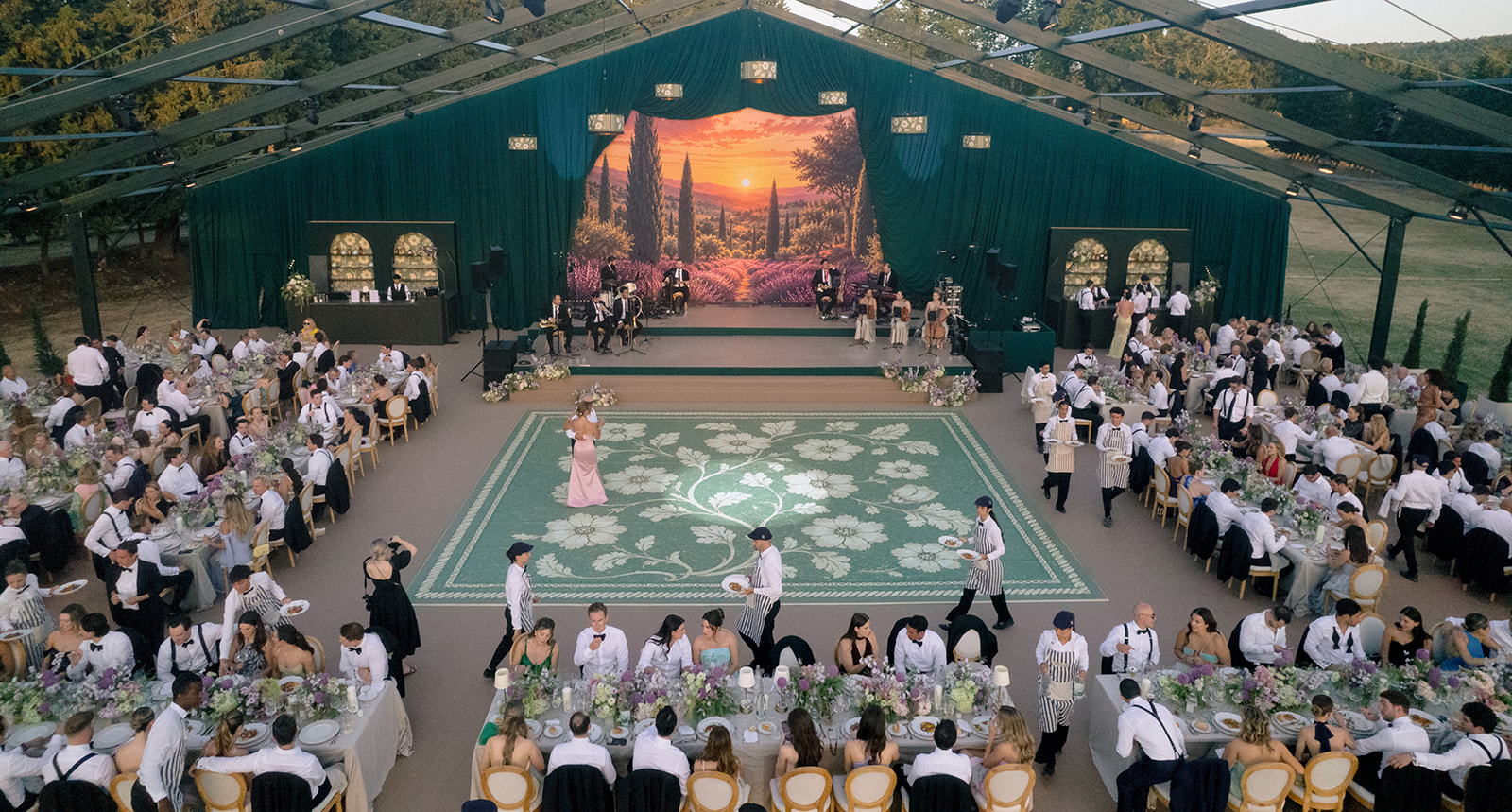
Structure the opening event, wedding day, after-party and final gathering as one coherent destination experience.
Build the weekend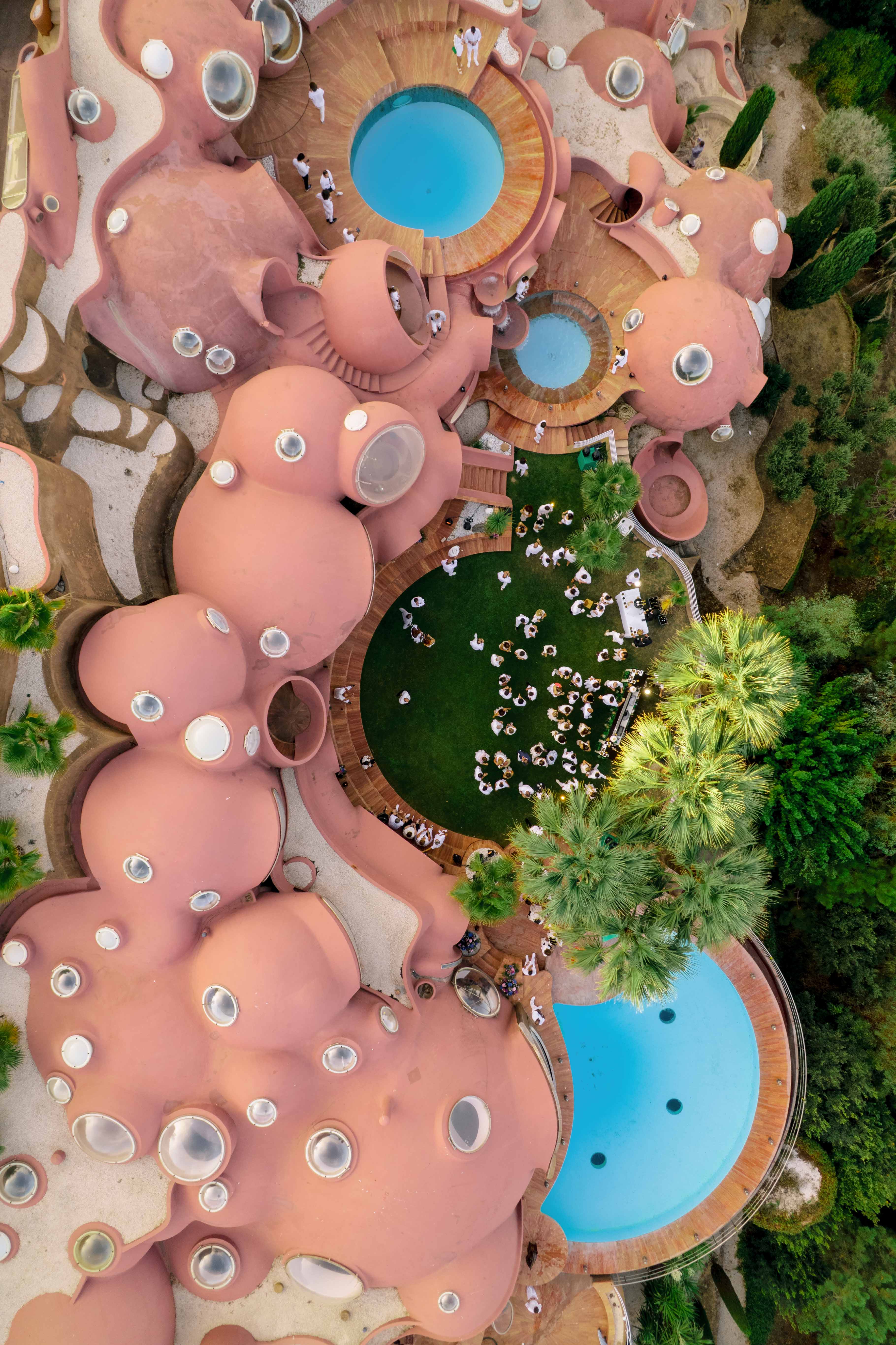
Compare private estates, Riviera hotels, Paris palaces and châteaux through guest experience and production reality.
Compare venues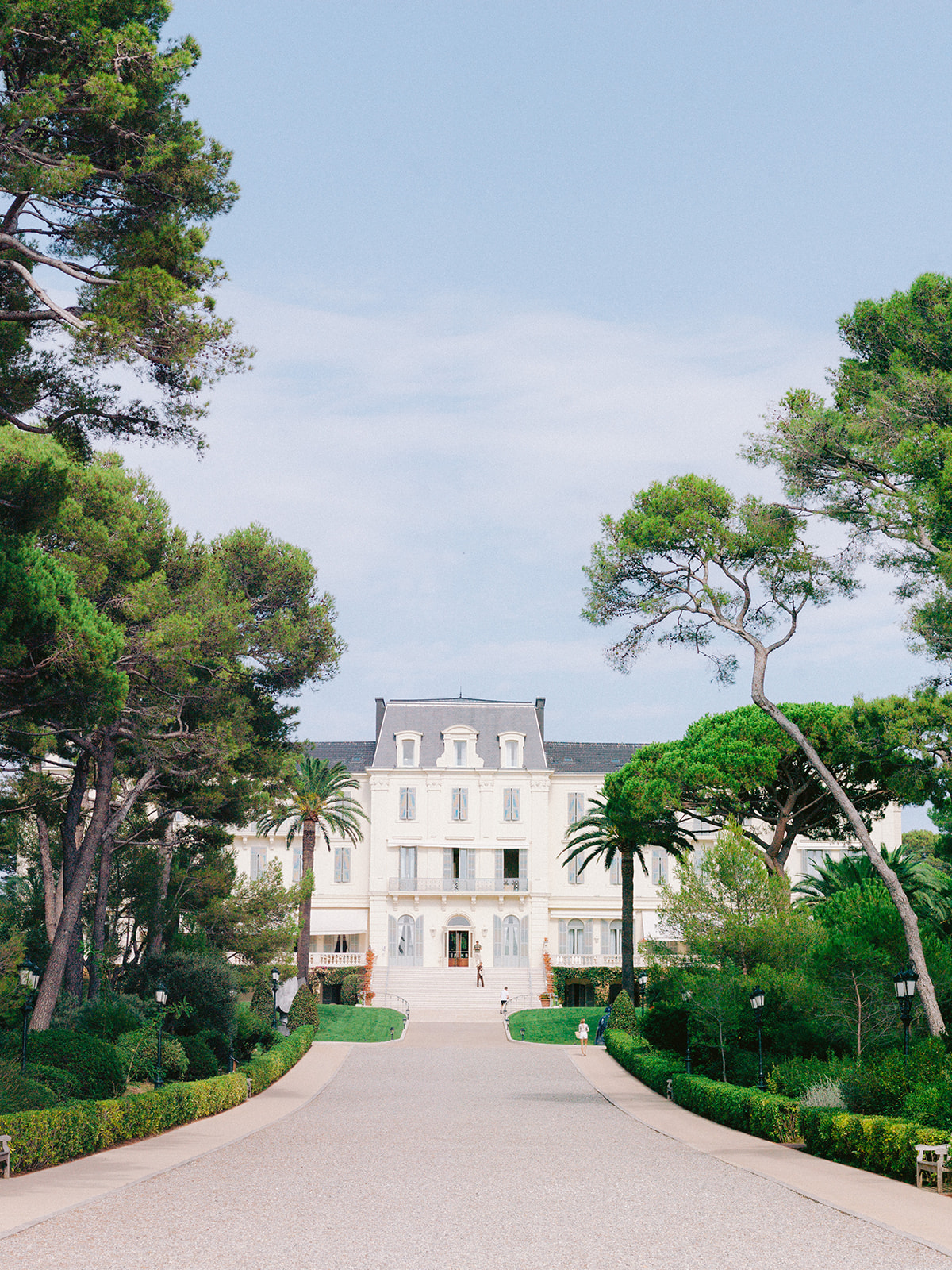
Choose the month through daylight, heat, rain, wind, regional travel and the strength of the venue’s backup plan.
Compare seasons
Compare pool-capable estates with accommodation, guest flow, transport and weather planning in mind.
Compare Provence venuesDestination weddings in France