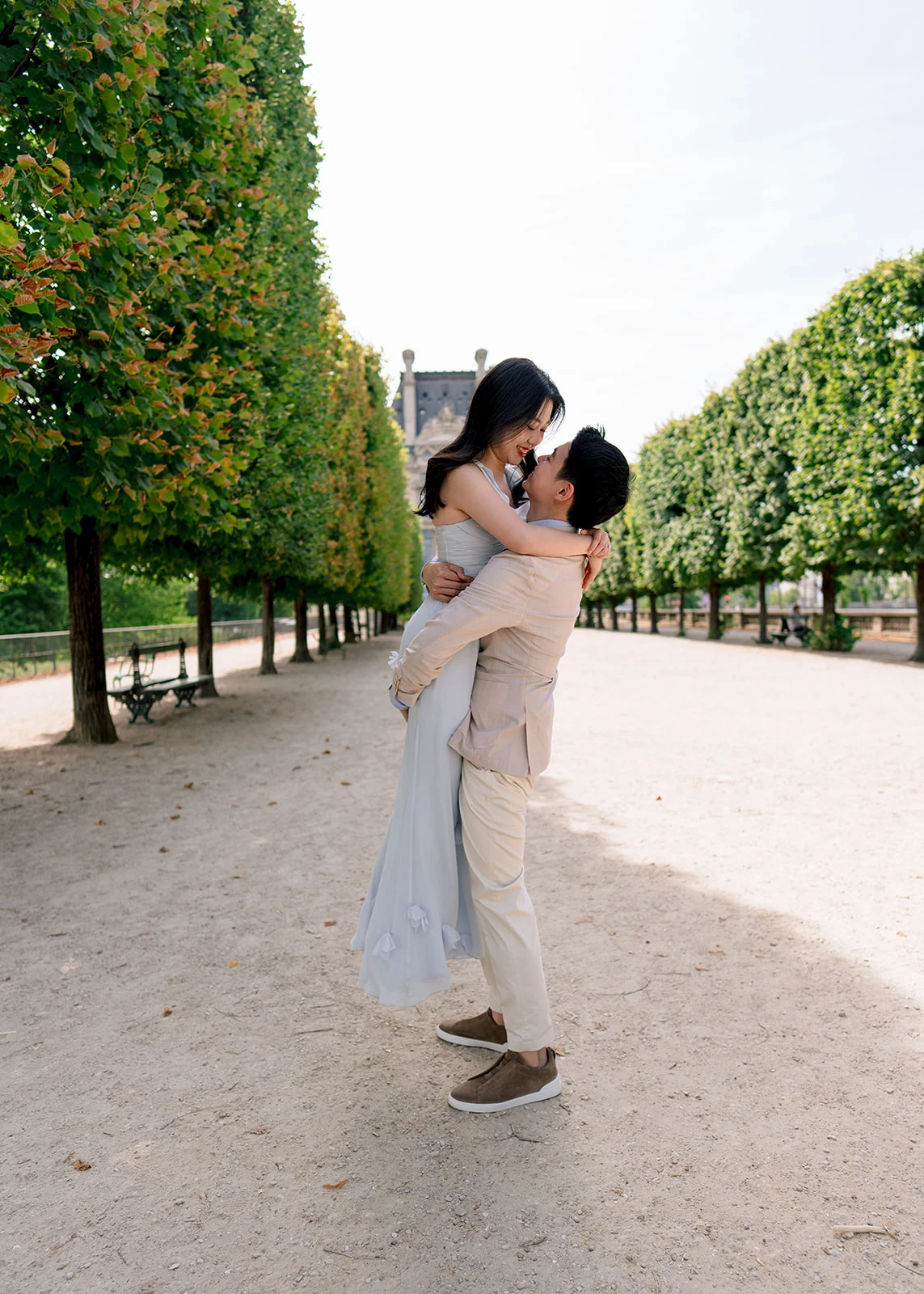
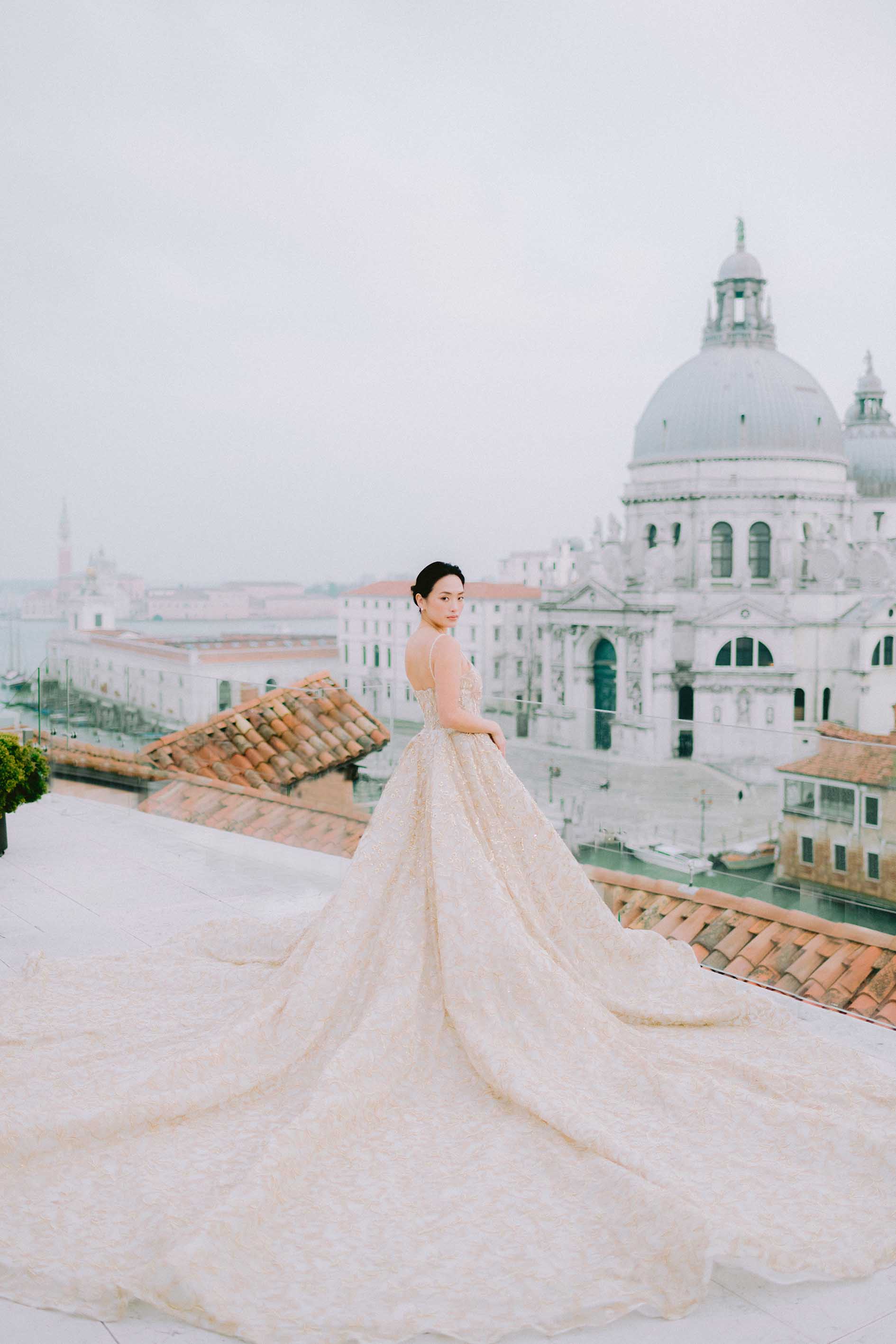
Direction for portraits
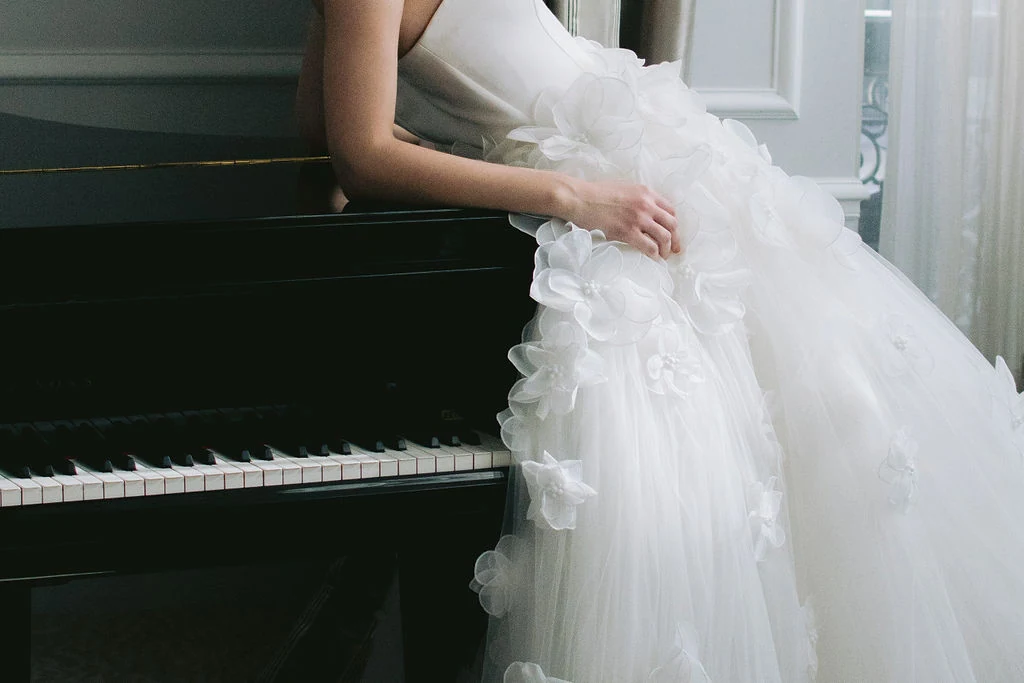
Before the ceremony and during the rooftop session, clear guidance helps shape posture, movement and composition. The intention is fashion-led without making the couple feel staged or disconnected from one another.

An intimate celebration
above Avenue Montaigne.
Editorial wedding photography at Hôtel Plaza Athénée Paris, from an intimate indoor ceremony to refined reception details and rooftop portraits overlooking the Eiffel Tower.
Discover the Plaza Athénée wedding01 — The wedding
This intimate wedding at Hôtel Plaza Athénée Paris brought together fifty guests for an indoor ceremony and a refined reception on Avenue Montaigne. The smaller guest list created a warm atmosphere in which the couple could remain close to their families and friends throughout the celebration.
The day moved between private preparations, the ceremony, reception details, rooftop portraits and dinner. Each part of the wedding remained connected to the hotel’s identity: its Parisian interiors, fashion-led address, red-awning façade and direct relationship with the Eiffel Tower.
Jérémy Froeliger photographed the celebration with an editorial and documentary approach, balancing directed portraits with genuine moments between the couple and their guests. Discover more wedding photography in Paris, explore a couture bridal editorial at Hôtel Plaza Athénée, discover a private celebration inside the Haute Couture Eiffel Suite, or inquire about your wedding at Plaza Athénée.
02 — The venue
Hôtel Plaza Athénée offers a recognizable Paris setting without requiring the wedding day to feel oversized or formal.
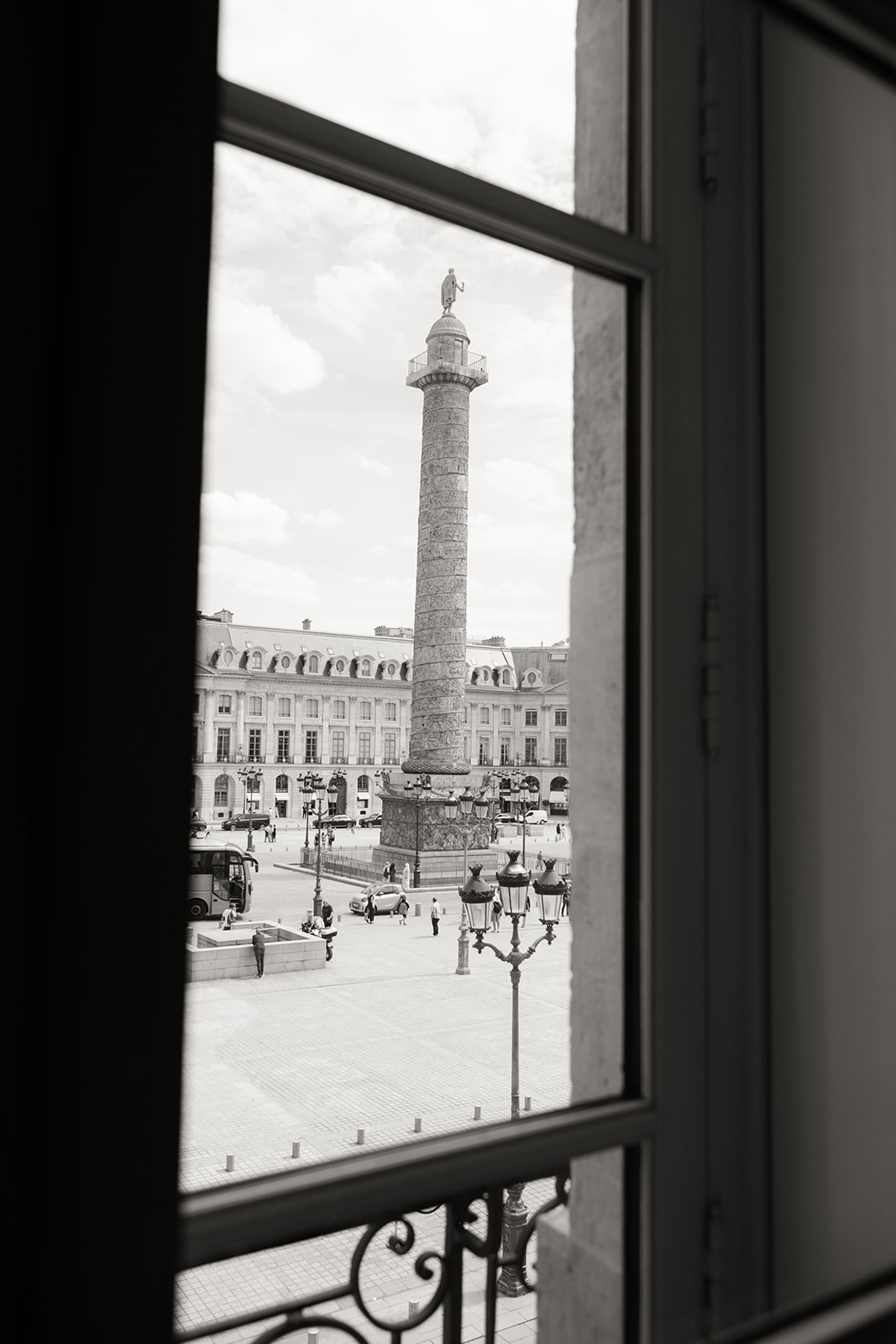
Avenue Montaigne places the celebration inside the city’s fashion district, while the hotel provides several visual environments within one address. Bridal preparations, ceremony moments, reception details and portraits can all be photographed without losing time in long transfers across Paris.
The interiors bring polished surfaces, staircases and classical details; the exterior adds the hotel’s signature red awnings; selected rooftop and suite views introduce the Eiffel Tower. Together, these elements create variety while keeping the complete gallery visually coherent.
For an intimate wedding, this balance is particularly effective. The celebration can remain personal and guest-focused while still carrying the identity of a major Paris palace.
The heritage · Avenue Montaigne
The identity of Hôtel Plaza Athénée begins with Avenue Montaigne and a century-long relationship with Parisian culture.
Designed by architect Charles Lefebvre, Hôtel Plaza Athénée opened on April 20, 1913. The nearby Théâtre des Champs-Élysées opened during the same spring, helping establish the avenue as a destination for performance, architecture and international society.
In 1936, Le Relais Plaza introduced a landmark Art Deco interior inspired by the first-class dining room of the SS Normandie. Ten years later, Christian Dior opened his first couture house on Avenue Montaigne, reinforcing the connection between the hotel, fashion and image-making.
That history still matters for a wedding today. The red awnings, couture references, classical interiors and Eiffel Tower views allow a celebration to feel unmistakably Parisian without relying on a single decorative style.
Why it matters now
The hotel combines a globally recognizable Paris address with spaces that can remain intimate, private and connected to the guests throughout the wedding day.
Red awnings, polished interiors, couture details, mirrors, staircases and Eiffel Tower views create several visual registers without leaving the hotel.
Historical details referenced from the official Hôtel Plaza Athénée history.
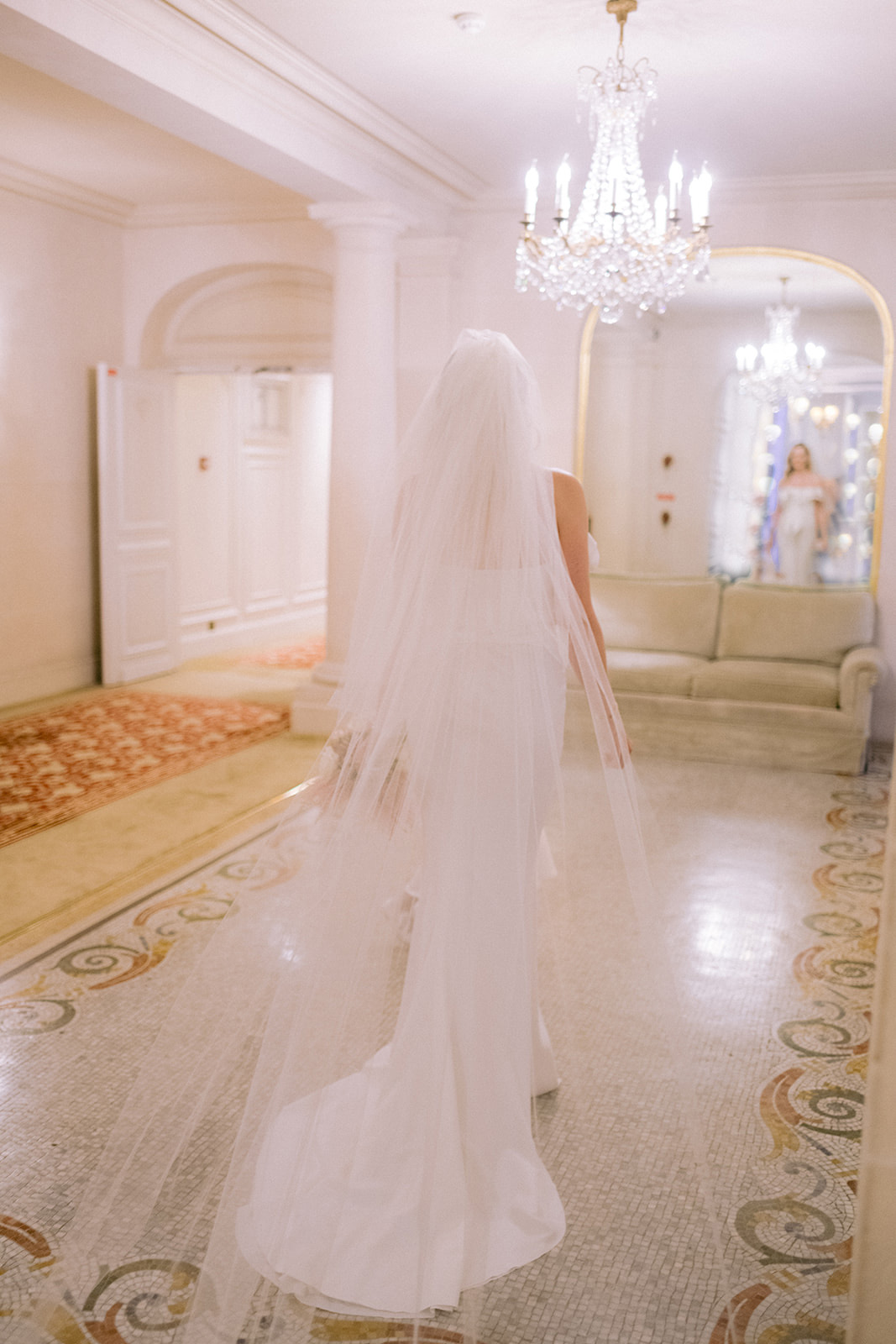
Plaza Athénée · Getting ready
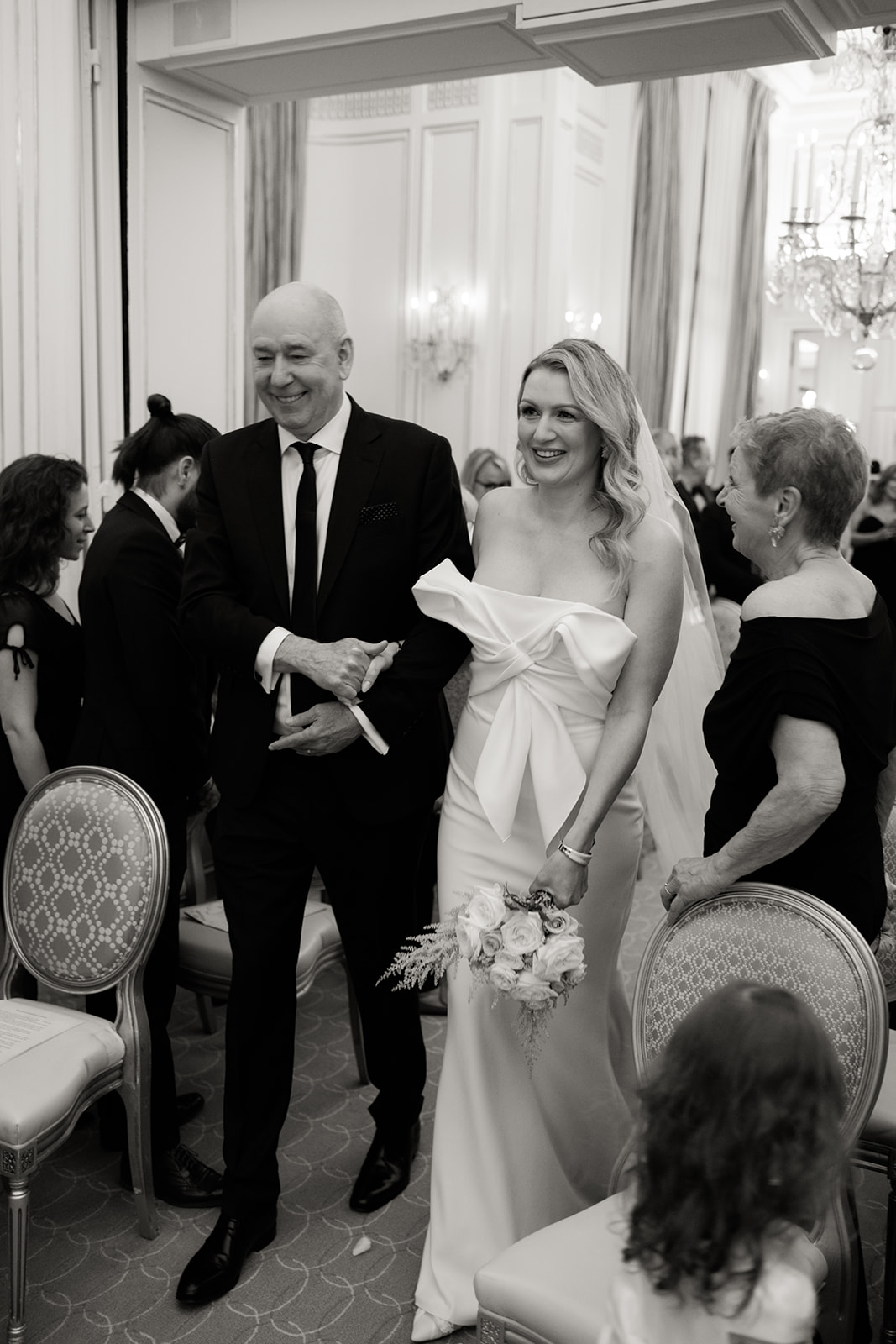
Plaza Athénée · Ceremony
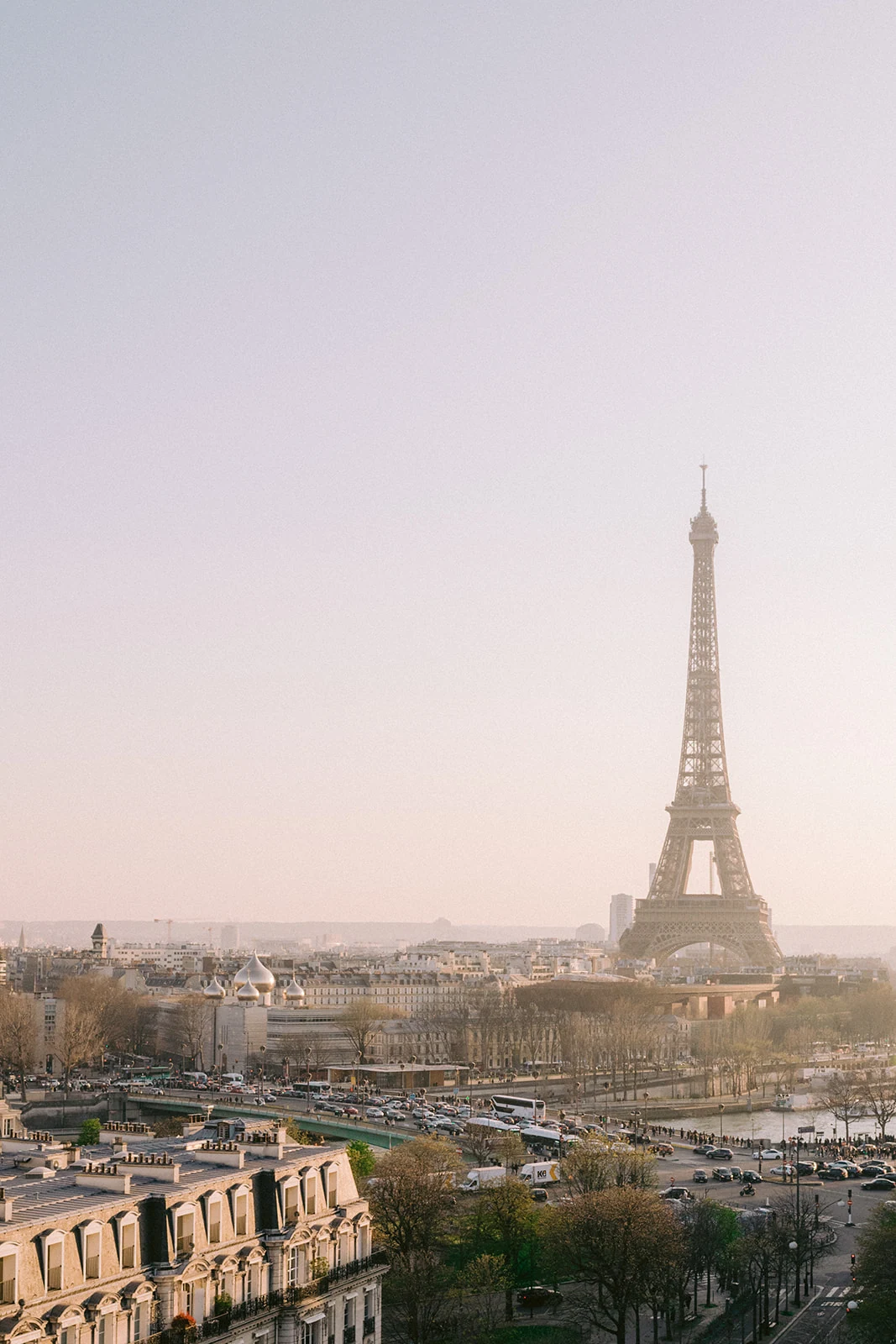
Plaza Athénée · Rooftop couple session
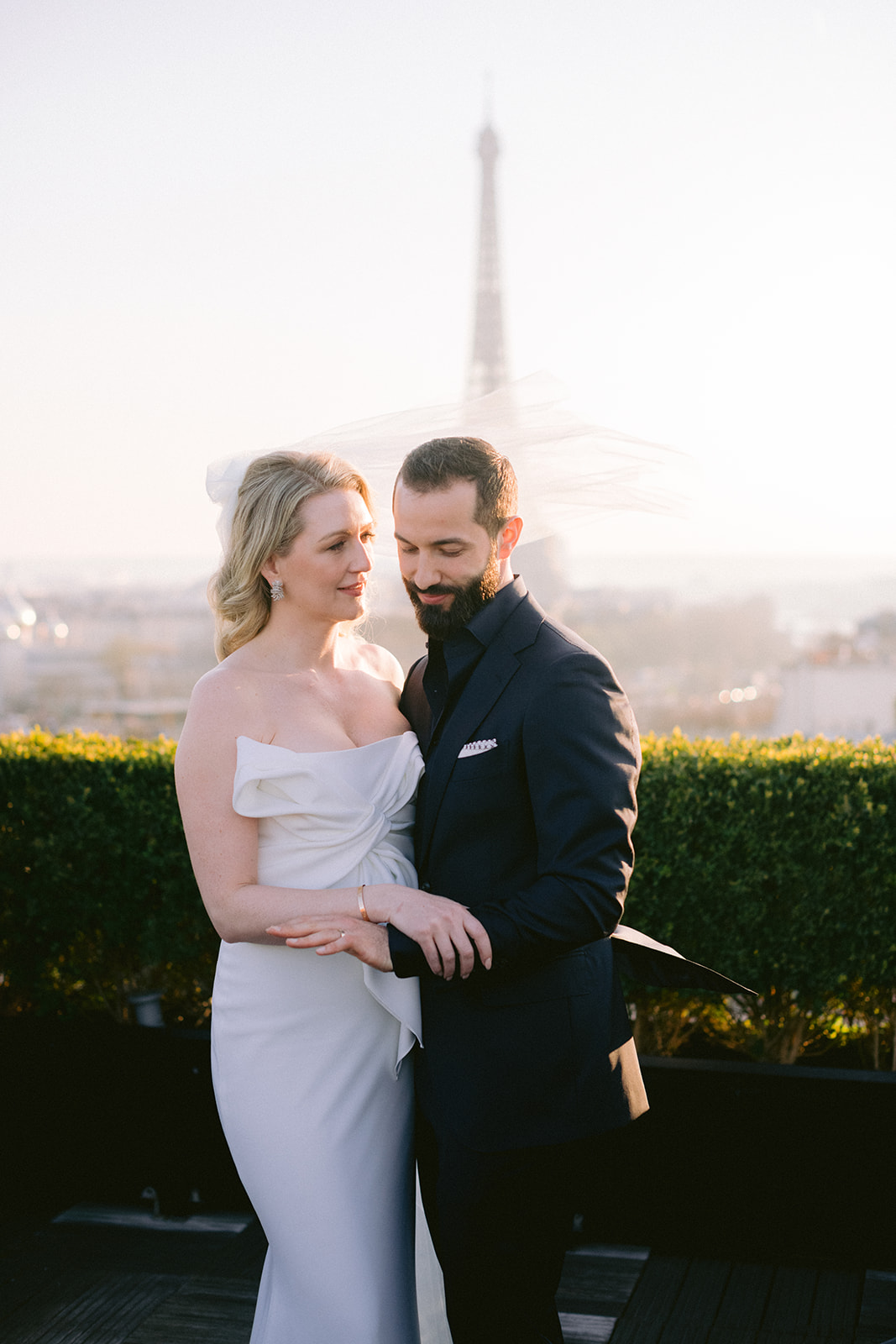
Plaza Athénée · Rooftop couple session
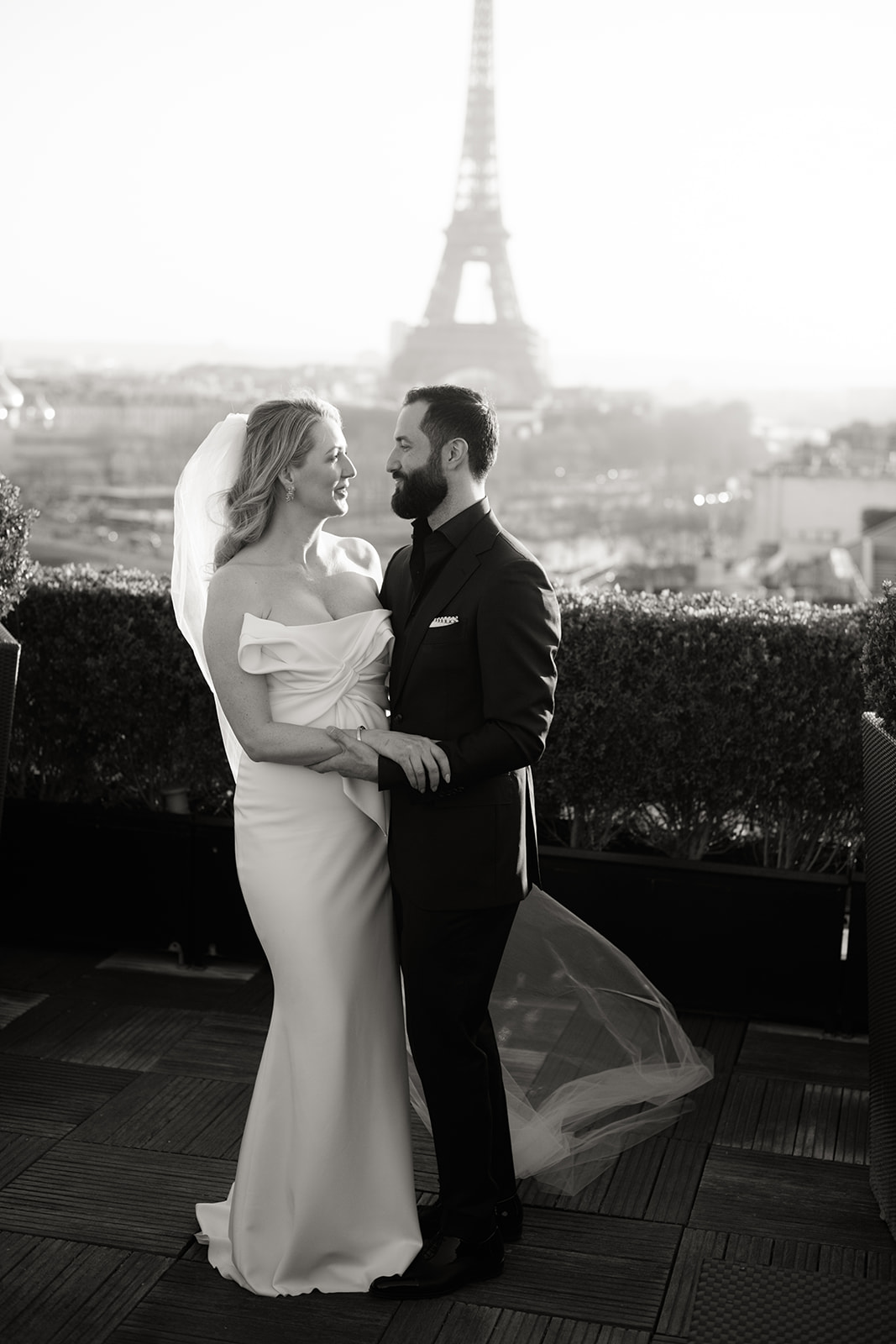
Plaza Athénée · Rooftop couple session
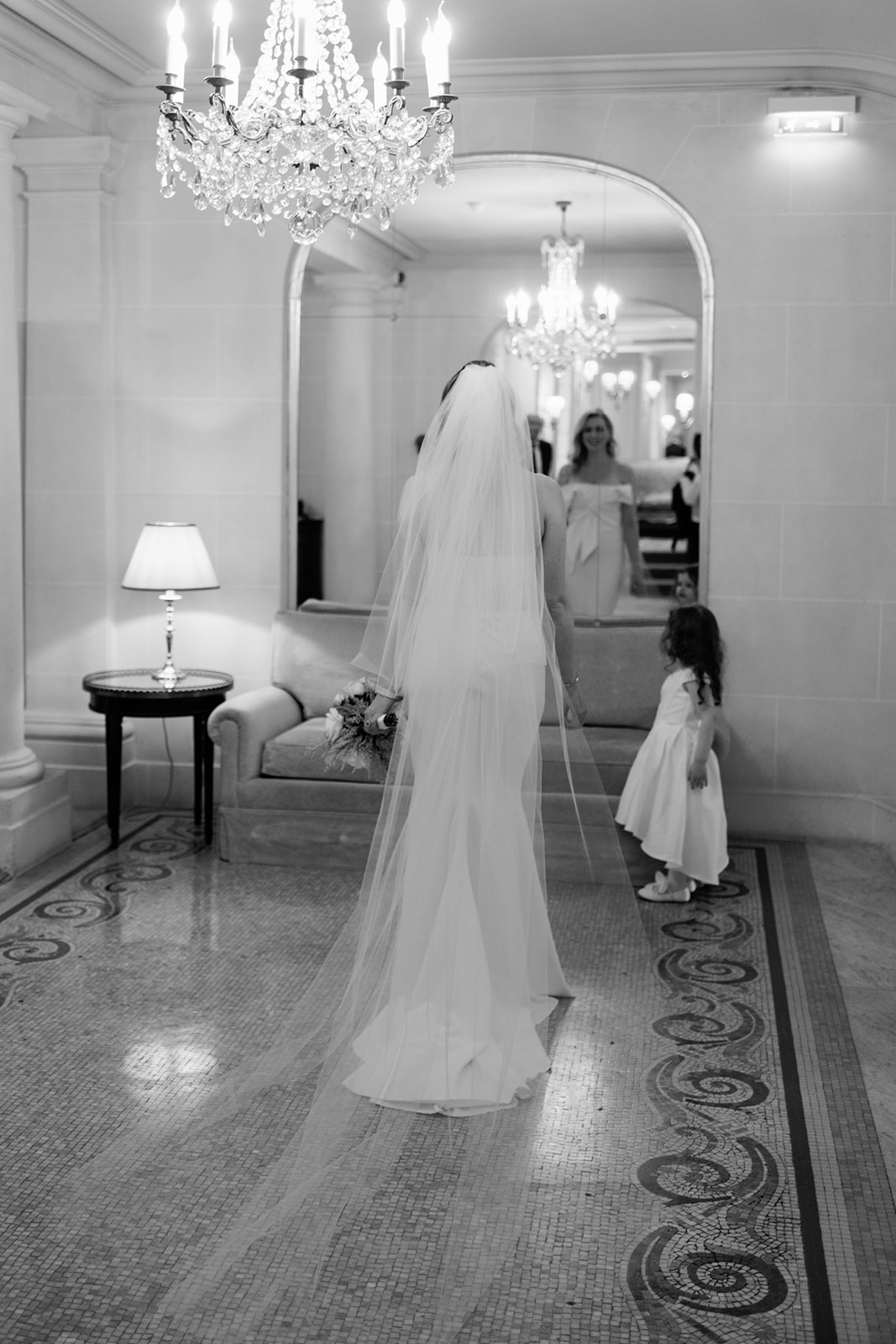
Plaza Athénée · Before the ceremony
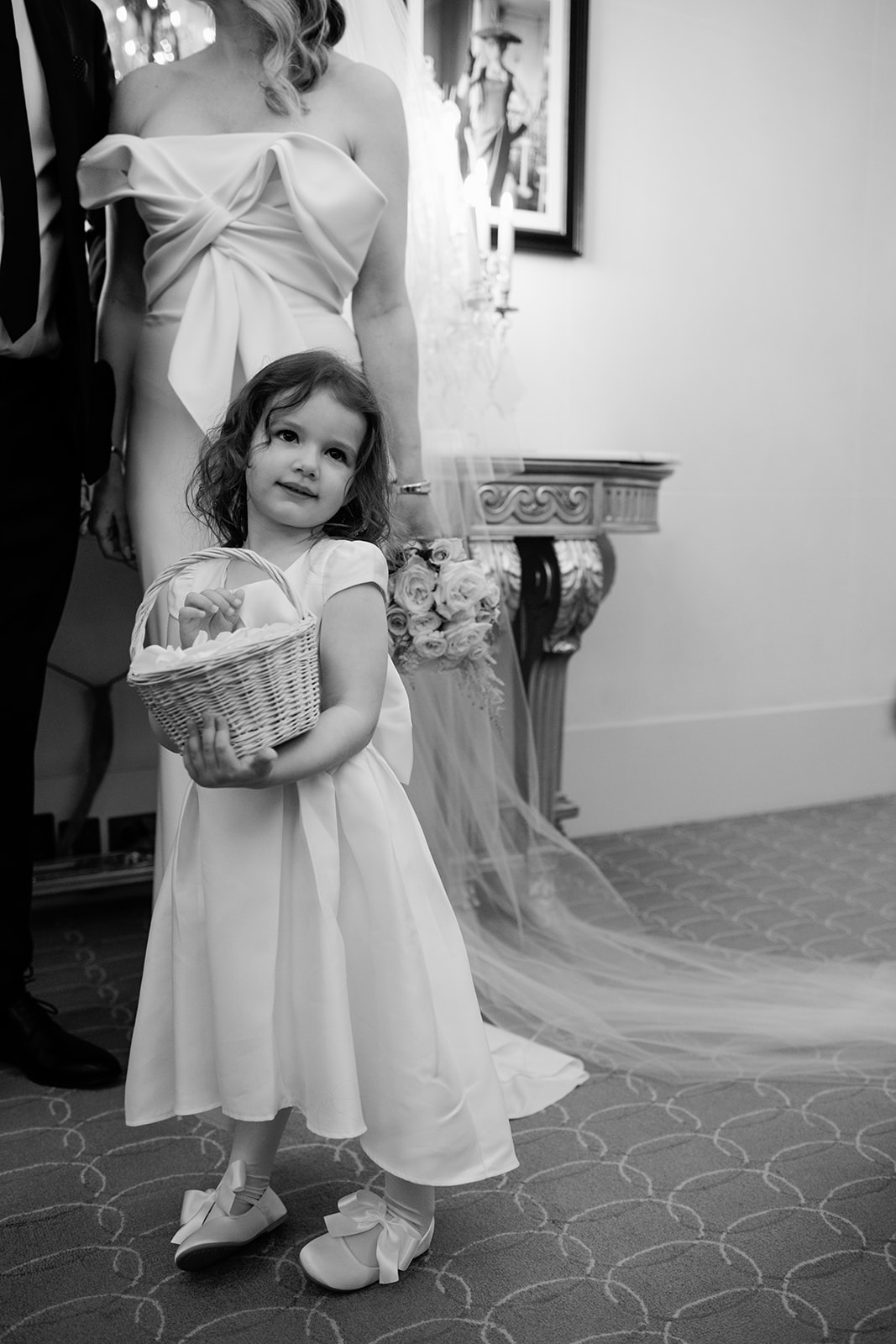
Plaza Athénée · Flower girl
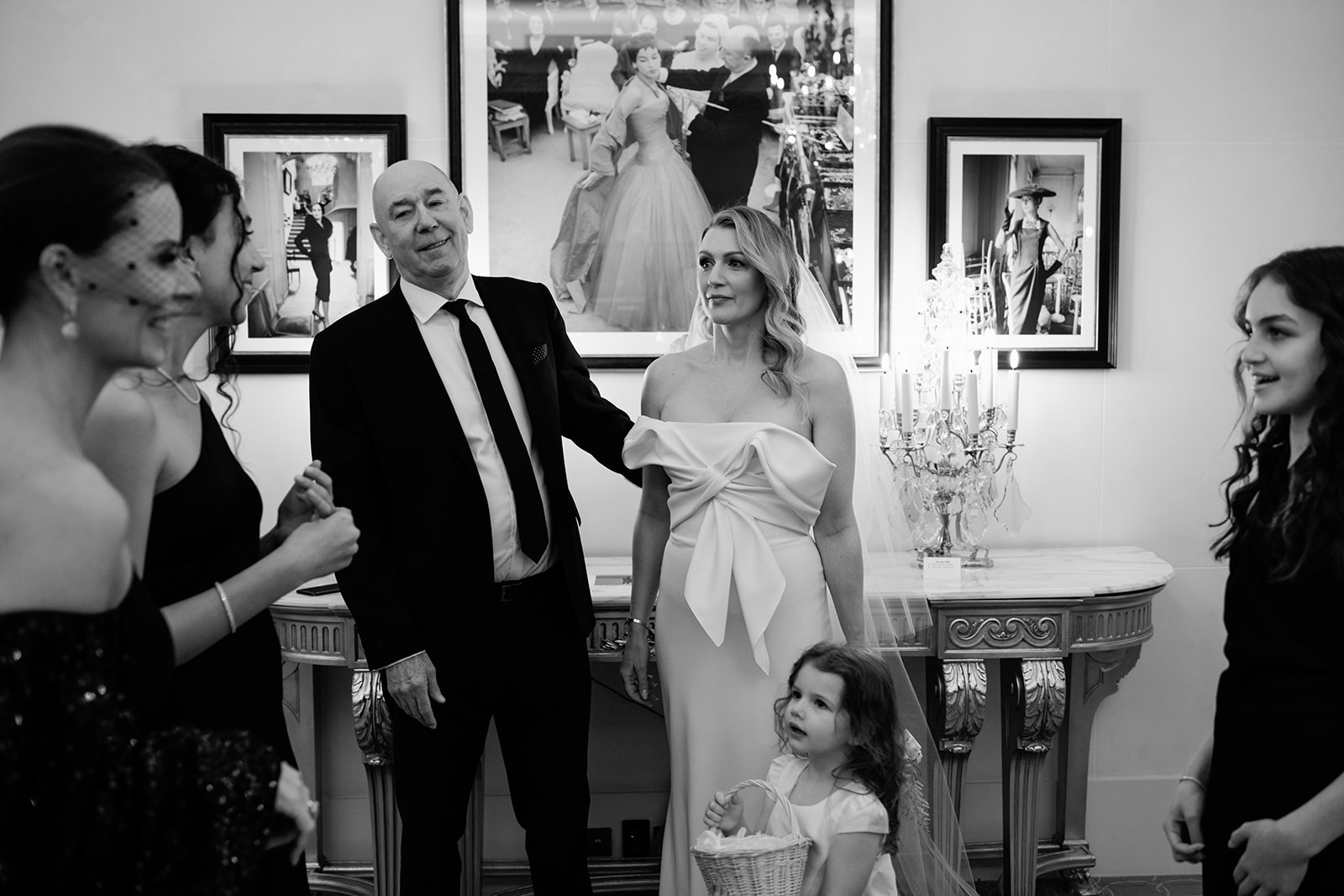
Plaza Athénée · Preparations
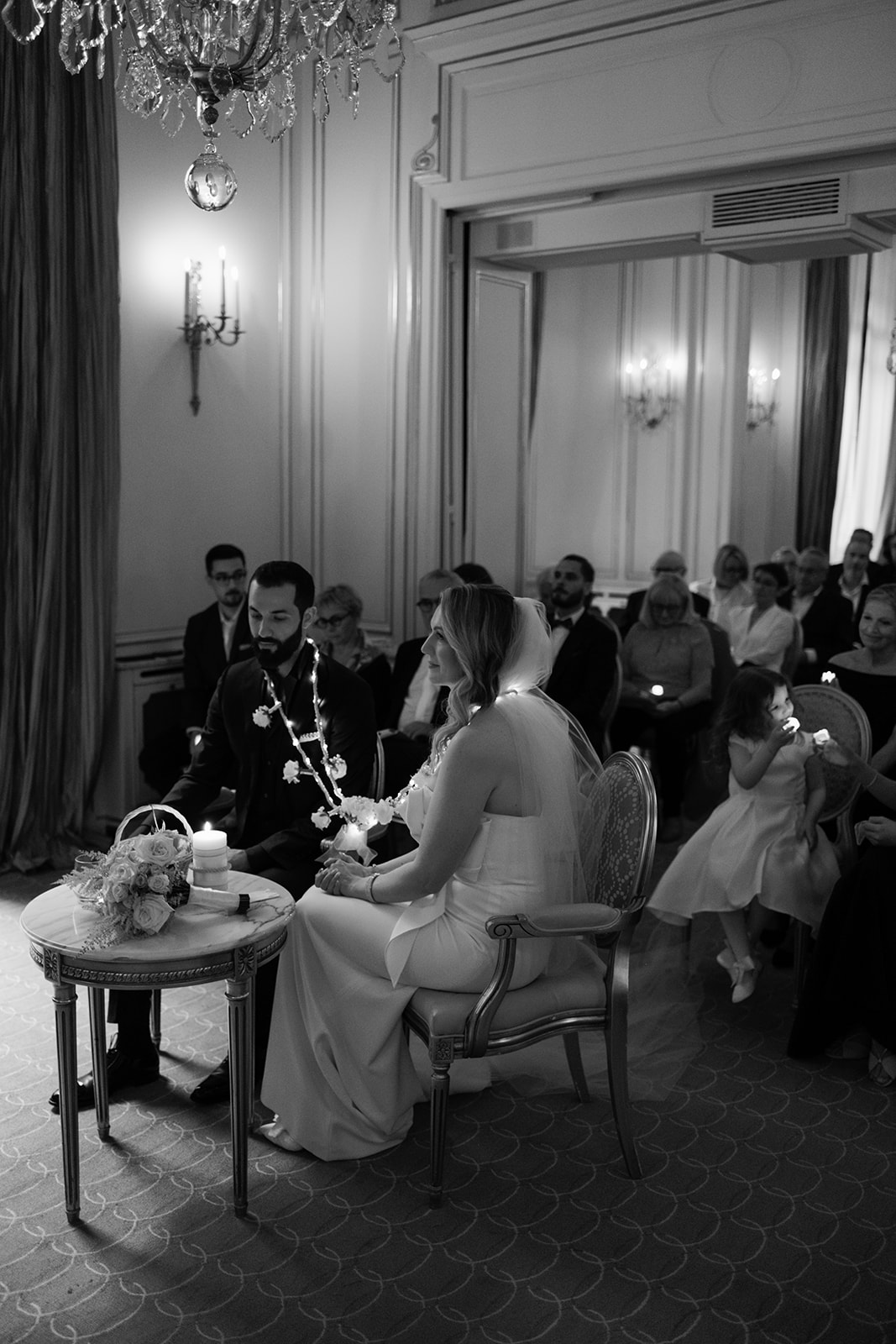
Plaza Athénée · Ceremony
Plaza Athénée · Guest moments
Plaza Athénée · Ceremony
Plaza Athénée · Family moment
Plaza Athénée · Reception design
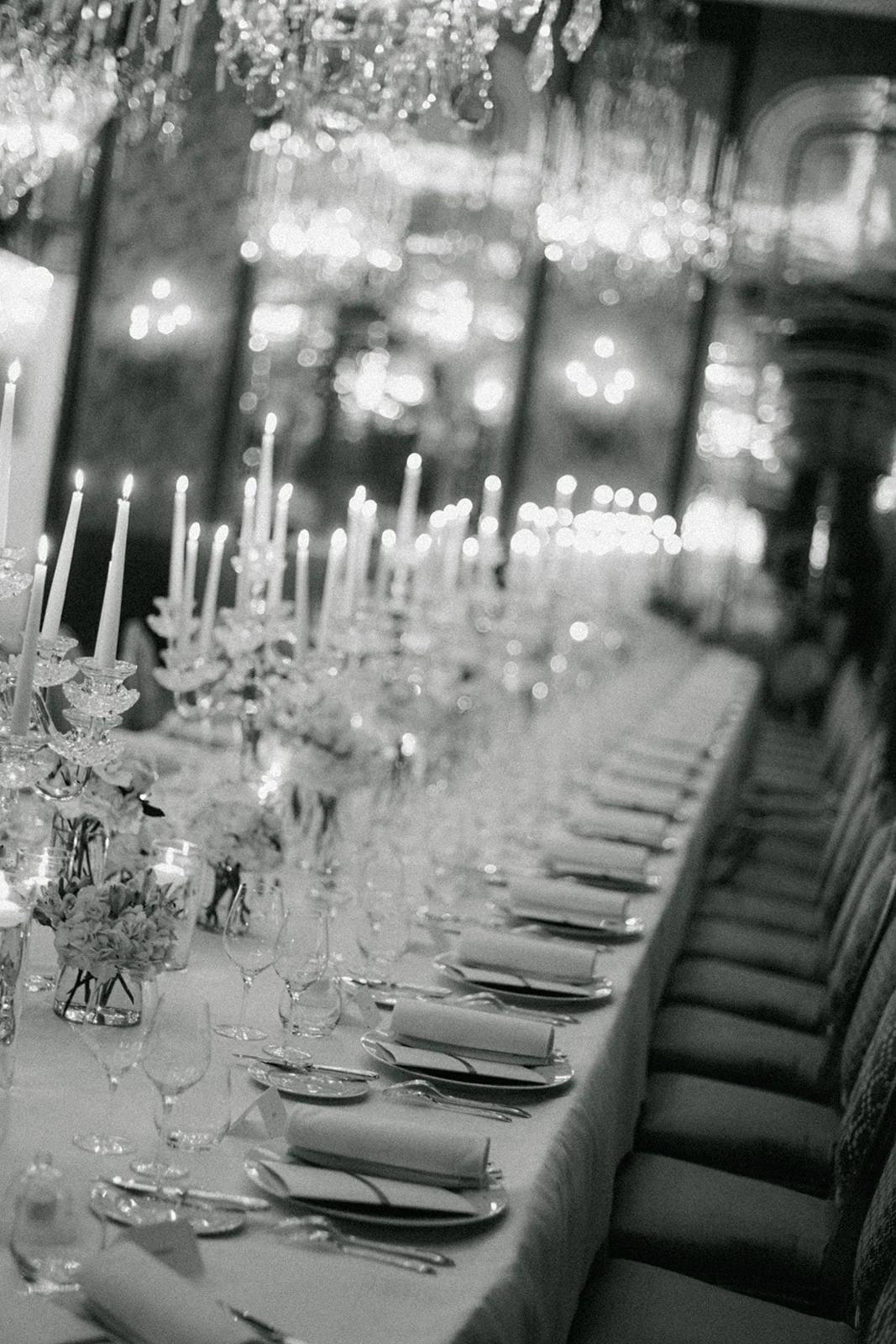
Plaza Athénée · Reception design
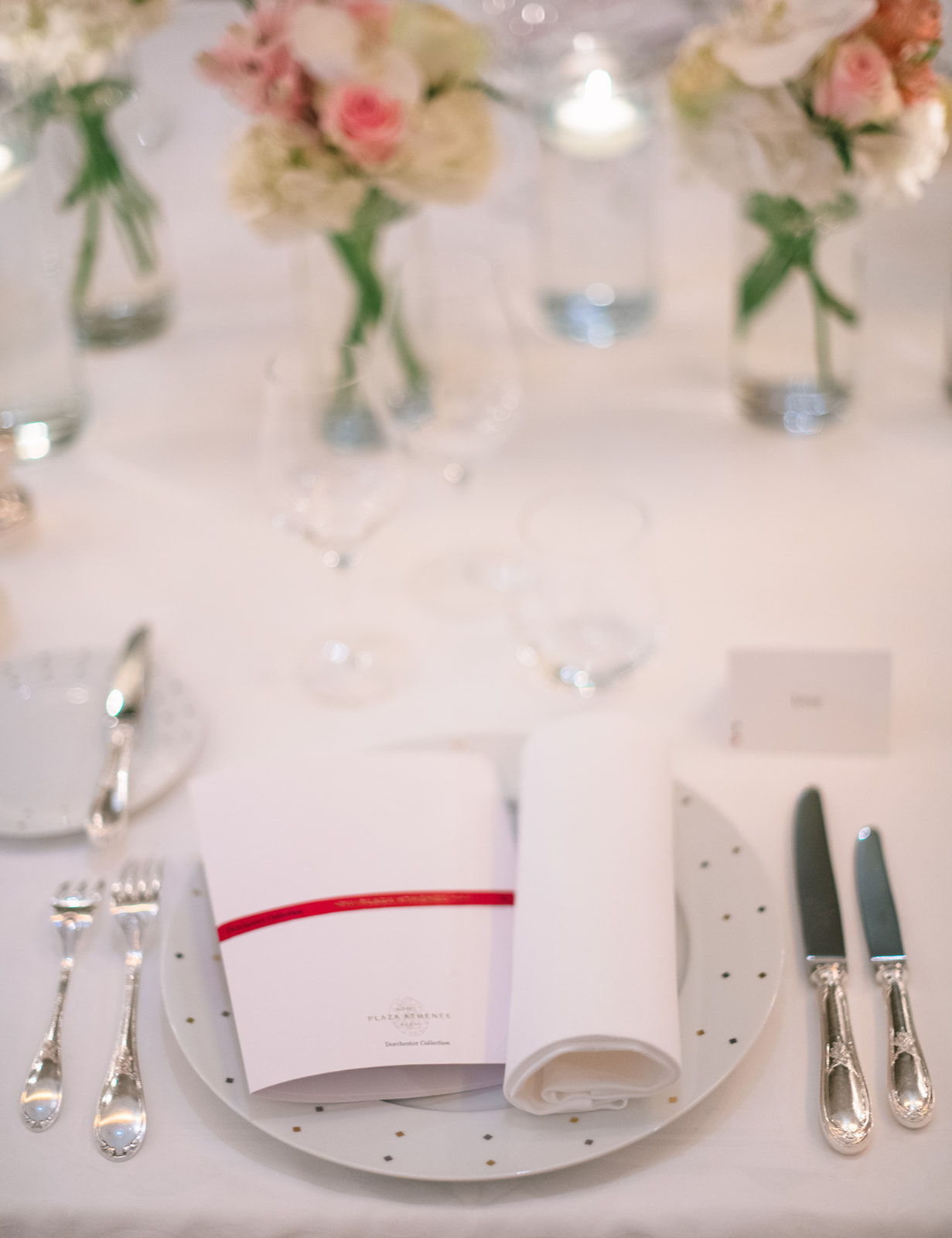
Plaza Athénée · Table details
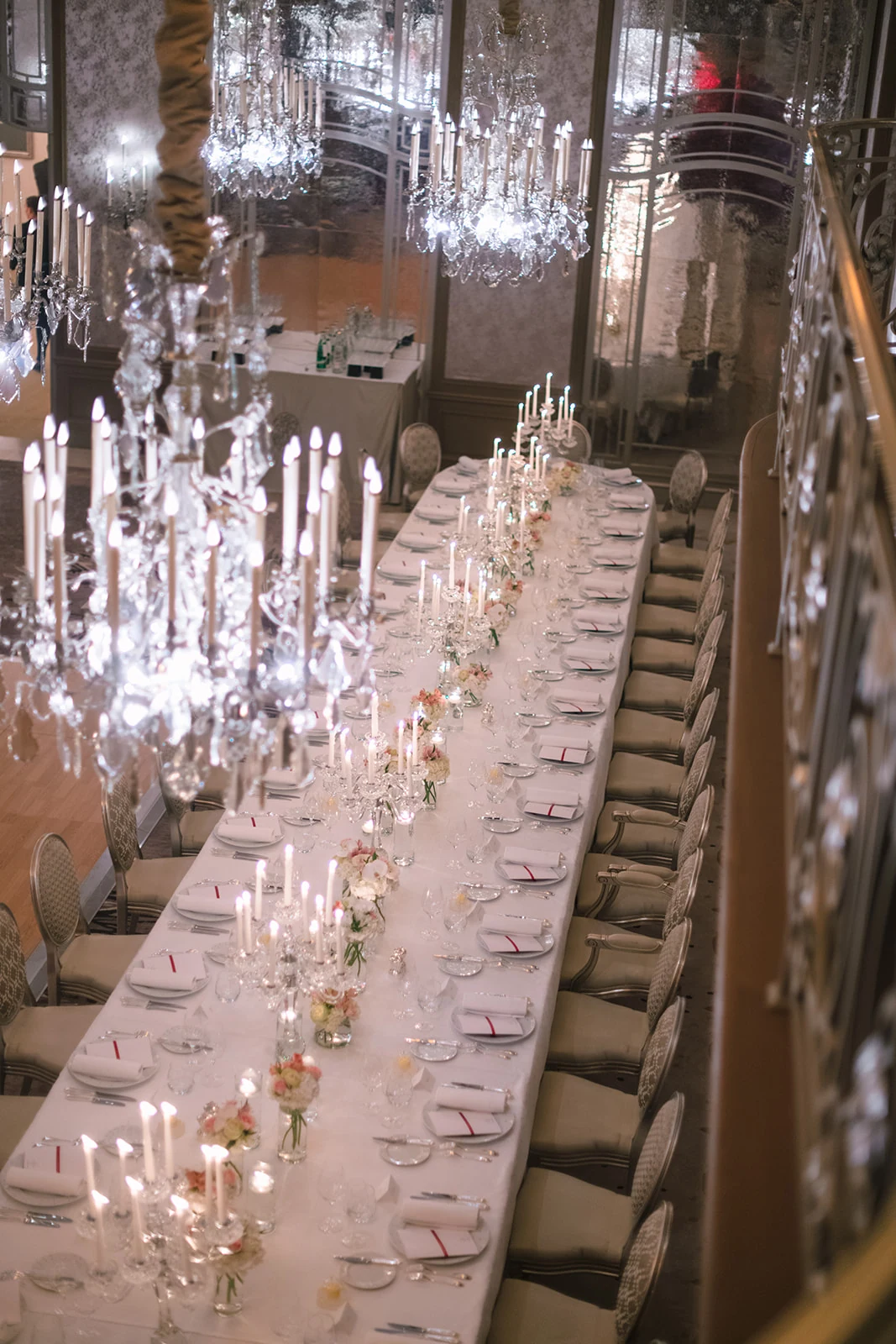
Plaza Athénée · Ballroom
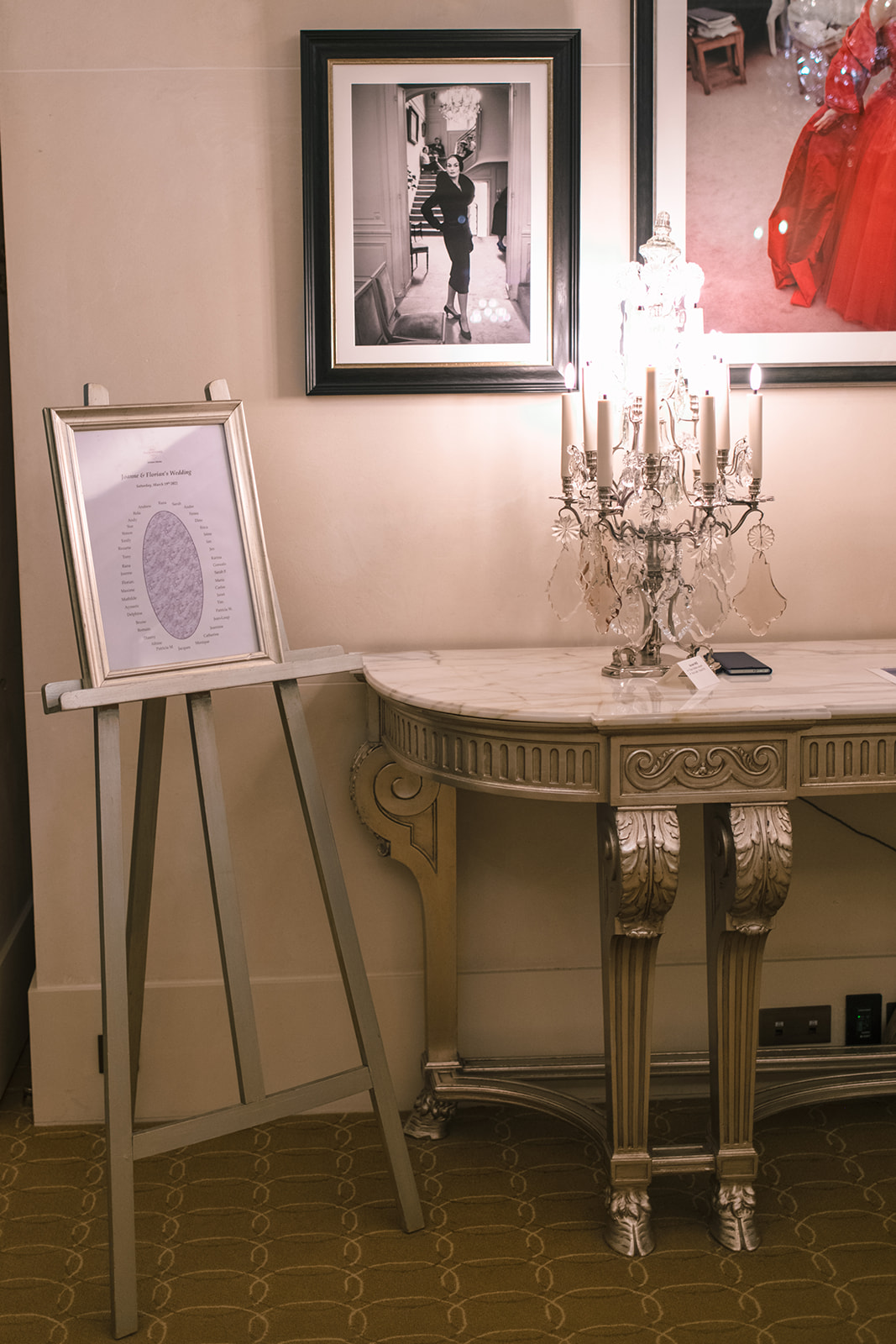
Plaza Athénée · Seating plan
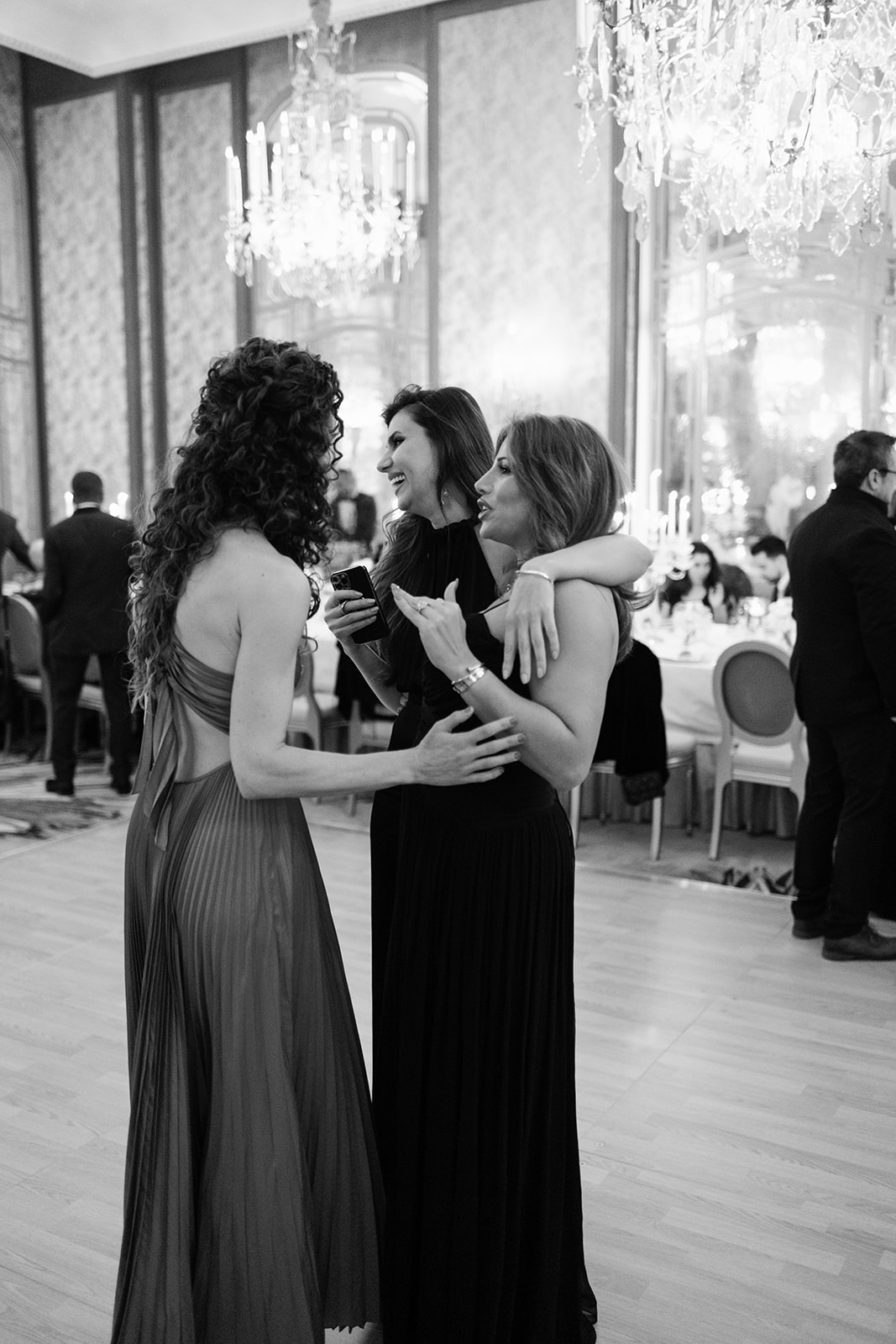
Plaza Athénée · Guest moments
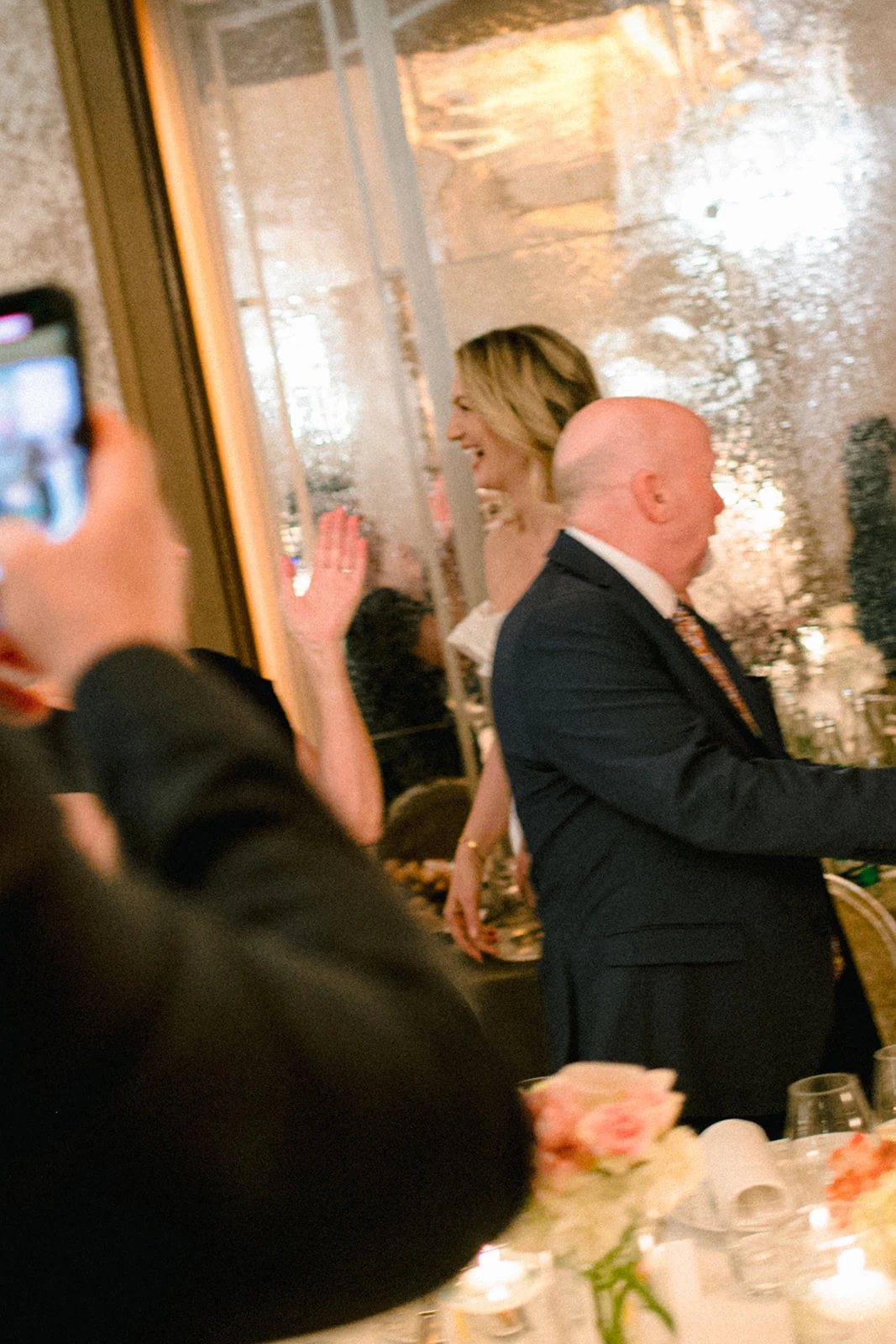
Plaza Athénée · Dinner speech
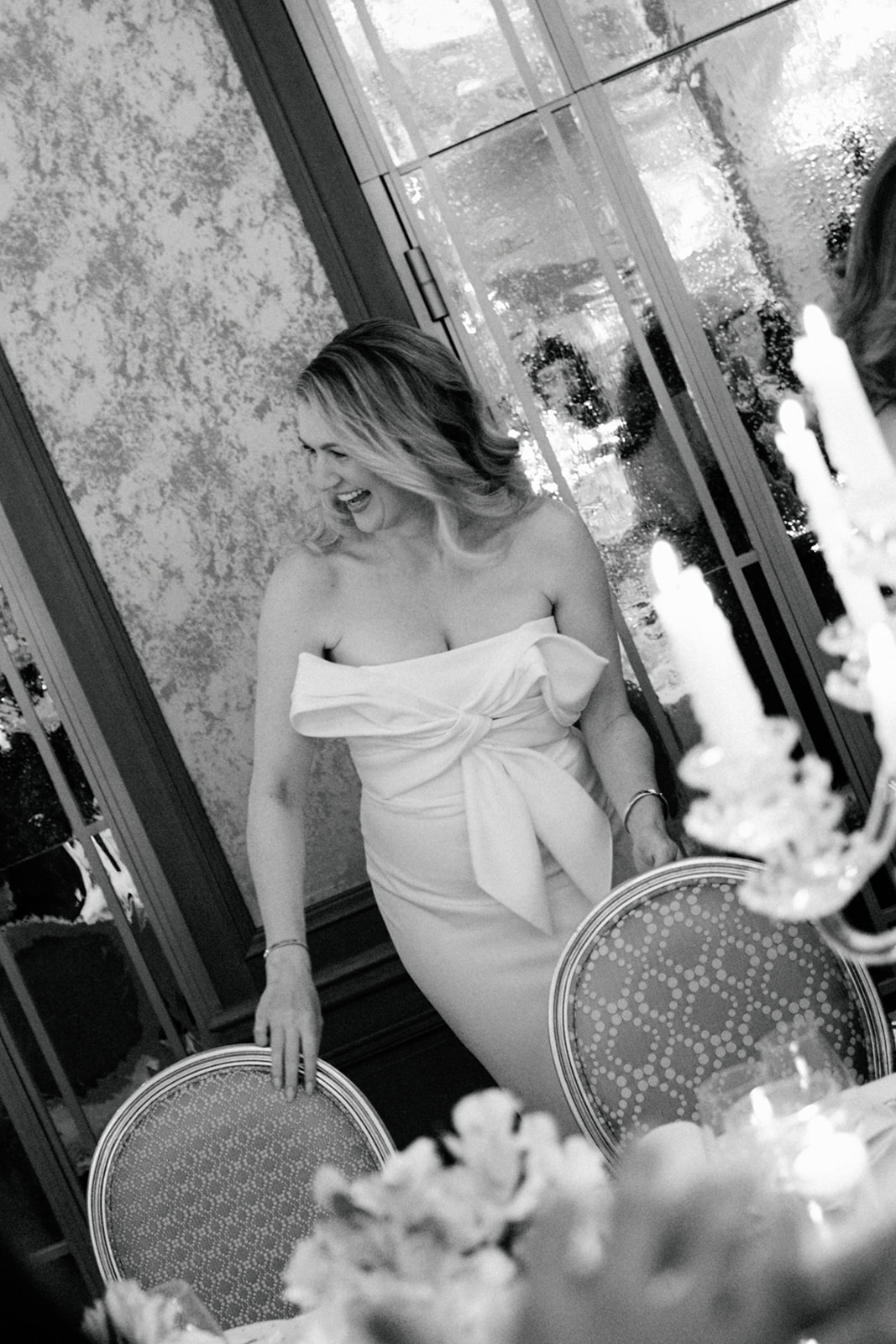
Plaza Athénée · Dinner
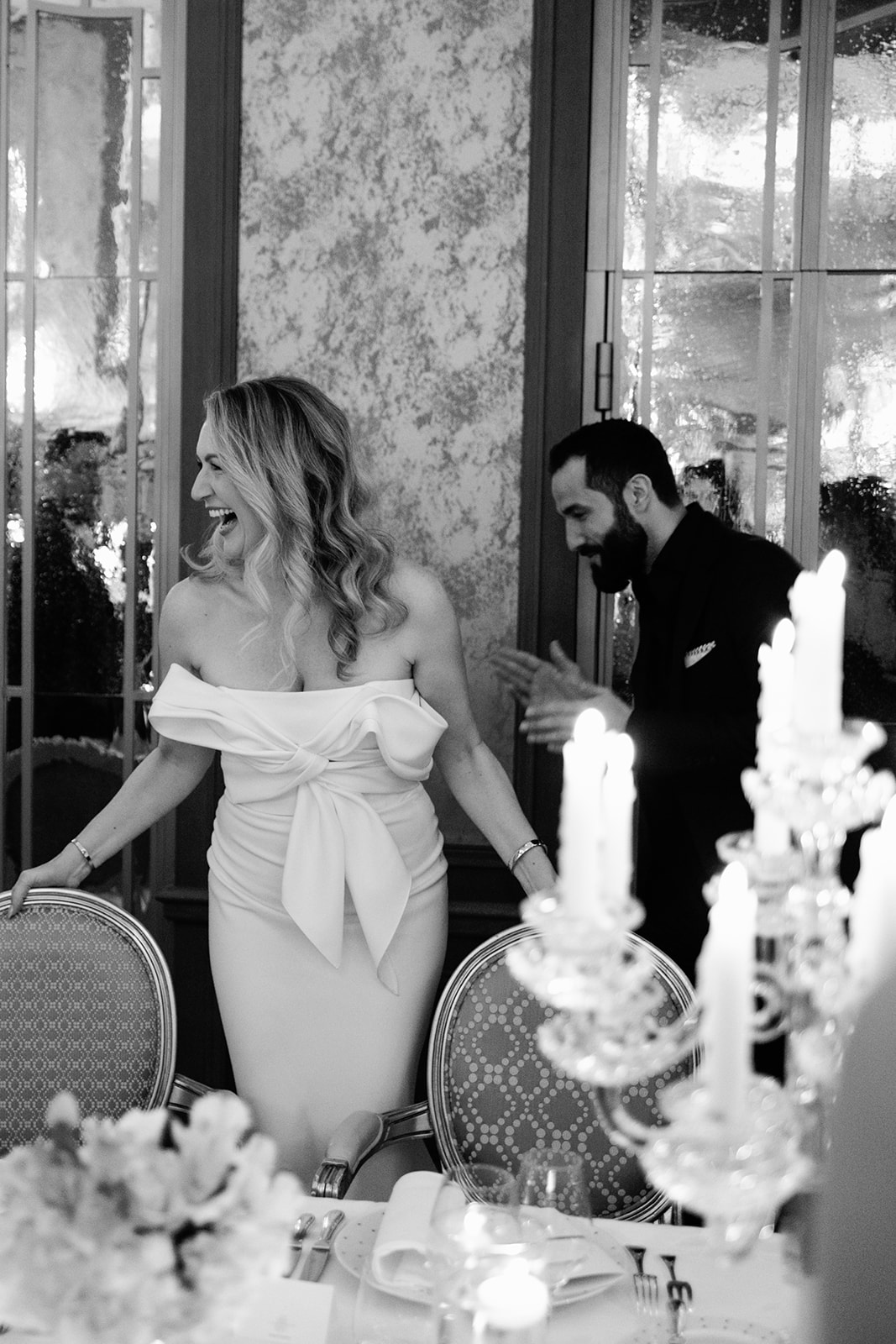
Plaza Athénée · Dinner
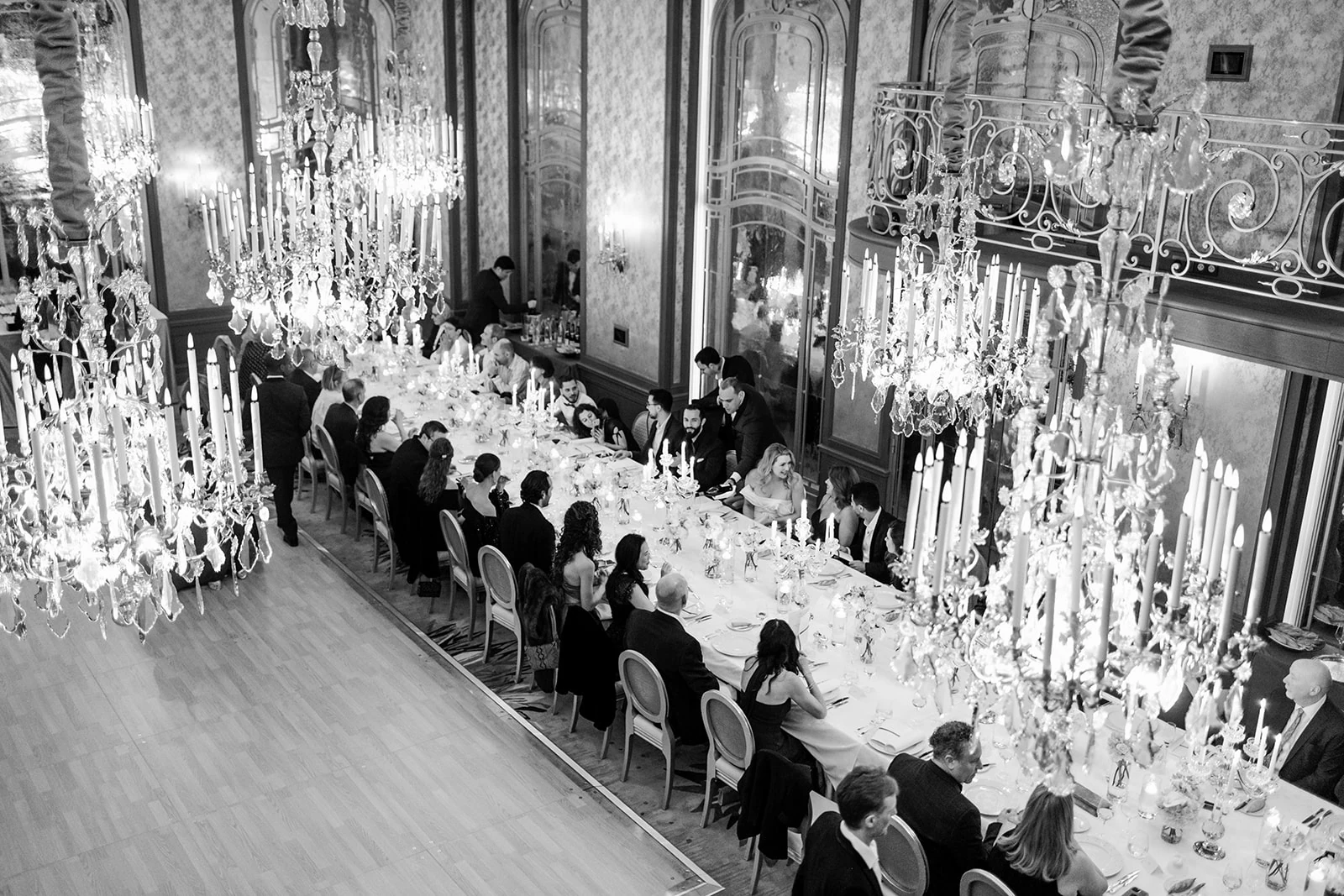
Plaza Athénée · Reception room
03 — The ceremony
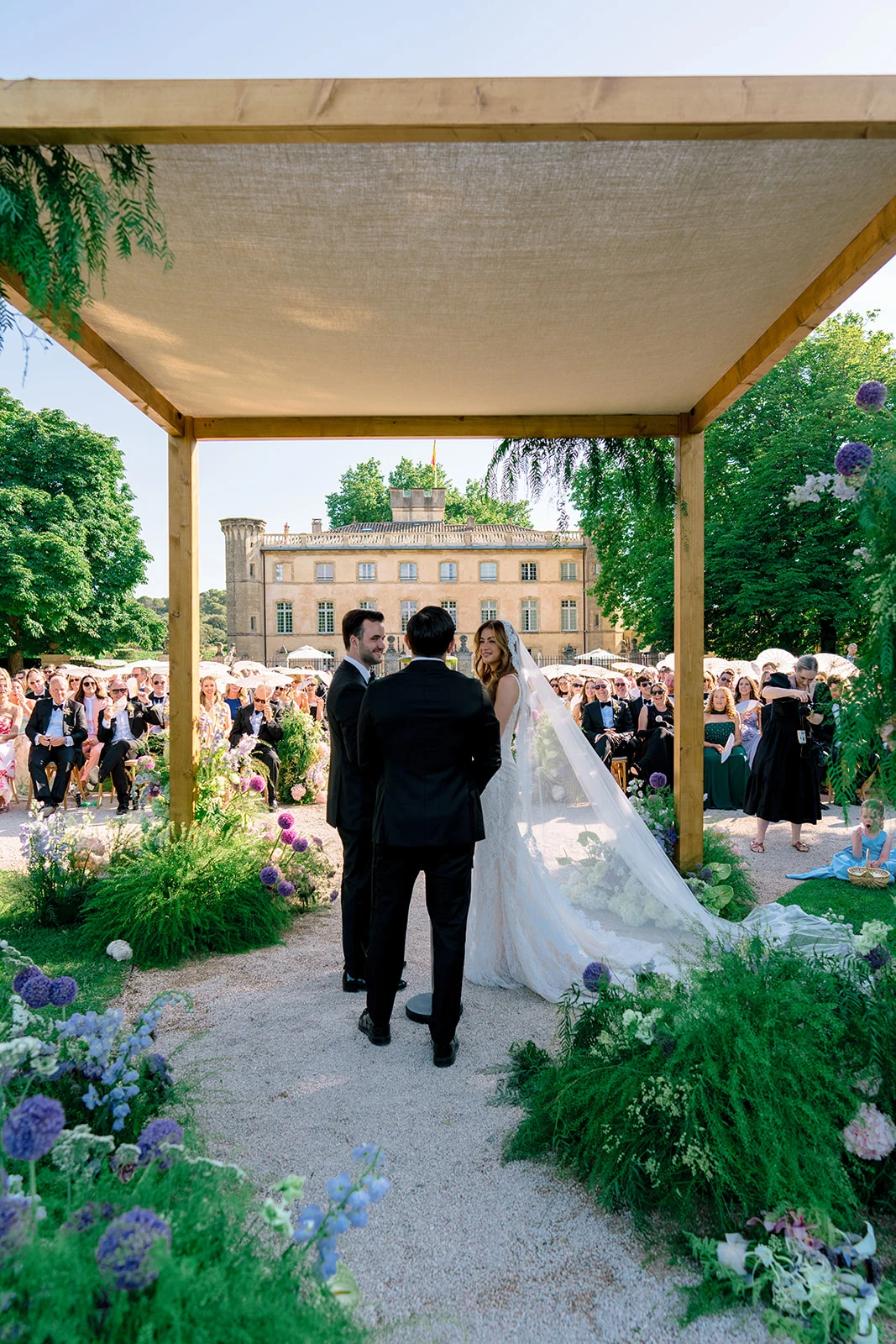
The indoor ceremony was designed around proximity rather than spectacle.
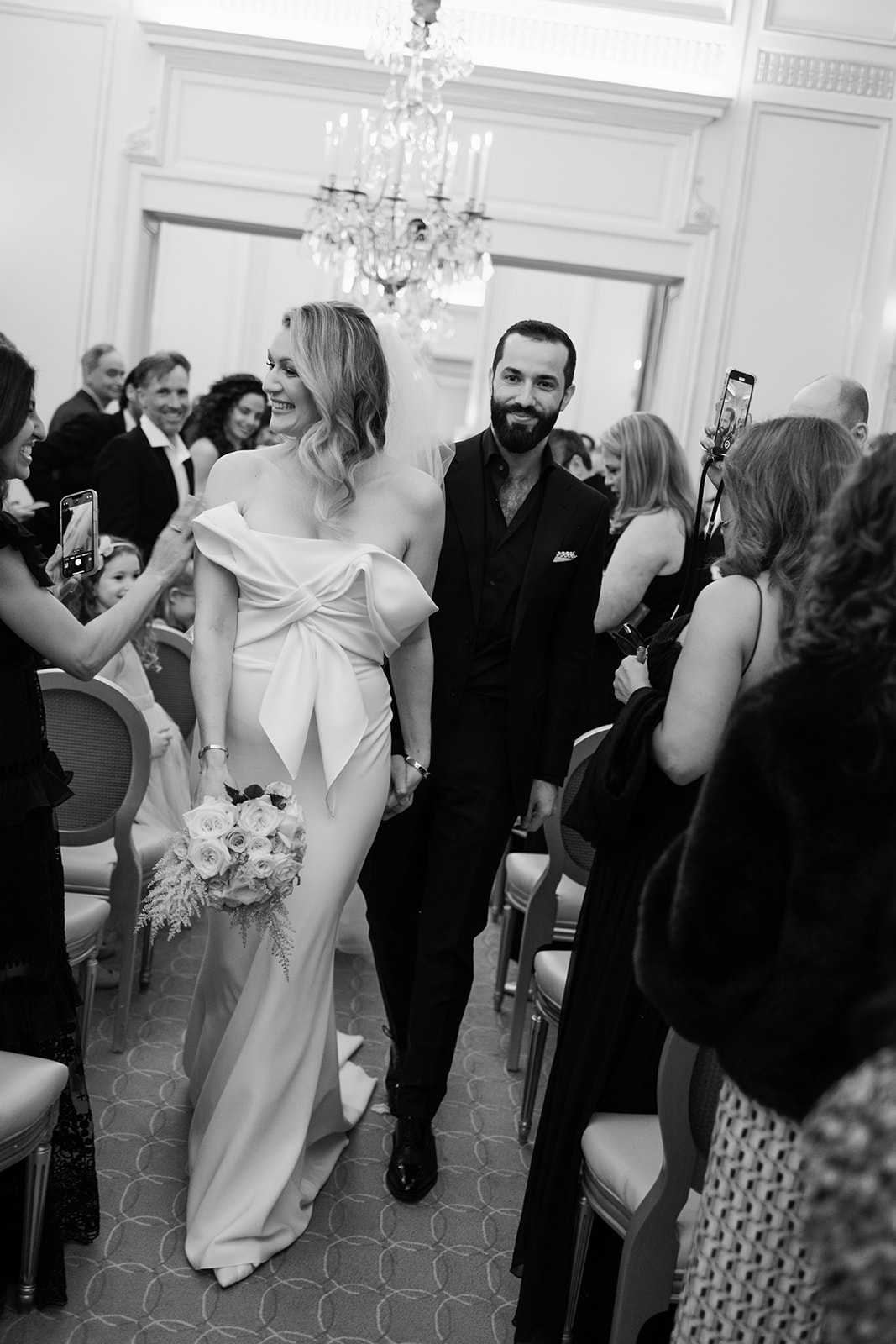
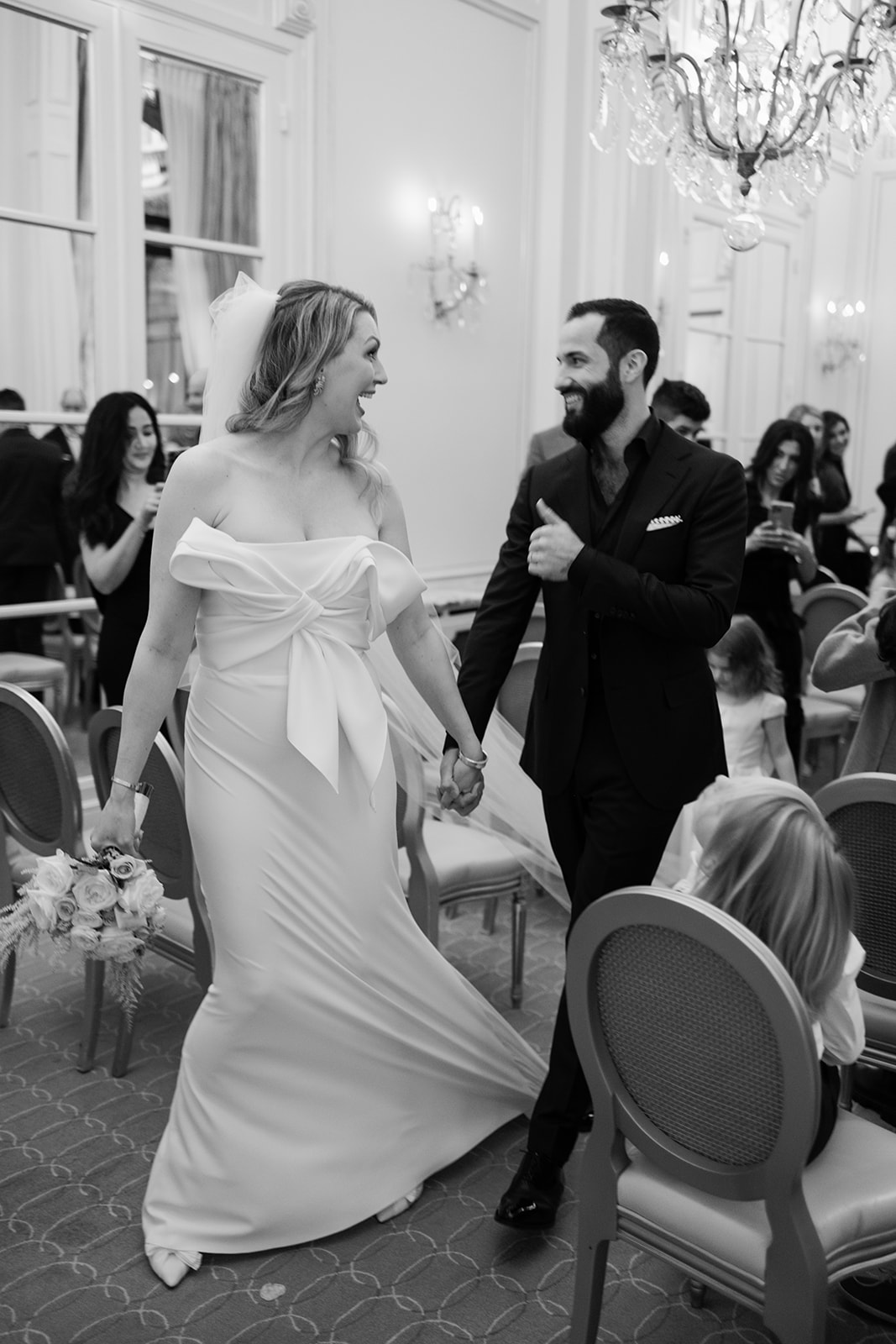
With approximately fifty guests, the couple could see and respond to the people closest to them throughout the vows. The room felt warm and personal, while the hotel service and surrounding interiors maintained the precision expected from a Paris palace.
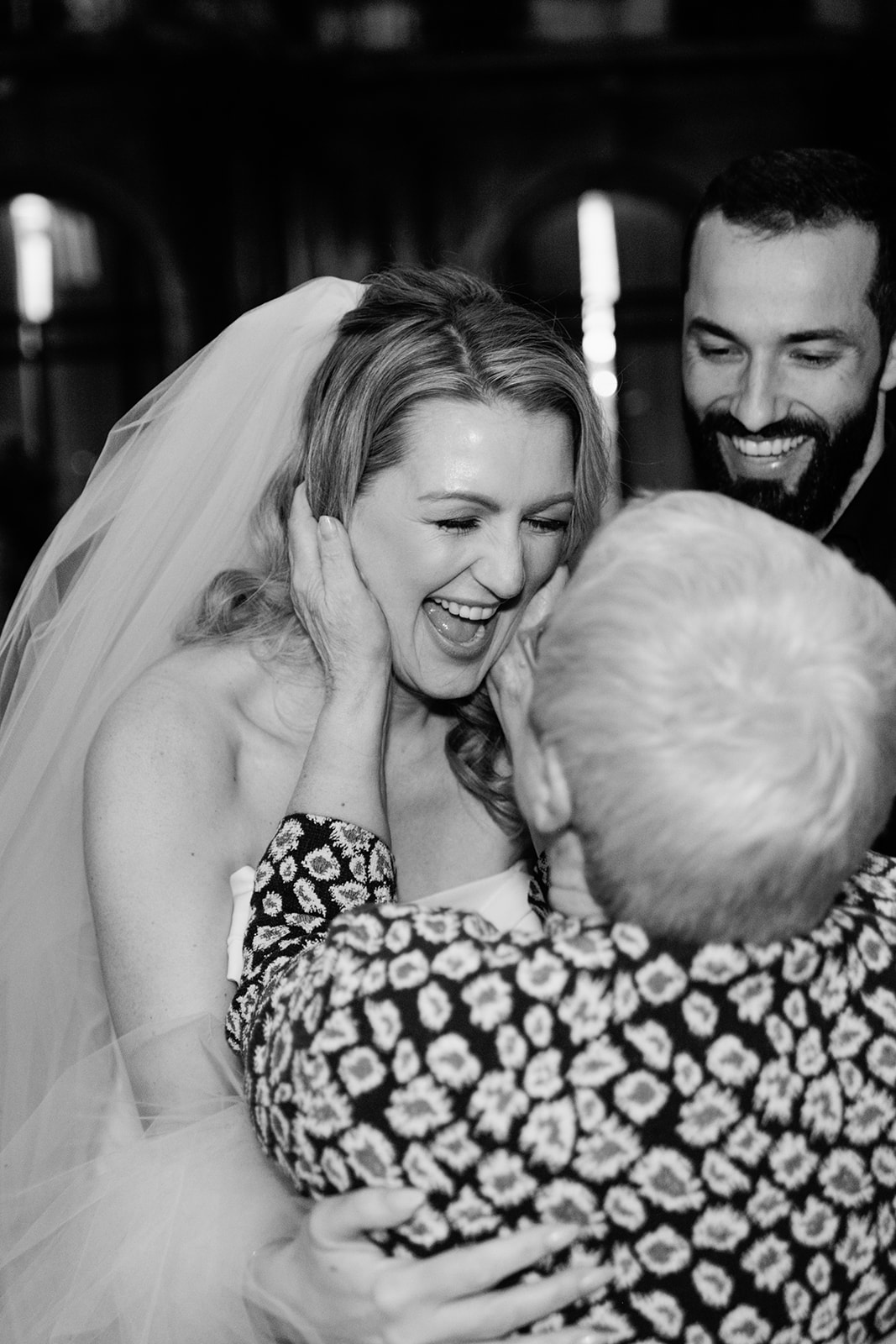
During the ceremony, the photographic approach remained documentary. The priority was the entrance, exchanges of vows, reactions and relationships between the couple, their families and friends. Direction was reserved for moments before and after the ceremony, so the emotional rhythm of the event was never interrupted.
04 — The reception
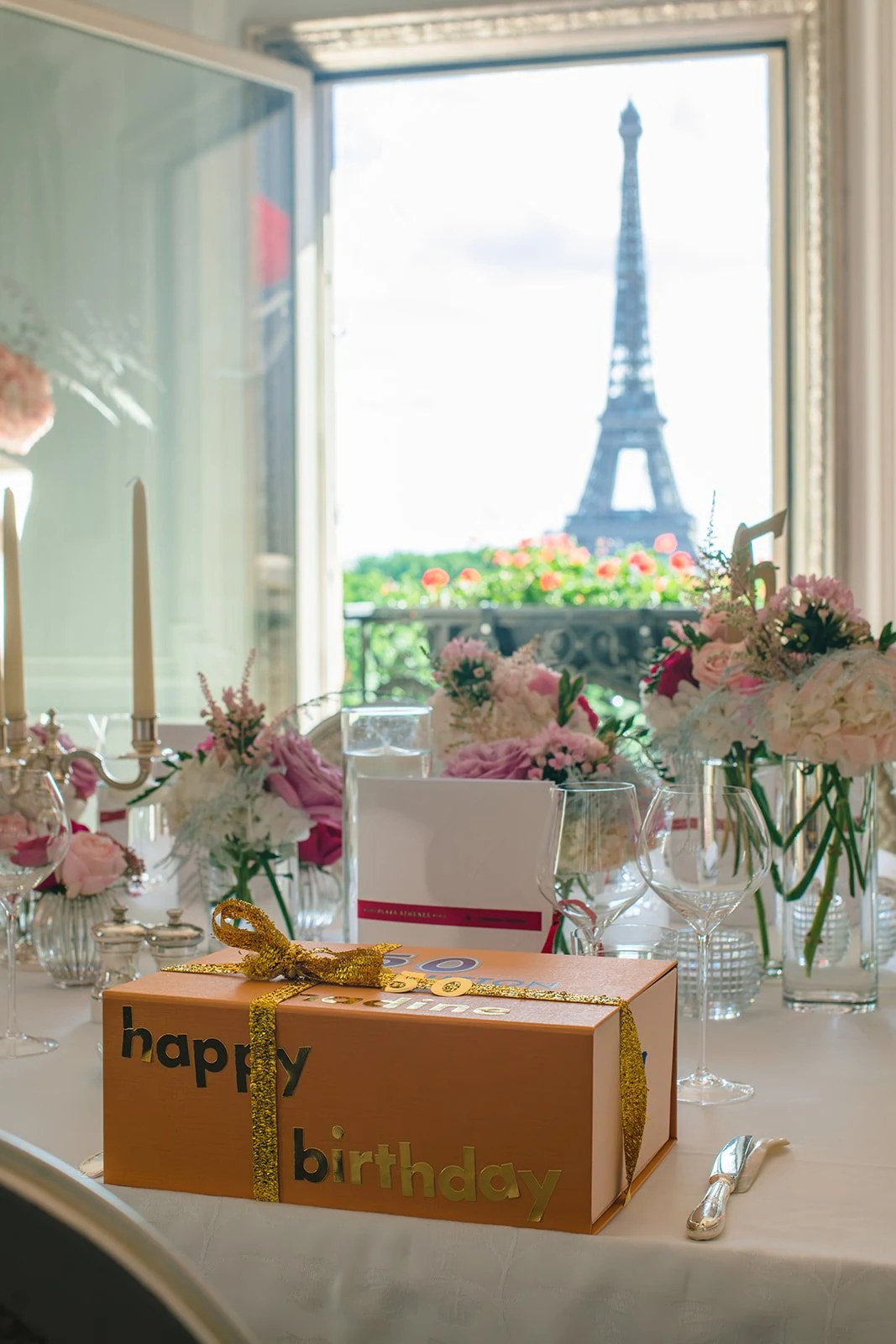
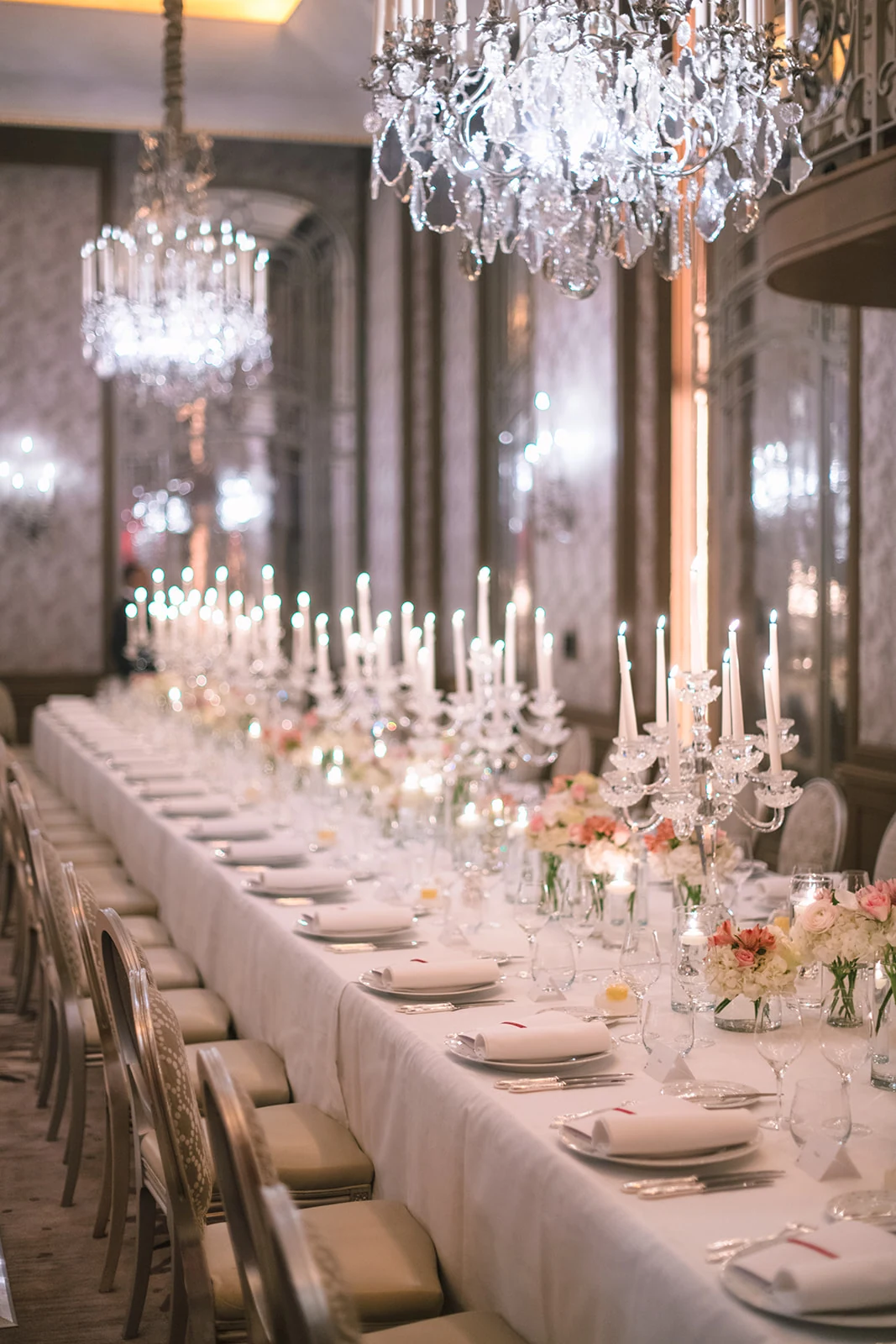
The reception design connected flowers, stationery, table styling and dinner with the atmosphere of Avenue Montaigne.
Photographing the room before guests entered preserved the complete design: place settings, floral arrangements, paper details and the relationship between the table and the surrounding interiors. Once dinner began, the focus moved from decoration to conversation, gestures and the energy of the guests.
This transition matters in a complete wedding story. Refined details establish the visual identity, but the photographs become more meaningful when they also show how the room was experienced by the people present.
The entrance · In motion
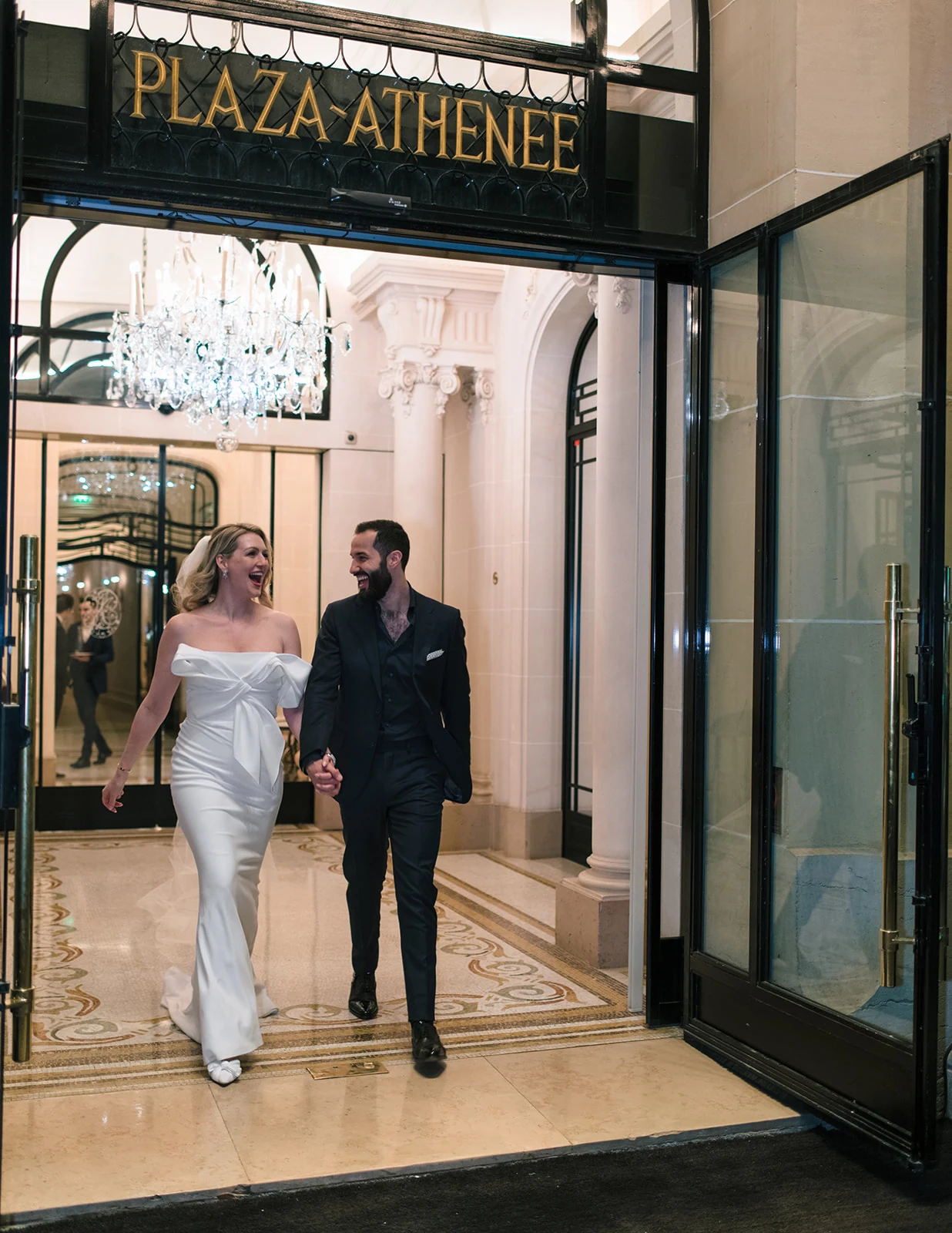
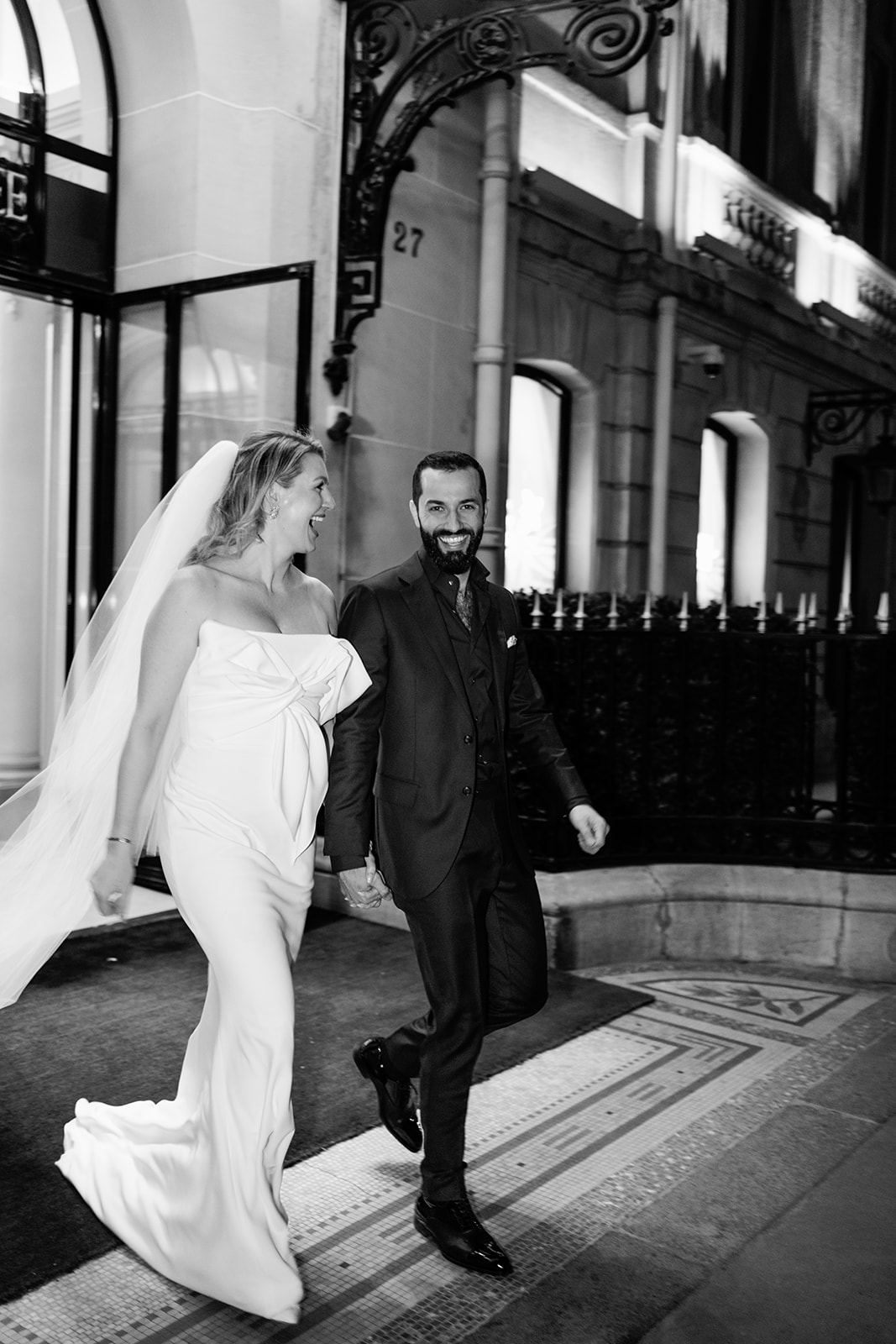
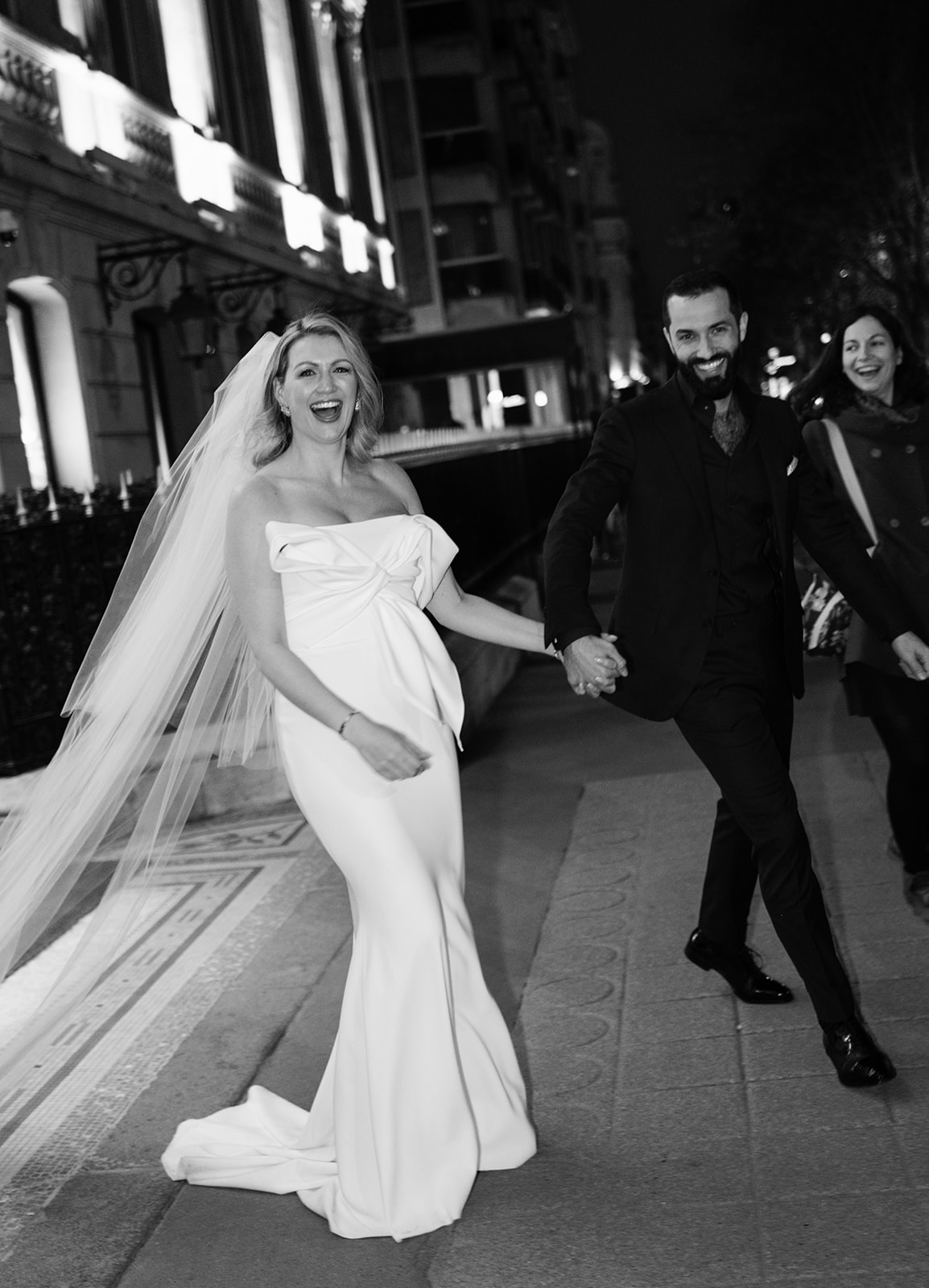
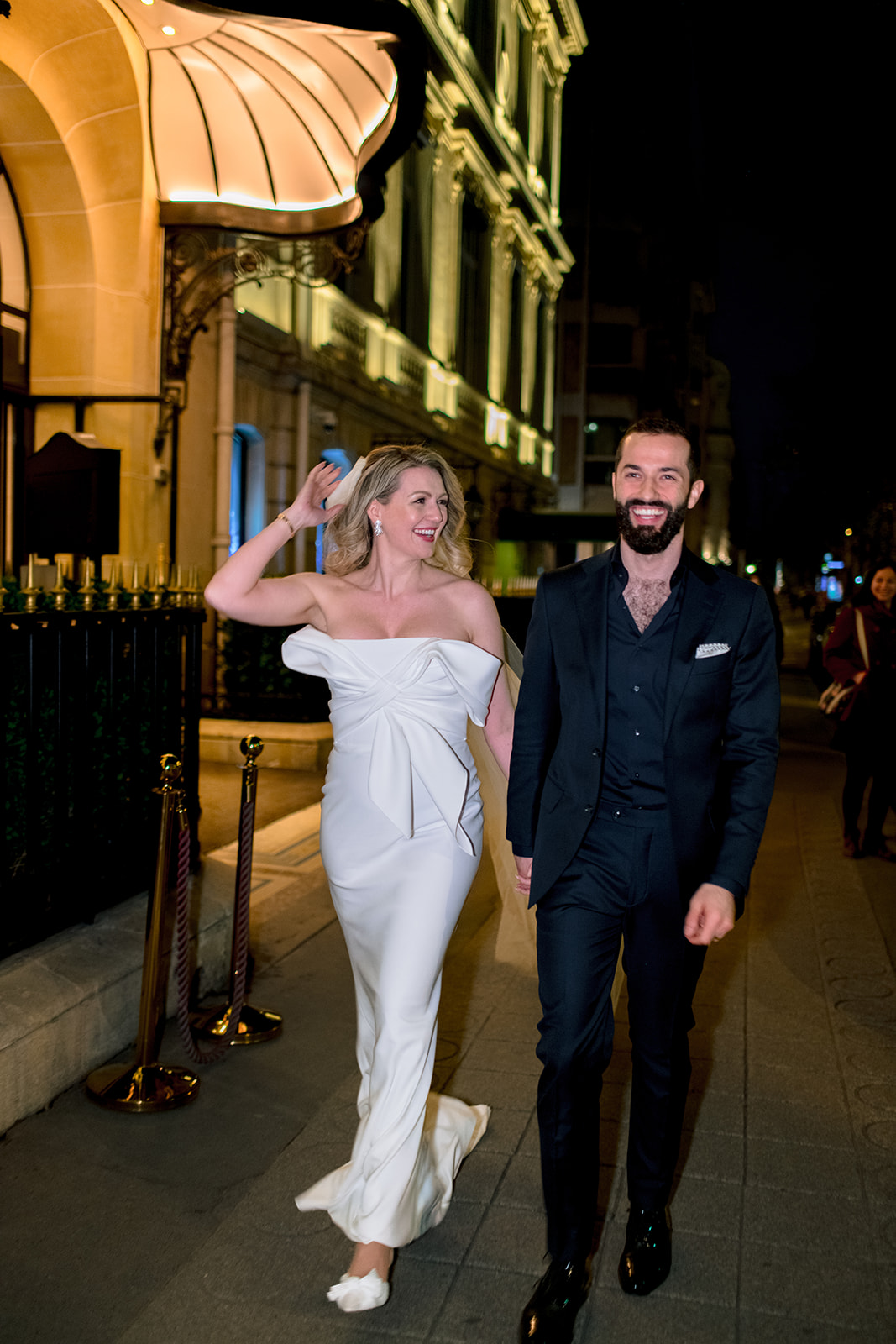
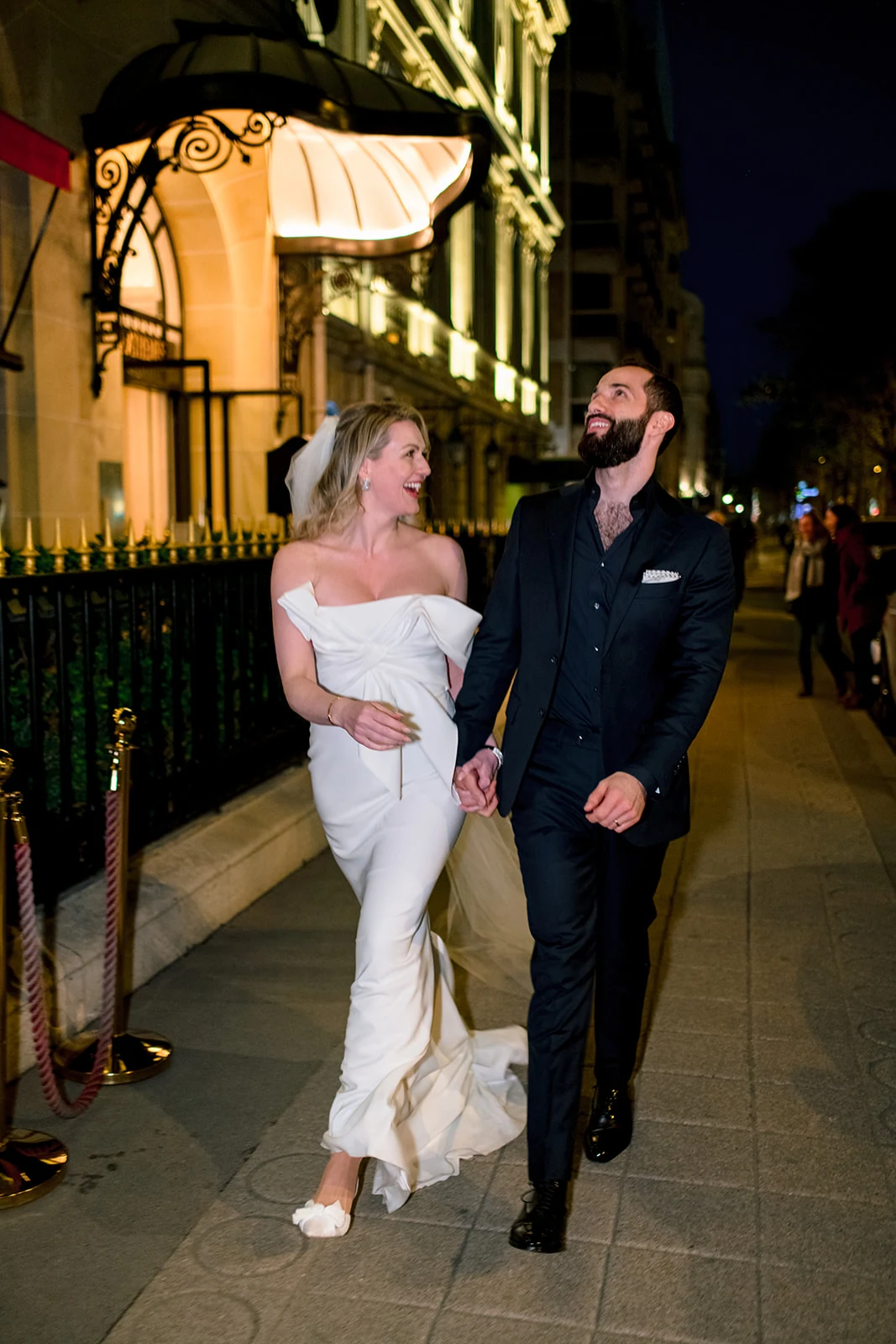
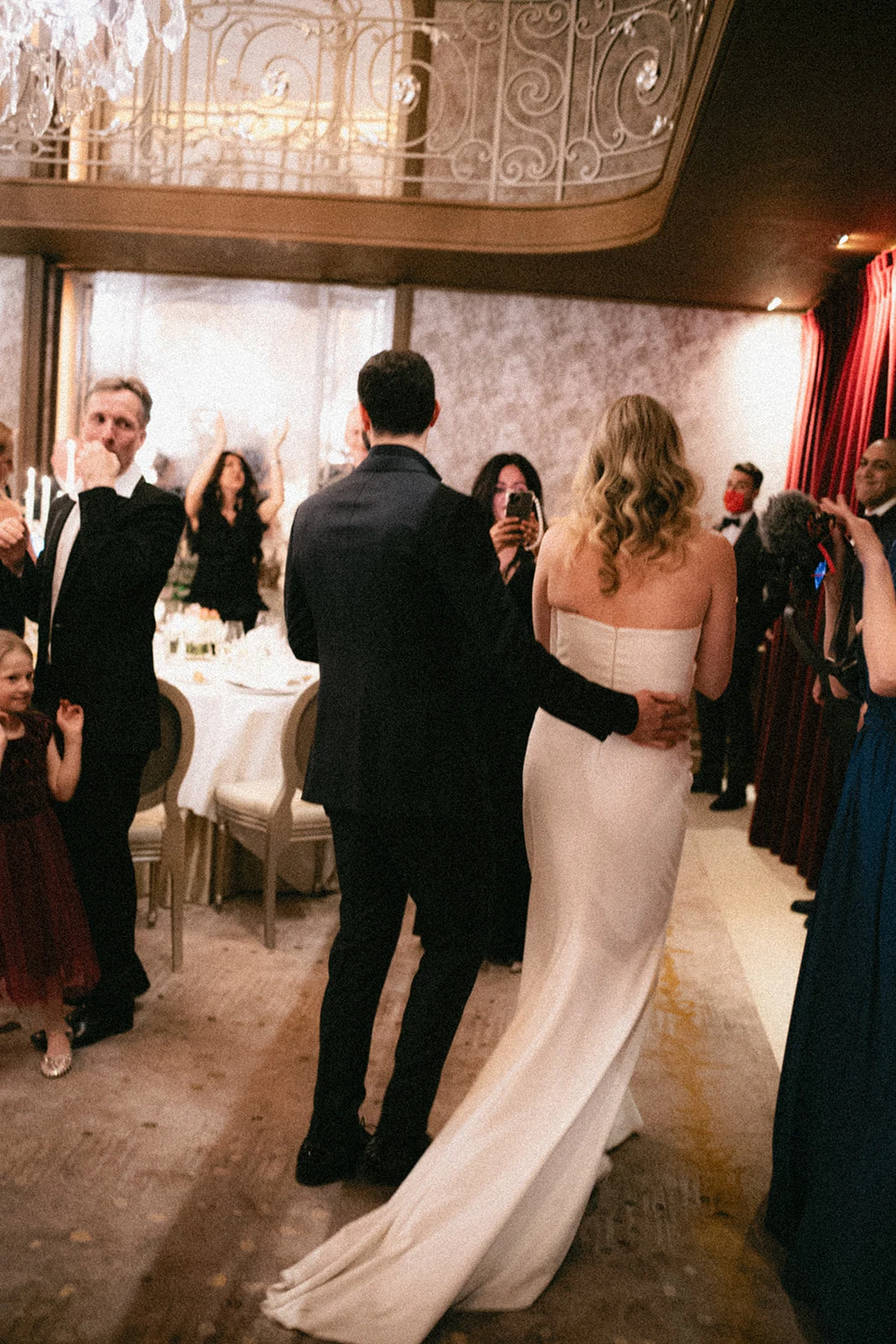
From the staircase to Avenue Montaigne, then straight into the ballroom, the couple’s entrance became a complete visual sequence rather than a transition between events.
Elegant does not have to mean restrained. They walked, ran, laughed and arrived in the room with the energy already high—a fashion-led, documentary chapter built around movement, personality and the guests’ reaction.
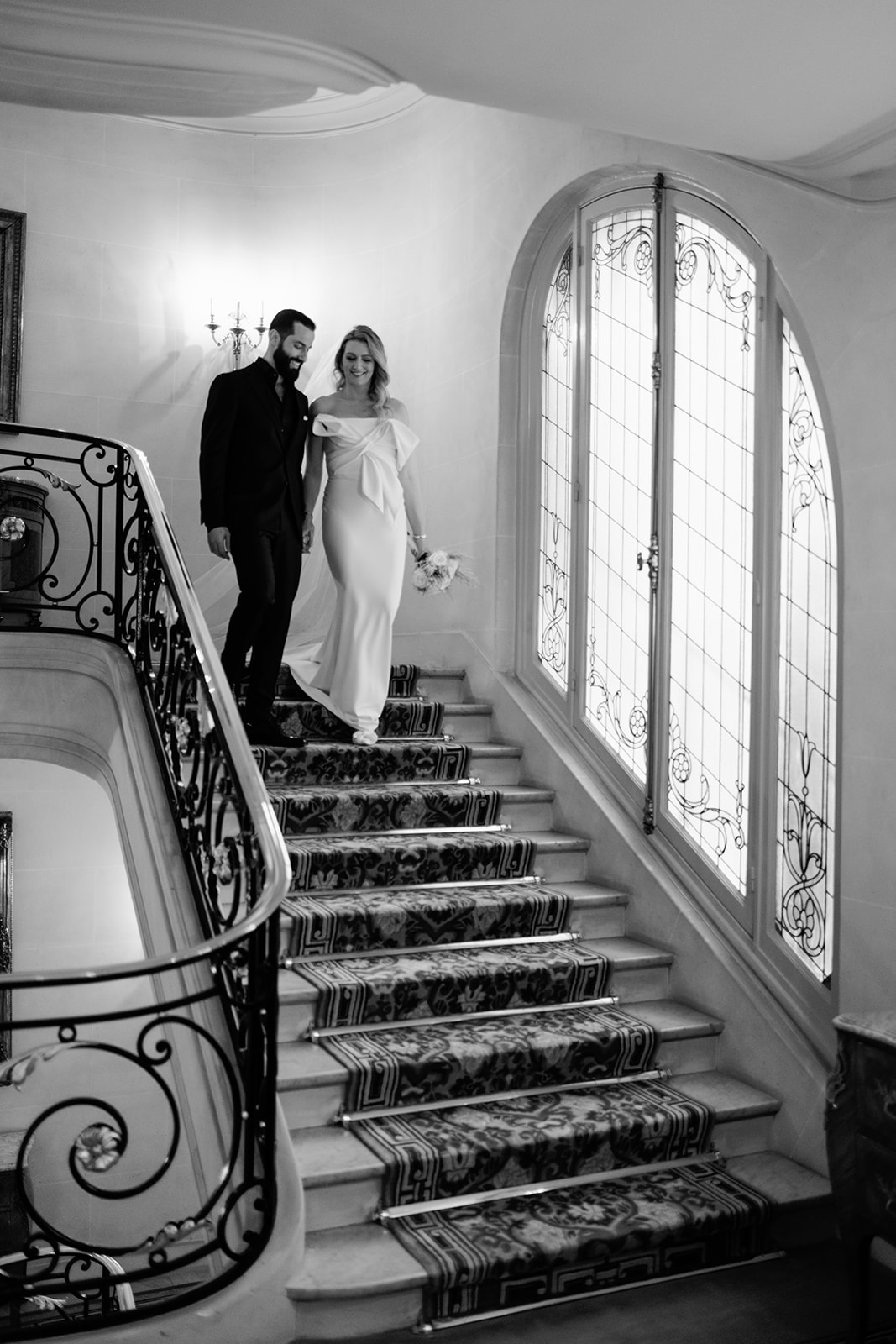
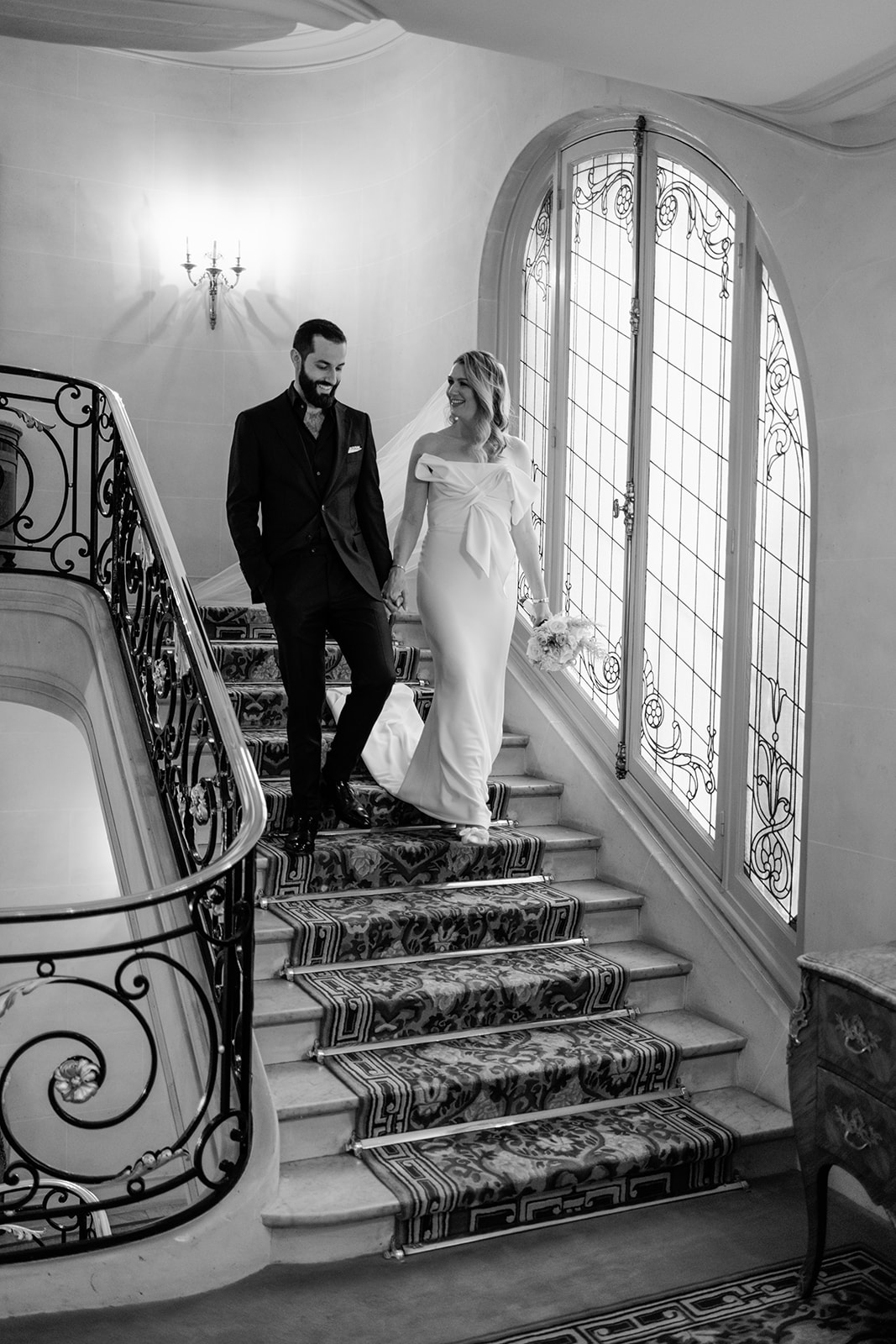
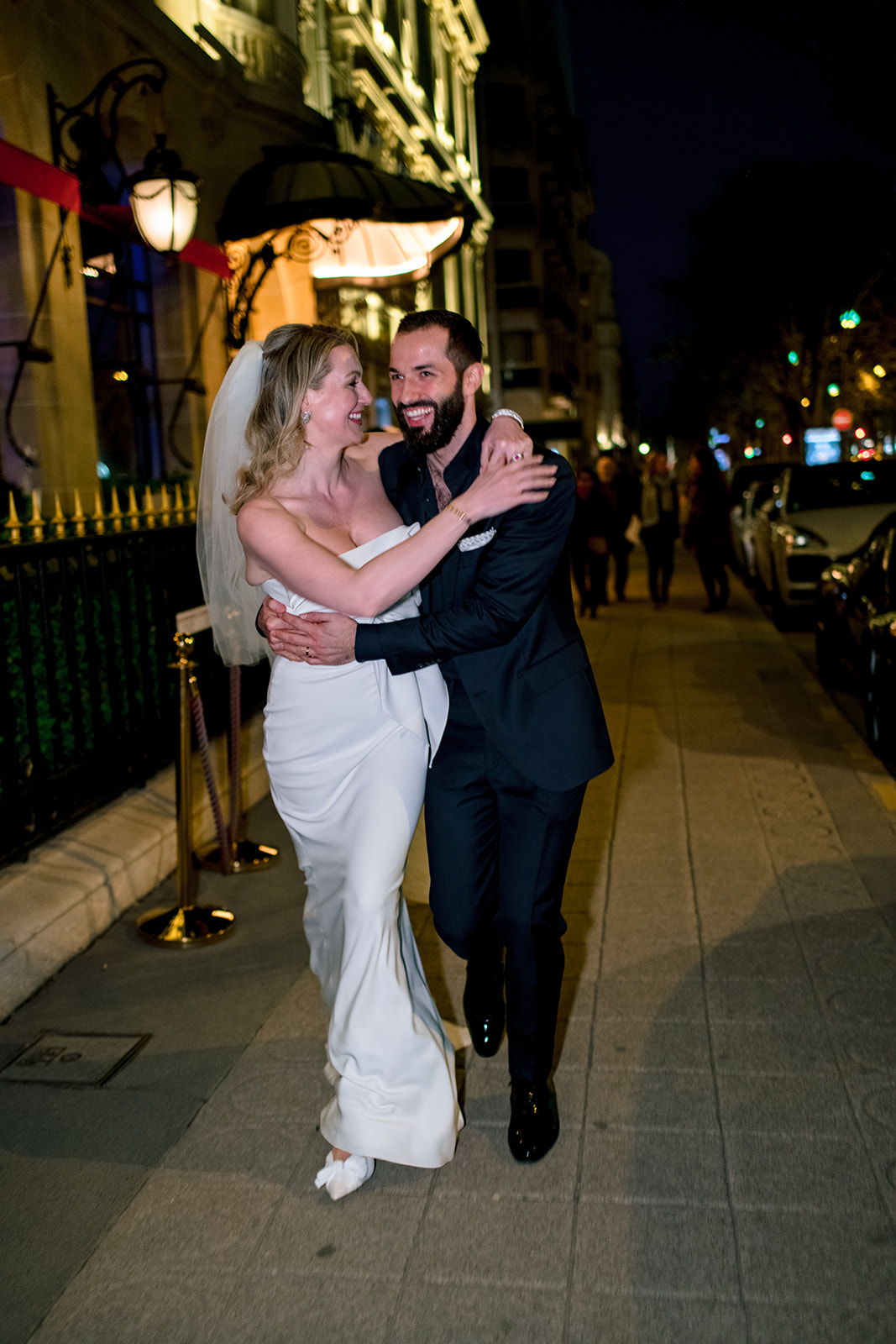
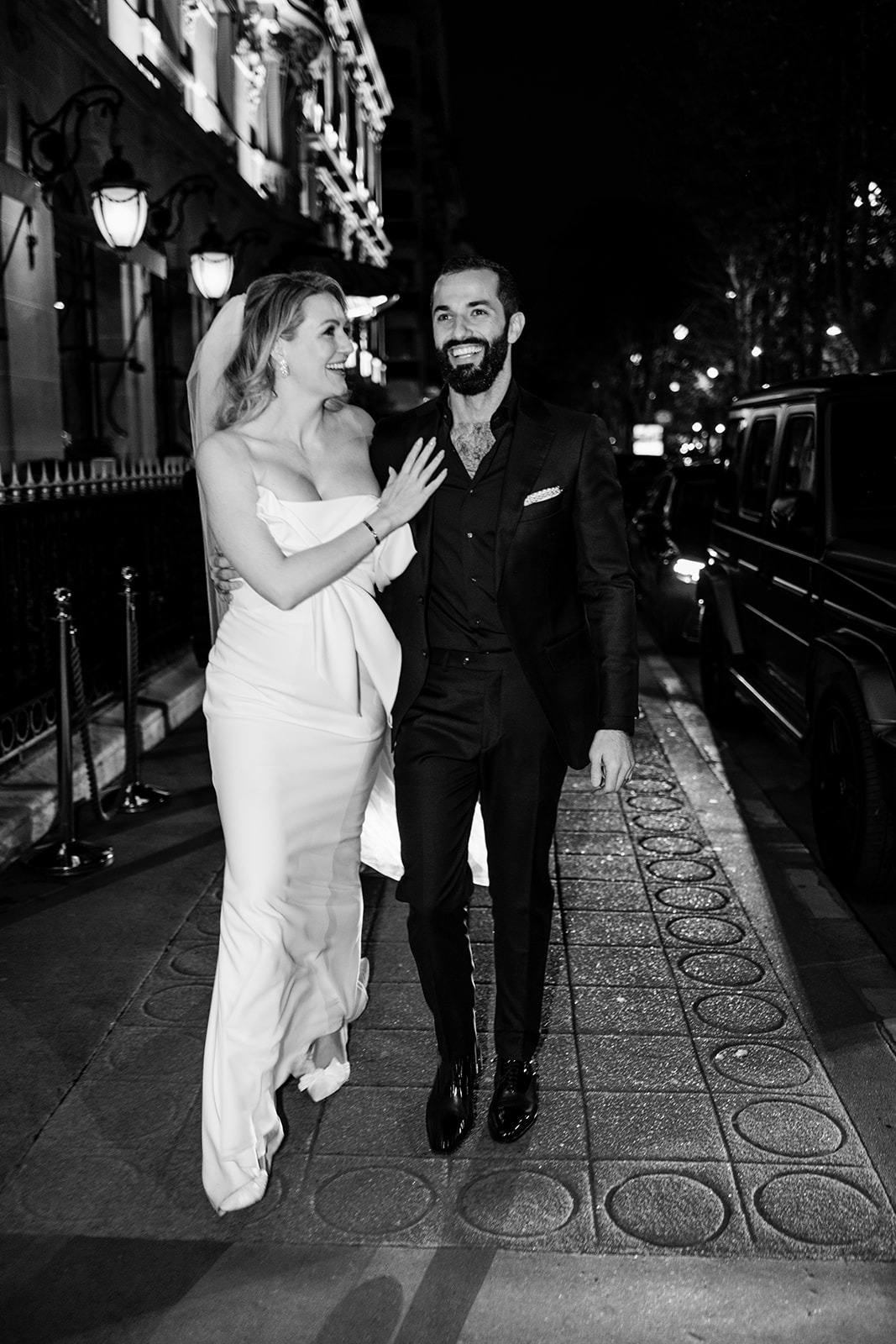
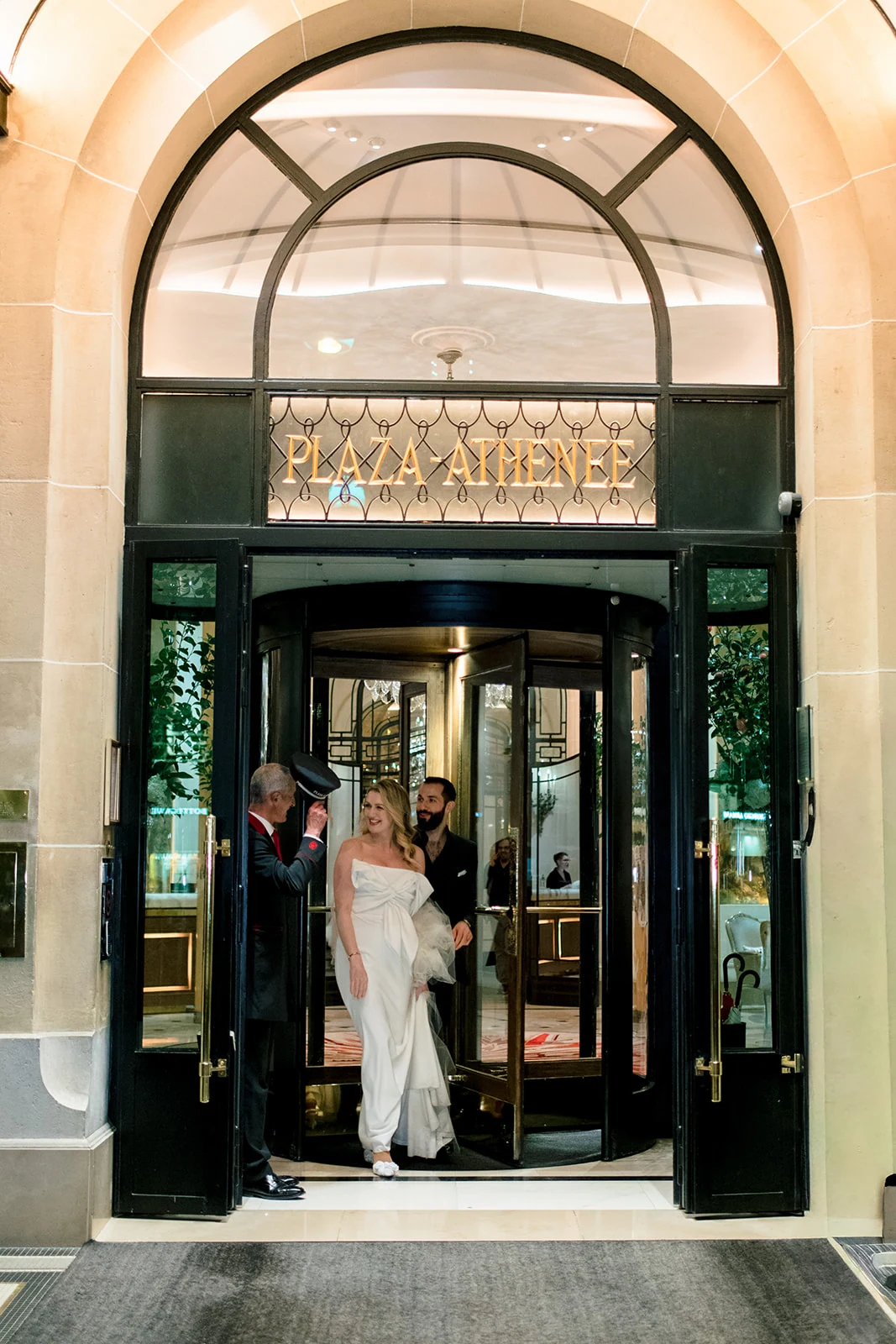
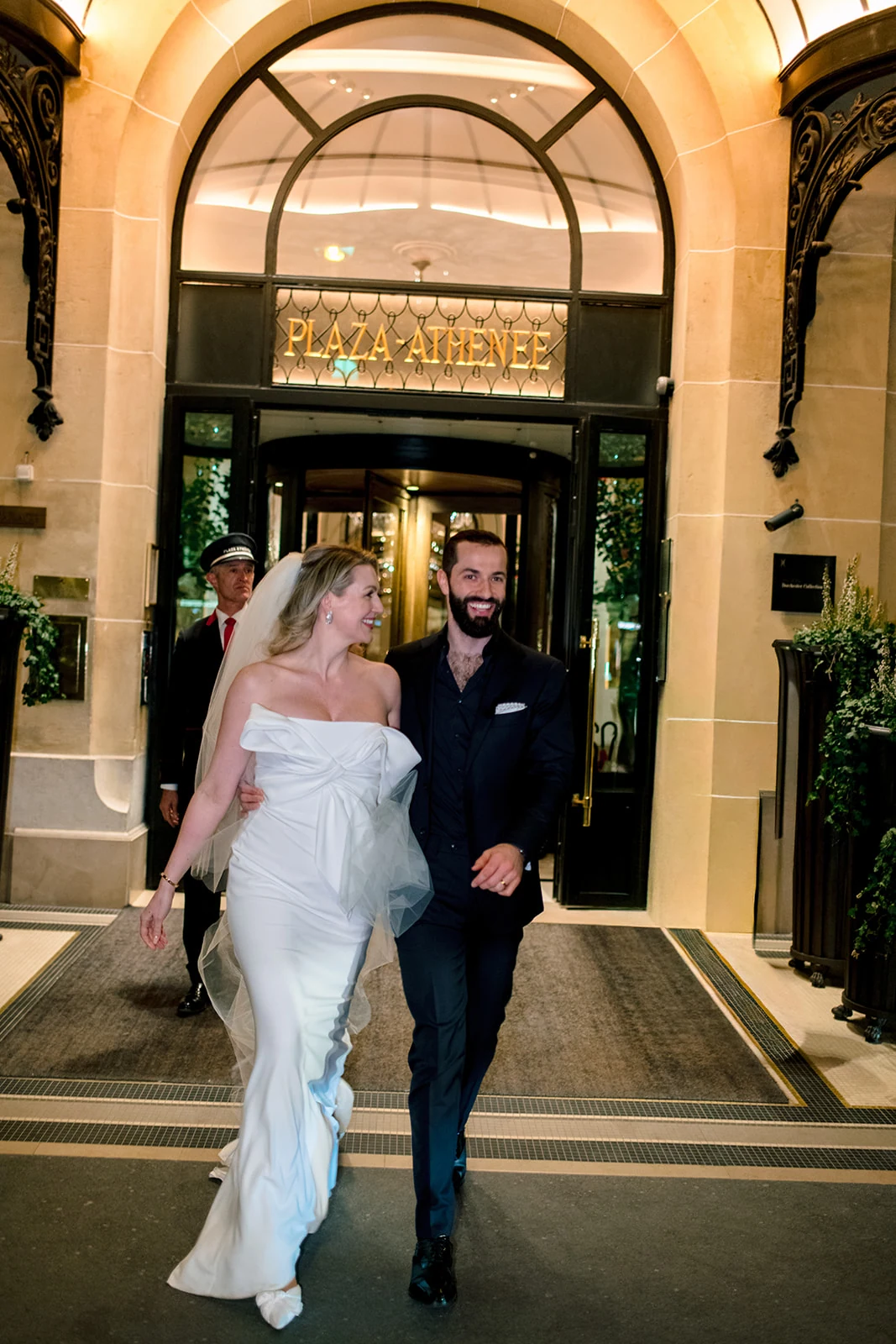
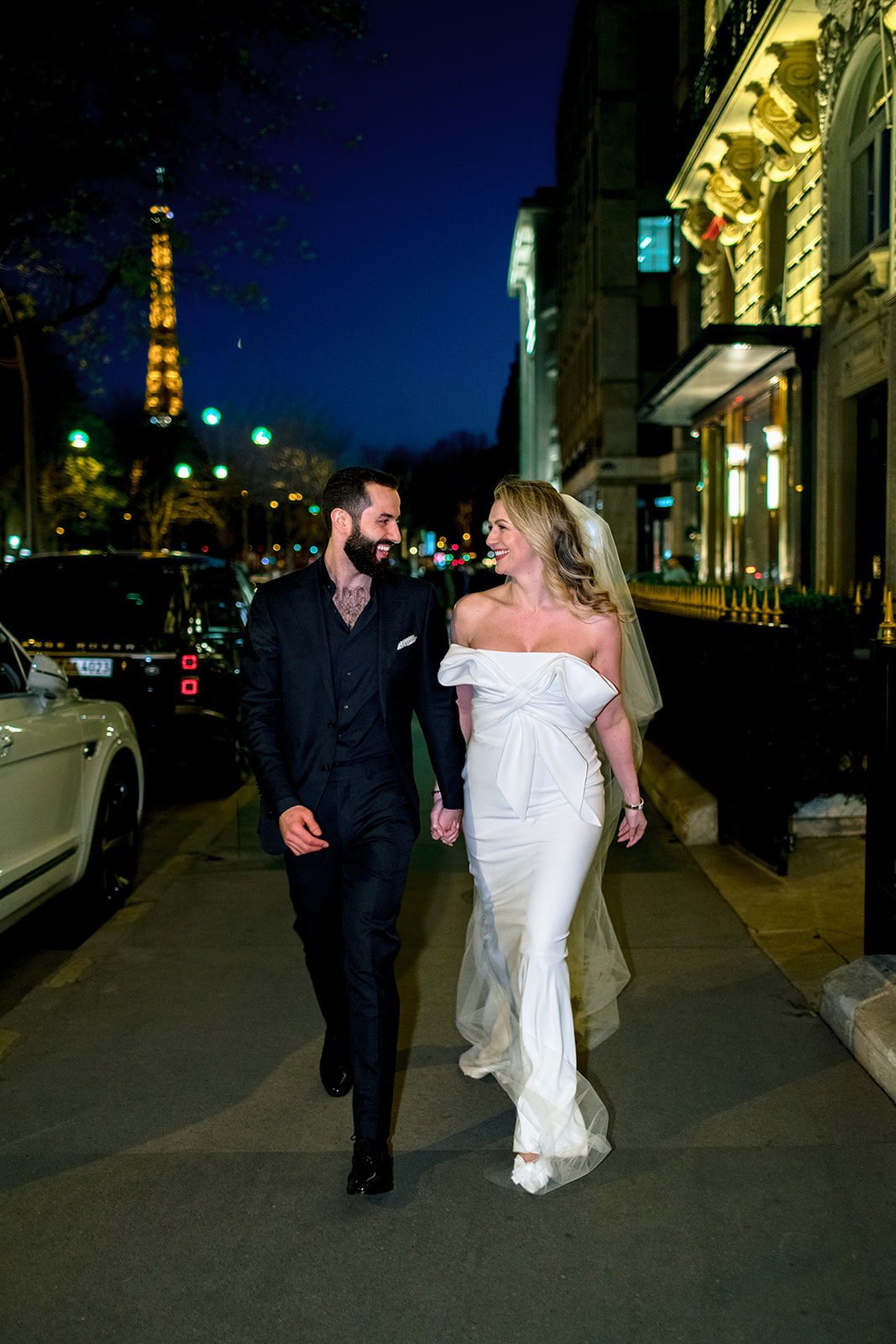
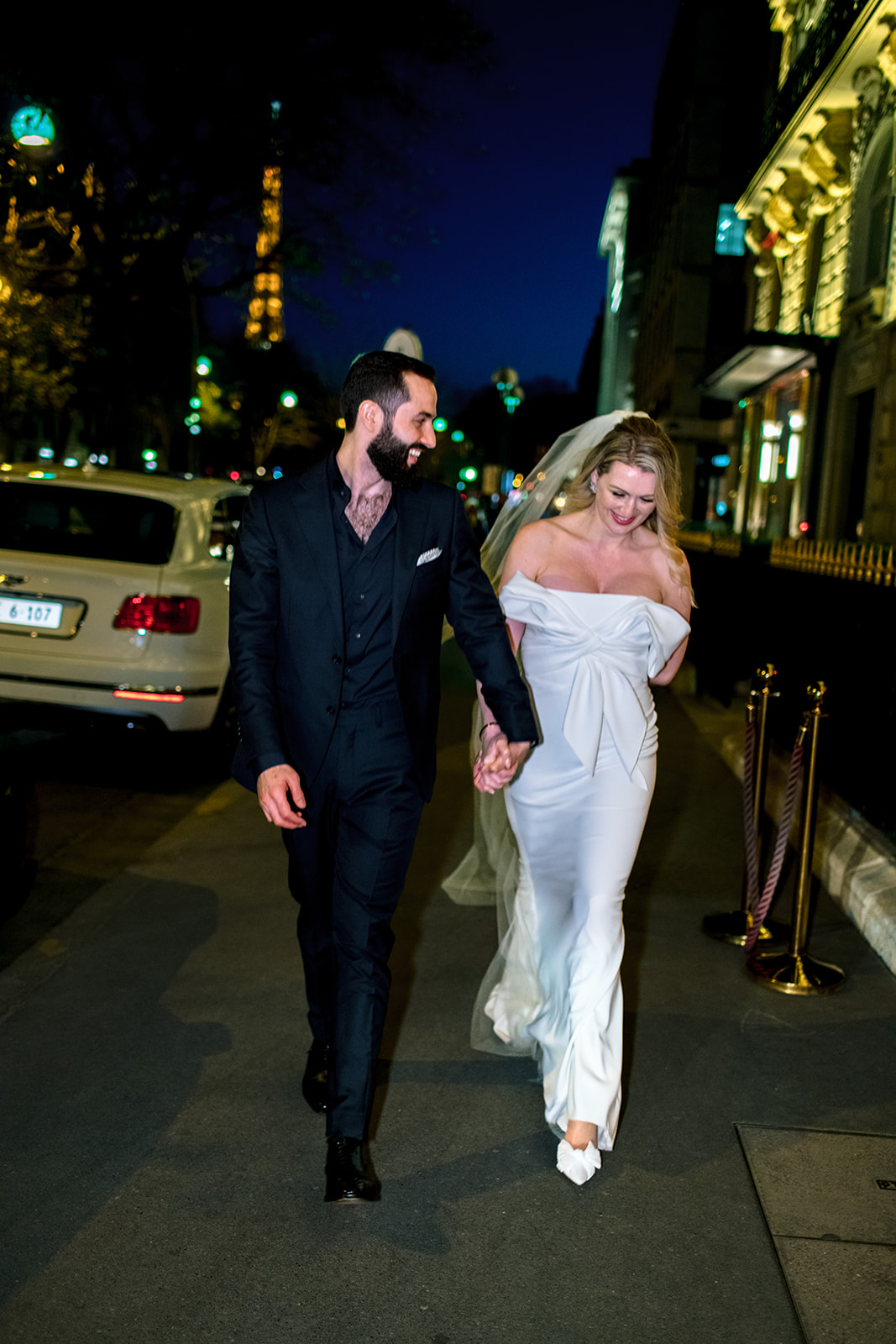
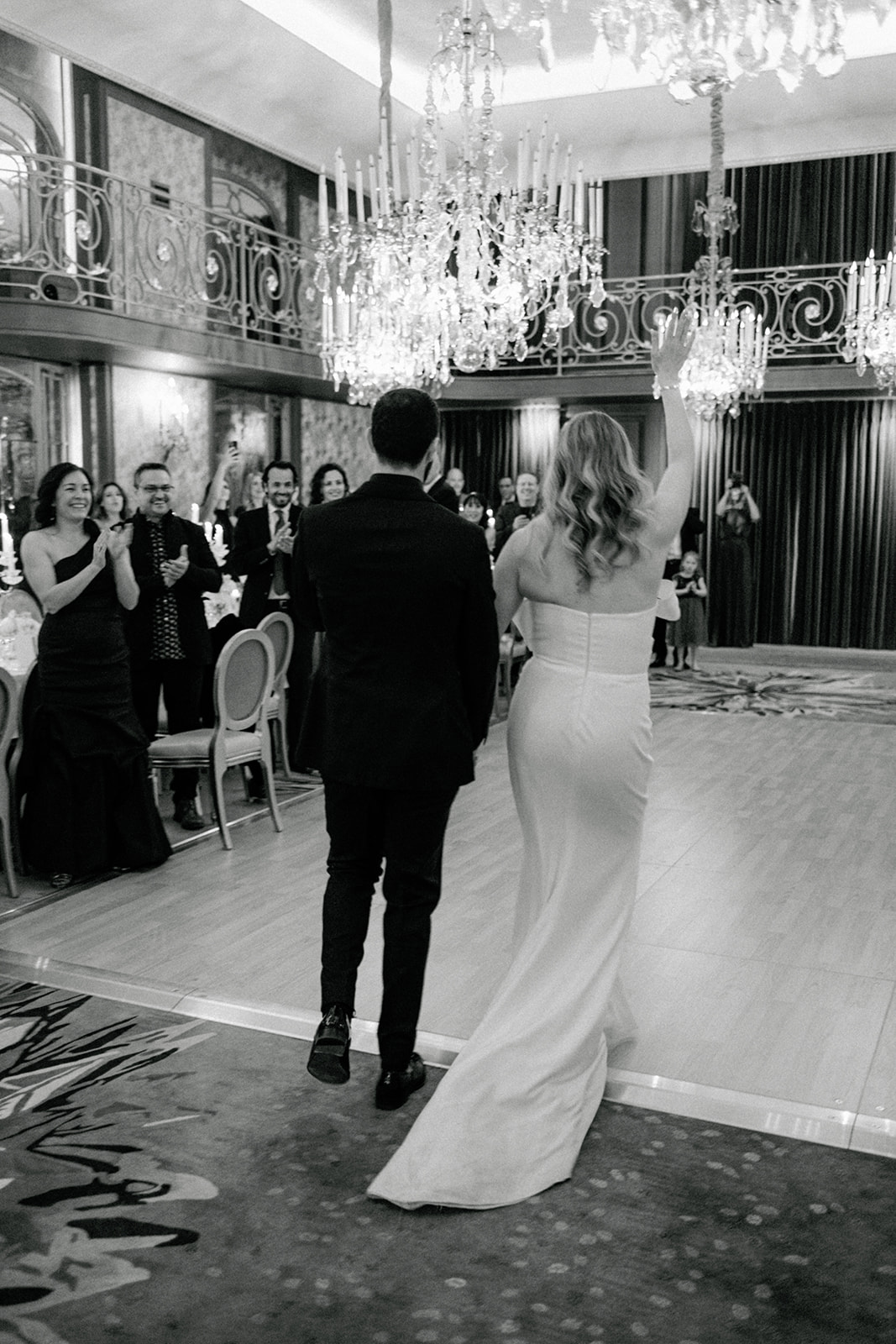
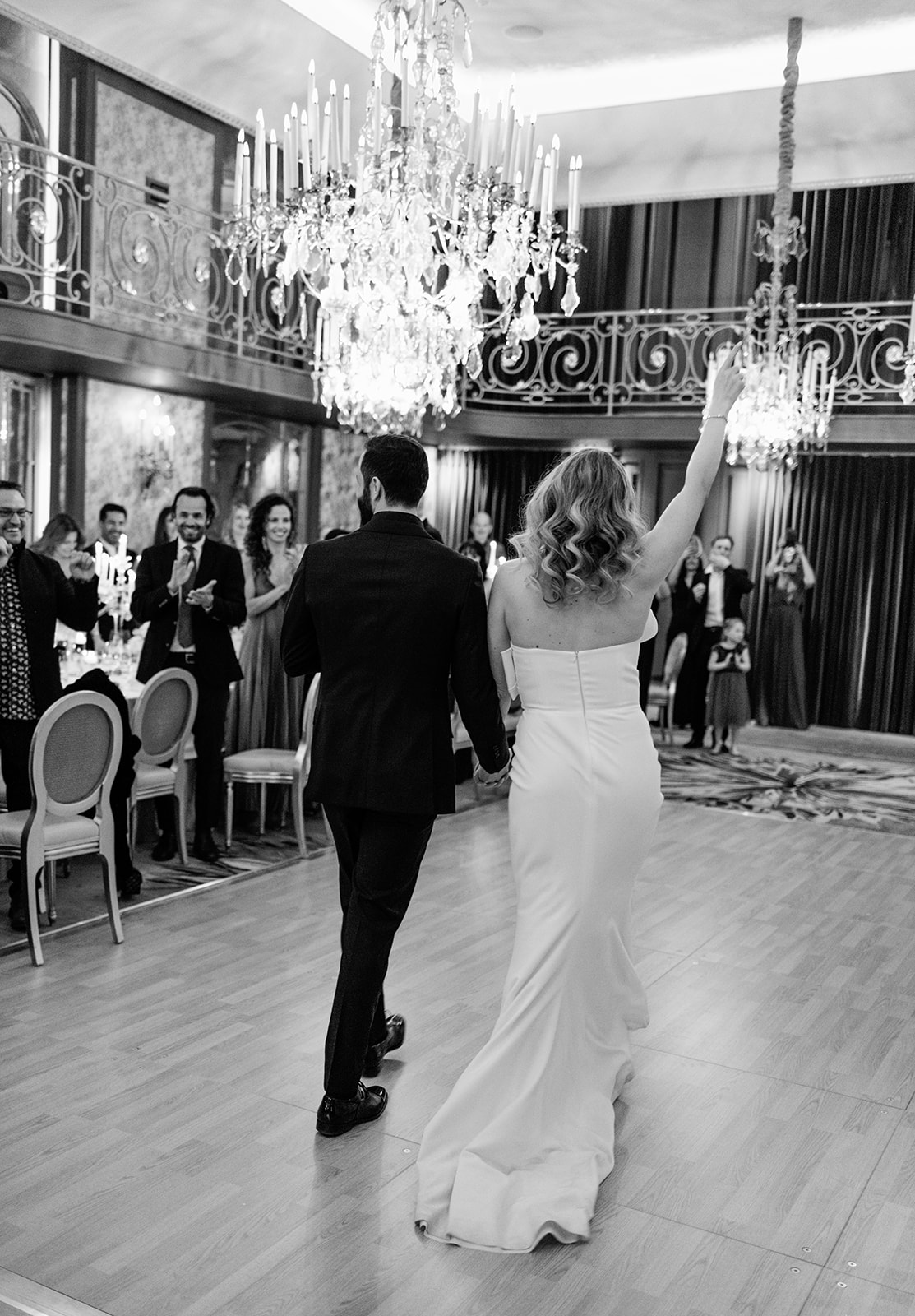
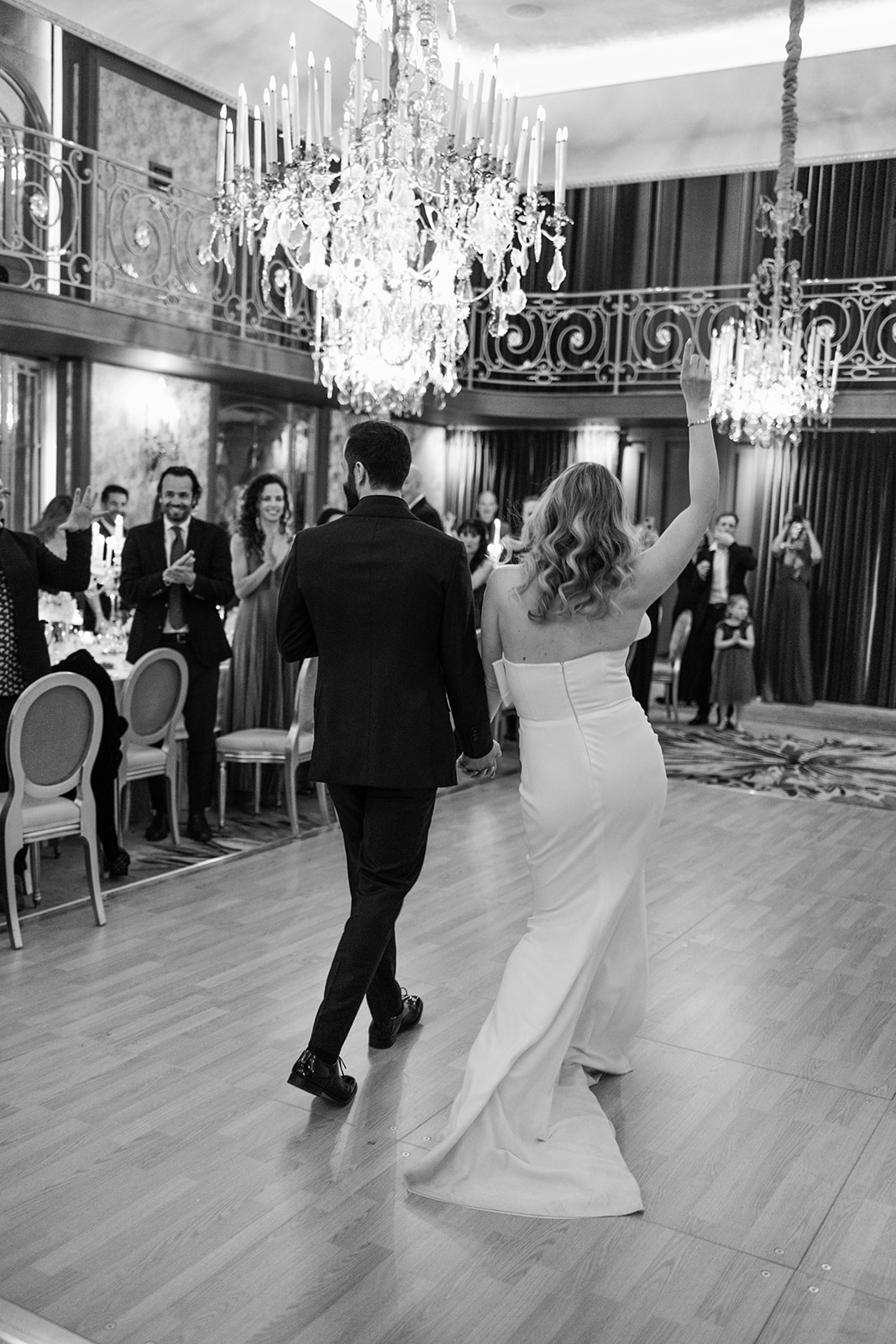
Polished setting.
Unfiltered energy.
05 — The rooftop portraits
“A private Paris celebration.
An unforgettable view of the Eiffel Tower.”
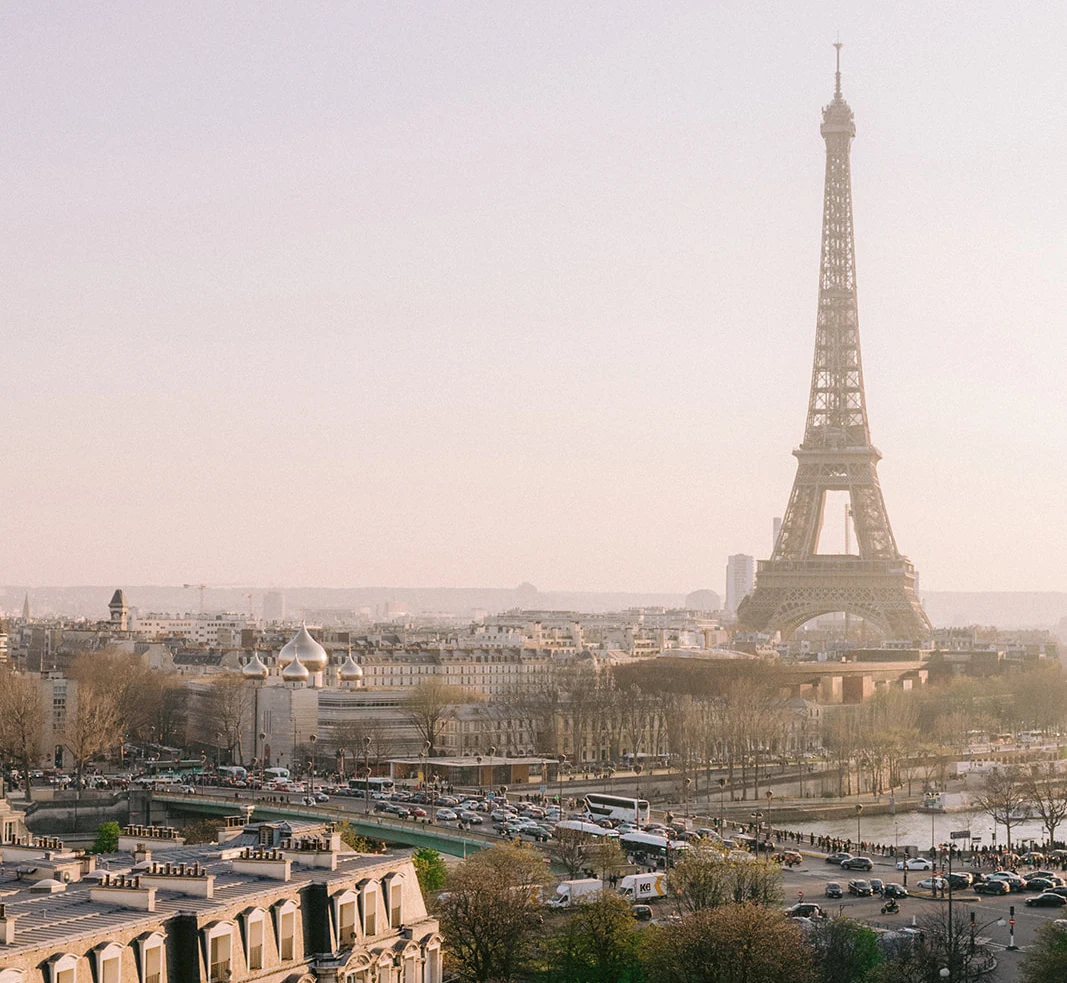
The rooftop offered a rare perspective over Paris and a direct view of the Eiffel Tower. These portraits were guided with attention to silhouette, movement and light, while keeping the couple relaxed and connected to one another.
The landmark remained part of the composition rather than becoming the only subject. Wider frames established the location; closer portraits focused on expression and connection. This balance kept the photographs recognizably Parisian without turning the session into a conventional sightseeing sequence.
Access, timing and available spaces must always be coordinated with the hotel and the wedding team. Building portrait time into the schedule before the light changes helps preserve both the experience and the visual quality of the session.
06 — The photography
The photographic direction changes throughout the day: precise when a portrait needs structure, quiet when the ceremony and guest experience need space.
Before the ceremony and during the rooftop session, clear guidance helps shape posture, movement and composition. The intention is fashion-led without making the couple feel staged or disconnected from one another.
During the ceremony, dinner and guest interactions, the approach becomes observational. Reactions, gestures and relationships are photographed as they happen, without interrupting the flow of the celebration.
Working with the planner, hotel and creative team allows the rooms, reception details and portraits to be photographed at the right moments. A clear timeline protects both the guest experience and the visual consistency of the gallery.
07 — Planning from abroad
For American and international couples, the strongest photography plan begins with a clear timeline shared between the couple, planner, hotel and creative team.
Planning calls, timeline reviews and coordination can be handled in English. This makes it easier to clarify the ceremony format, family priorities, portrait expectations and the visual direction before arriving in Paris.
Reserve a dedicated window for couple portraits without separating the couple from their guests for too long. The exact timing should reflect hotel access, the season, available light and the wedding schedule.
Allow enough time to document the room, flowers, stationery and table design while they are untouched. This avoids rushing the design photographs once the ceremony or reception has begun.
Suites, terraces and rooftop areas may require advance confirmation. Access should be discussed directly with the hotel and incorporated into the photography timeline rather than assumed on the wedding day.
A Plaza Athénée wedding can be connected to a welcome dinner, private event, couple session or farewell gathering. Photographing more than one chapter creates a fuller account of the guests’ experience in Paris.
Paris traffic, room transitions and guest movement should be considered from the beginning. A realistic timeline supports stronger photographs and a calmer experience for the couple.
08 — Frequently asked questions
Hôtel Plaza Athénée presents spaces for weddings and private celebrations. The available format, room, guest count and access should be confirmed directly with the hotel’s events team for the selected date.
An intimate wedding can combine private preparations, an indoor ceremony, a refined reception and portraits within the hotel. This photographed celebration brought together approximately fifty guests on Avenue Montaigne.
Portrait opportunities may include selected interiors, staircases, the Avenue Montaigne exterior and approved suites, terraces or rooftop viewpoints. Final access depends on the hotel and the wedding-day schedule.
Portraits receive clear direction when shape, movement and light need structure. The ceremony, dinner and guest interactions are photographed more observationally so the final gallery includes both fashion-led images and genuine moments.
Begin with the ceremony format, guest count, portrait priorities and the spaces requested from the hotel. Then build one shared timeline with the planner, venue and photographer, including protected time for room details and portraits before guests arrive.